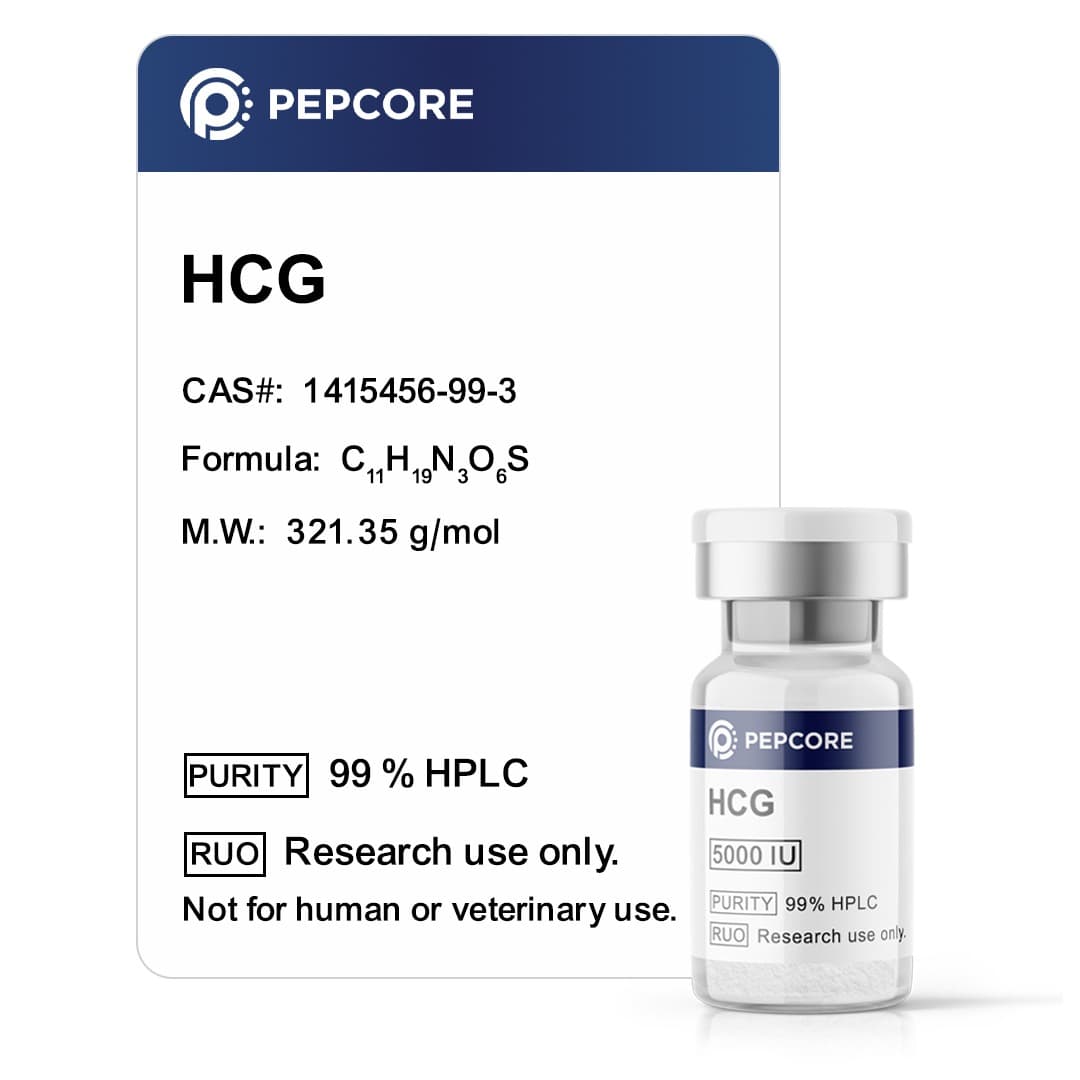
HCG 5000 IU (hCG)
For laboratory research use only. Not for human or veterinary use.


Description
HCG 5000 IU peptide is a purified glycoprotein hormone preparation widely studied for its role in reproductive signaling and LH/CG receptor activation in laboratory models. As a ligand for the luteinizing hormone/choriogonadotropin receptor (LHCGR), hCG is commonly investigated in research focused on steroidogenic signaling, endometrial biology, trophoblast communication, and maternal-fetal interface regulation. Through receptor-mediated activation of intracellular signaling cascades, HCG 5000 IU peptide is used to examine hormone-dependent cellular responses, receptor sensitivity, and the relationship between gonadotropin signaling and reproductive tissue function.
Research interest in HCG 5000 IU peptide extends to angiogenic and immunomodulatory pathways associated with implantation-related biology and endocrine communication. Studies and reviews describe hCG as an active regulator of endometrial receptivity, vascular adaptation, and immune dialogue, while also highlighting its shared receptor biology with luteinizing hormone and its distinct signaling behavior at the LH/CG receptor. These properties make hCG a valuable compound in research involving reproductive endocrinology, signal transduction, and hormone-mediated tissue remodeling (Tsampalas et al., 2010 — Human Reproduction Update; Casarini et al., 2018 — Cellular and Molecular Life Sciences).
Beyond classical receptor activation studies, HCG 5000 IU peptide is also relevant to research on hormone structure-function relationships, glycosylation, and isoform-dependent biological activity. Different hCG glycoforms have been shown to influence signaling behavior, half-life, and functional outcomes, supporting ongoing investigation into how hormone composition affects receptor interaction and downstream endocrine responses. This broader profile has positioned hCG as an important research tool in studies of embryonic signaling, reproductive physiology, and glycoprotein hormone biology (Fournier et al., 2016 — Journal of Molecular Endocrinology; d’Hauterive et al., 2022 — International Journal of Molecular Sciences).
The peptide is supplied as a lyophilized powder to ensure optimal stability during storage and handling.