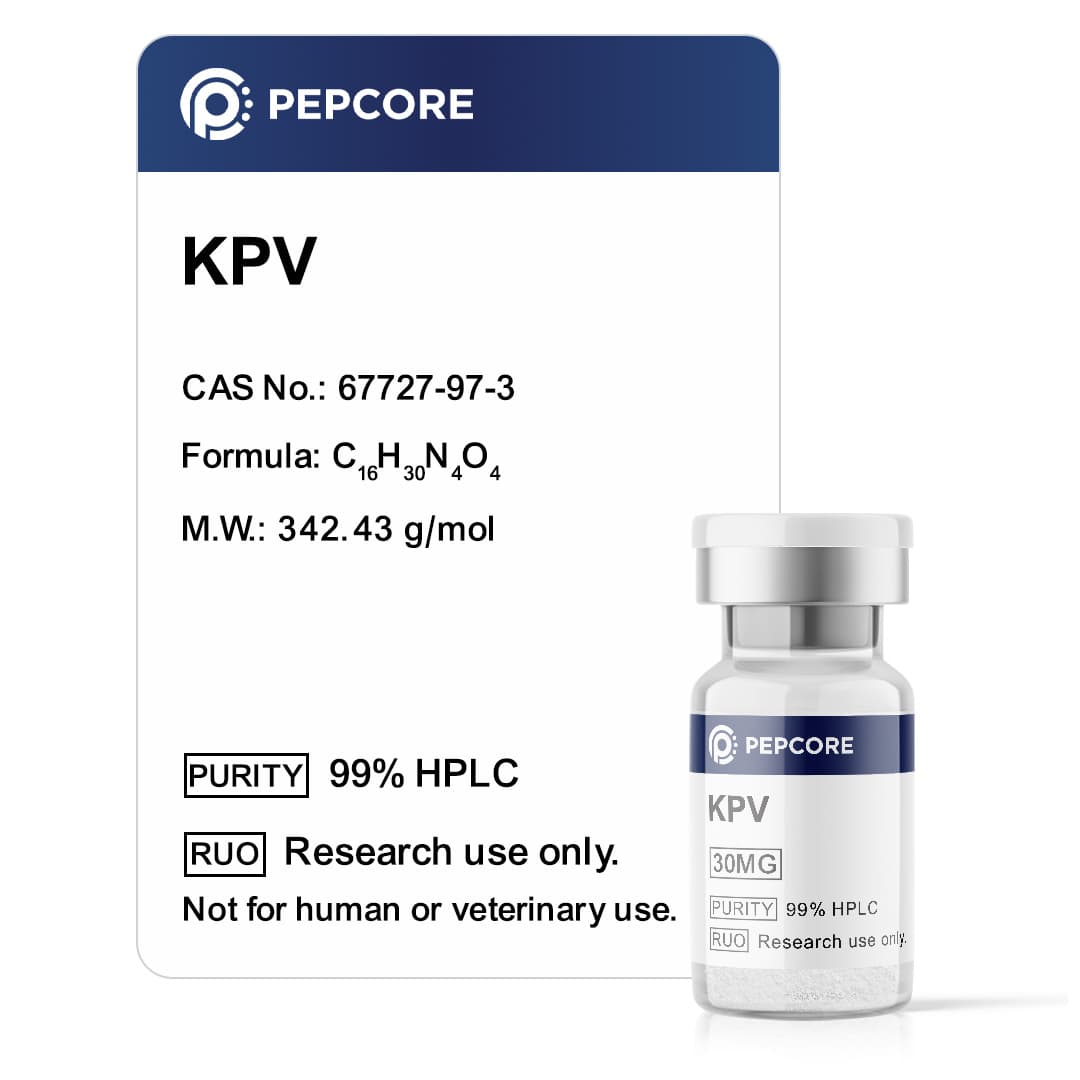
KPV 30 mg
Nur für In-vitro-Laborforschung. Nicht für den menschlichen Verzehr, veterinärmedizinische, diagnostische oder klinische Anwendung bestimmt.




Beschreibung
This 30 mg vial of KPV is supplied as a higher-content format for extended-duration research applications. KPV is a short anti-inflammatory tripeptide composed of the amino acids lysine, proline, and valine. It corresponds to the C-terminal fragment of alpha-melanocyte-stimulating hormone (α-MSH), the parent melanocortin peptide, and is classified as a melanocortin-derived tripeptide studied for its immunoregulatory and inflammatory-pathway research properties.
Research interest in KPV centers on its proposed ability to dampen pro-inflammatory signaling within epithelial and immune-cell models. Experimental work suggests that KPV may enter cells, translocate toward the nucleus, and interfere with NF-κB-mediated transcription, reducing the expression of inflammatory cytokines such as TNF-α, IL-1β, and IL-6. Additional research models examine its influence on mast-cell activation, neutrophil recruitment, and intestinal epithelial barrier integrity, positioning KPV as a useful tool for investigating mucosal-inflammation pathways without engaging classical melanocortin receptors.
Because of these properties, KPV has been investigated in research contexts focused on inflammatory bowel research models, gut-barrier biology, skin inflammatory-signaling studies, and oral and mucosal tissue research. Murine colitis studies reported that KPV exposure was associated with reduced inflammatory markers and improved epithelial recovery in research models of inflammatory bowel disease (Kannengiesser et al., 2008, Inflammatory Bowel Diseases).
The peptide is supplied as a lyophilized powder to ensure optimal stability during storage and handling.