Peptide Calculator
Calculate peptide reconstitution and dosage: concentration (mg/mL), dose volume, and syringe units.
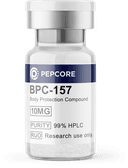
How many mg are in the vial?
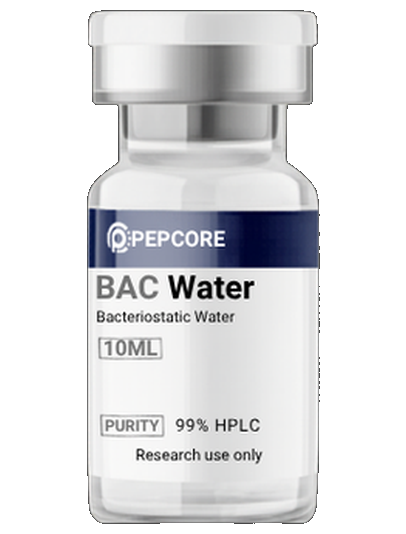
How much bacteriostatic water are you adding?
Dose of Peptide
Fill in all fields above to see your result
Research guide
Reconstitution math, conversions, and examples
Use this section as a quick reference for the calculations behind the tool. The examples are arithmetic demonstrations only, not recommendations.
How the calculator works
The calculator divides peptide amount by water volume to get concentration in mg/ml. It then divides the target dose by that concentration to calculate the required volume.
What to enter
Enter the total peptide amount in the vial, the water volume added, and the target amount per dose. Choose the syringe size so the unit scale matches the visual result.
What the result means
The result shows concentration, volume per dose, syringe units, and estimated doses per vial. Always follow the receiving laboratory’s own handling procedures.
Peptide dosage and reconstitution, explained
A peptide calculator turns three known numbers into the values you need for a dose: the milligrams of peptide in the vial, the volume of bacteriostatic water you add, and the target amount per dose. Dividing the peptide amount by the water volume gives the concentration in mg/mL; dividing your target dose by that concentration gives the volume to draw, which this tool also converts to units on a 0.3 ml, 0.5 ml, or 1 ml syringe size.
Reconstitution is the step of adding bacteriostatic water to a lyophilized (freeze-dried) peptide so it dissolves into a solution of known strength. Getting the reconstitution math right is what makes every later measurement repeatable. Used as a peptide dosage calculator, it answers how many micrograms are in a milligram, how many units a given volume is on a syringe, and how many doses a vial yields at a chosen concentration.
All figures are arithmetic for laboratory planning only. The calculator does not recommend amounts, administration, or any human or veterinary use.
Quick conversion reference
Worked reconstitution examples
5 mg vial with 2 ml water
Concentration: 2.5 mg/ml
0.25 mg dose: 0.100 ml
1 ml syringe: 10 units
10 mg vial with 2 ml water
Concentration: 5 mg/ml
0.5 mg dose: 0.100 ml
1 ml syringe: 10 units
15 mg vial with 3 ml water
Concentration: 5 mg/ml
1 mg dose: 0.200 ml
1 ml syringe: 20 units
Common research entries
BPC-157 research vial
5 mg vial, 2 ml water, 0.25 mg dose example
TB-500 research vial
10 mg vial, 2 ml water, 0.5 mg dose example
Semax or Selank research vial
10 mg vial, 2 ml water, 0.5 mg dose example
Blend research vial
Use total vial mg and the laboratory-defined dose target
Peptide calculator FAQ
Does this calculator recommend an amount?
No. It only performs concentration and volume arithmetic for laboratory research planning. It does not recommend research amounts, administration, human use, veterinary use, or suitability.
Is this a peptide dosage calculator?
It works as a peptide dosage and reconstitution calculator: from the vial mg and the water volume you enter, it computes the concentration, the volume to draw for a target dose, and the equivalent syringe units. The values are arithmetic for laboratory planning, not a recommended amount.
What is peptide reconstitution?
Reconstitution means adding a defined volume of bacteriostatic water to a lyophilized peptide powder so the resulting solution has a known concentration.
Why do syringe units change with syringe size?
Units are printed on the syringe. A 1 ml syringe has 100 units, a 0.5 ml syringe has 50 units, and a 0.3 ml syringe has 30 units.
Are Pepcore peptides for human use?
No. Pepcore peptides are supplied strictly for laboratory research use only and are not for human or veterinary use.
Popular research peptides
Retatrutide 10 mg →
GLP-1 / GIP / glucagon triple-agonist research peptide.
Tesamorelin 10 mg →
GHRH analogue used in growth-hormone-axis research.
BPC-157 →
Body-protection compound studied in tissue-repair research.
GHK-Cu →
Copper tripeptide studied in skin and regeneration research.
Cagrilintide →
Amylin analogue studied in metabolic and appetite research.
KPV →
Tripeptide studied in inflammatory-pathway research.
Glow →
TB4, BPC-157 and GHK-Cu blend for skin and regeneration research.
Bacteriostatic Water →
Sterile diluent for reconstituting lyophilized peptides.
Related research tools & resources
Peptide reconstitution guide →
How to mix, store, and handle lyophilized peptides, with shelf-life numbers.
Peptide stability calculator →
Estimate shelf-life from form, storage temperature, and pH.
BAC water →
Sterile bacteriostatic water for reconstituting research peptides.
Research FAQ →
COA, HPLC purity, storage, and EU shipping questions.
Need research-grade peptides for controlled lab work? Pepcore supplies 99% HPLC-pure peptides with a COA on request and fast EU shipping.
Browse the research catalog