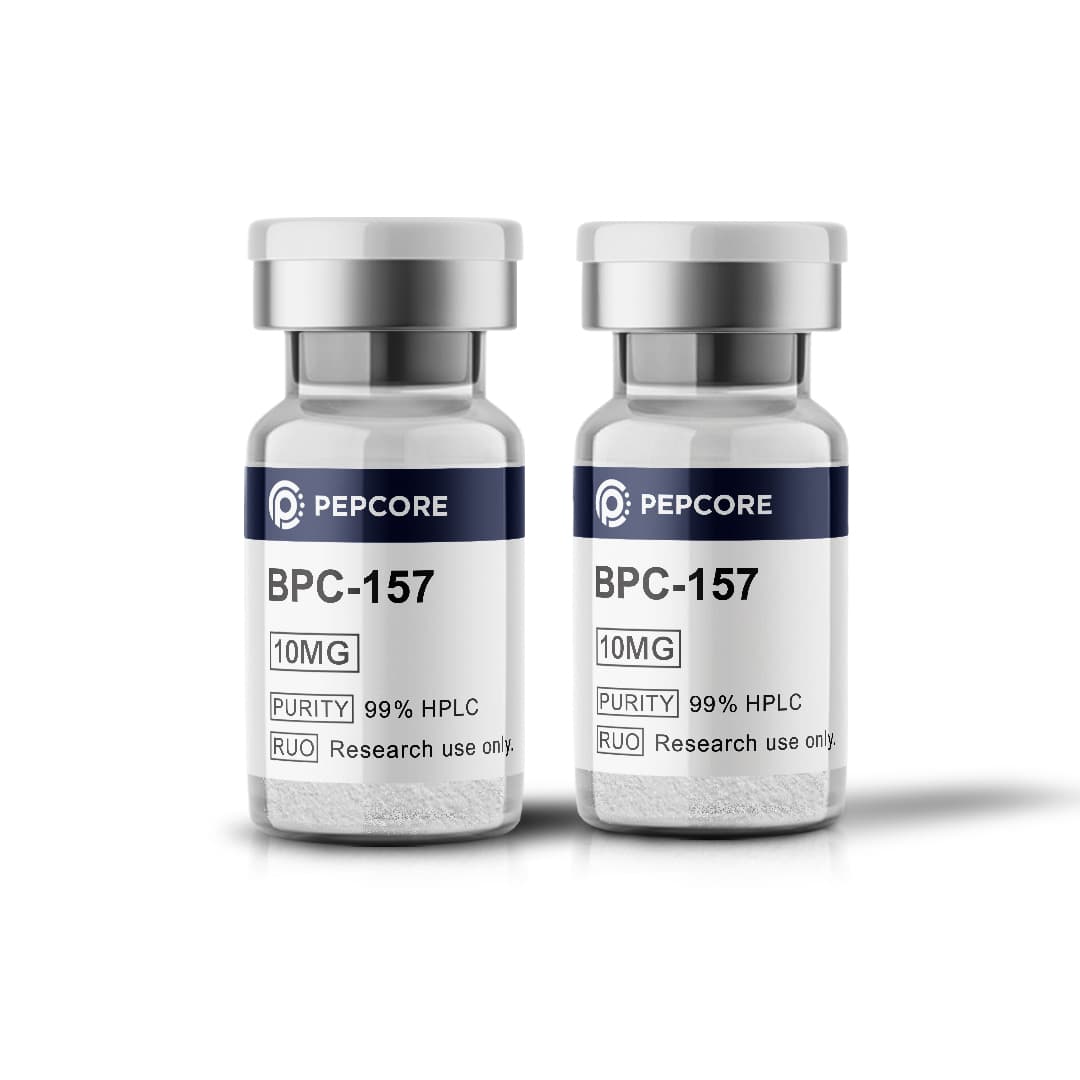
2x BPC-157 Bundle
Nur für In-vitro-Laborforschung. Nicht für den menschlichen Verzehr, veterinärmedizinische, diagnostische oder klinische Anwendung bestimmt.




Description
This bundle brings together 2× BPC-157 in a single research bundle, priced around 15% below buying each vial separately. Each peptide is supplied in its own individual vial, so reconstitution and handling stay fully independent per compound.
Every vial is lyophilized research-grade powder at ≥ 99% HPLC purity, with a Certificate of Analysis available on request.
For laboratory research use only. Not for human or veterinary use.
BPC-157
BPC-157 is a synthetic 15-residue gastric-pentadecapeptide research compound derived from a protein originally identified in gastric extracts. Composed of the sequence Gly-Glu-Pro-Pro-Pro-Gly-Lys-Pro-Ala-Asp-Asp-Ala-Gly-Leu-Val, this gastric-extract-derived research peptide is supplied as a defined investigational laboratory peptide for use in cellular-process research, nitric oxide signalling research, and gastric-tissue research models in controlled laboratory settings.
BPC-157 has been investigated in laboratory research studies for its interaction with vascular endothelial signalling pathways and the nitric oxide system. Mechanistic research models have characterized engagement with vascular endothelial growth factor receptor-2 (VEGFR2) signalling and the Akt-eNOS axis, supporting investigations into nitric oxide signalling research and endothelial cellular-process research (Hsieh et al., 2017, Journal of Molecular Medicine; Hsieh et al., 2020, Scientific Reports).
Beyond endothelial pathway research, BPC-157 has also been investigated in laboratory research studies examining gastric-tissue research models, inflammatory-pathway research, and cellular-process research signalling. These investigations have positioned BPC-157 as an experimental research compound of interest in studies of pentadecapeptide pharmacology and integrated cellular-pathway signalling.
For a deeper review of the published literature, see our [BPC-157 research guide](/blog/bpc-157-research-guide). See also: TB-500 10 mg, KPV 10 mg, GHK-Cu
Scientific Background
2x BPC-157 Bundle combines 1 research compounds: BPC-157. Scientific background for each component is documented below.
BPC-157
BPC-157 is classified as a synthetic gastric-pentadecapeptide research compound. The sequence was originally derived from a larger protein identified in gastric extracts, and the 15-residue synthetic version has become a widely used reference compound in cellular-pathway research and nitric oxide signalling research.
Laboratory research studies have characterized BPC-157 as a stable research peptide in acidic conditions, a property that distinguishes it from many other bioactive research peptides. This stability profile has made it a useful tool in laboratory research studies of gastric-tissue research, where peptide integrity under acidic conditions is an important methodological consideration.
Mechanistic research has investigated BPC-157 engagement with vascular endothelial pathways, including VEGFR2 signalling research and the Akt-eNOS axis. Additional research models have examined interaction with the broader nitric oxide system, Src-Cav-1-eNOS signalling, and inflammatory-pathway research. This positioning at the intersection of nitric oxide signalling research, endothelial cellular-process research, and gastric-tissue research has made BPC-157 a research peptide of considerable interest in laboratory research studies of pentadecapeptide pharmacology and integrated cellular-pathway signalling.
Structure
2x BPC-157 Bundle is supplied as a homogeneous lyophilized mixture. Structural details for each compound:
BPC-157
Mechanism of Action
Each compound in 2x BPC-157 Bundle engages distinct biochemical targets. Mechanism of action per compound:
BPC-157
1. VEGFR2 Signalling Research
BPC-157 has been investigated in laboratory research studies for engagement with vascular endothelial growth factor receptor-2 (VEGFR2) signalling. Mechanistic research models indicate that BPC-157 modulates VEGFR2 expression and internalization, supporting investigations into endothelial cellular-process research and vascular-pathway research (Hsieh et al., 2017, Journal of Molecular Medicine).
2. Akt-eNOS Axis and Nitric Oxide Signalling Research
Laboratory research studies have characterized BPC-157 engagement with the Akt-endothelial nitric oxide synthase (eNOS) axis. This signalling research is associated with nitric oxide production in endothelial research models and has been investigated as a downstream consequence of VEGFR2 modulation in cellular-pathway research.
3. Src-Cav-1-eNOS Pathway Research
Research models have also characterized BPC-157 engagement with the Src-Caveolin-1-eNOS pathway. Mechanistic research indicates that BPC-157 enhances phosphorylation of Src, Cav-1 and eNOS and reduces Cav-1-eNOS binding in vascular research models, supporting investigations into nitric oxide signalling research independent of canonical VEGFR2 input (Hsieh et al., 2020, Scientific Reports).
4. Gastric-Tissue Research Models
Laboratory research studies have investigated BPC-157 stability in acidic conditions and its engagement with gastric-tissue research models. These investigations support research on pentadecapeptide pharmacology and cellular-pathway research relevant to gastric-tissue research.
Research Applications
Conclusion
BPC-157 is a synthetic 15-residue gastric-pentadecapeptide research compound that engages VEGFR2 signalling, the Akt-eNOS axis, and the Src-Cav-1-eNOS pathway in research models. Its combination of acidic-condition stability and characterized engagement with nitric oxide signalling research makes it a valuable investigational laboratory peptide for laboratory research studies in cellular-pathway research, endothelial cellular-process research, and gastric-tissue research models.
References
Published references for each compound in 2x BPC-157 Bundle, listed by component:
BPC-157
Ähnliche Produkte
Artikel, die Sie interessieren könnten

BPC-157: A Comprehensive Research Overview
BPC-157 is a 15-amino-acid peptide derived from gastric juice. A look at its structure, mechani…
Semaglutide vs Tirzepatide: Research Comparison
Comparing semaglutide's selective GLP-1 action with tirzepatide's dual GIP/GLP-1 agonism, and w…
Peptide Longevity Research: Cellular Aging Overview
Senescence, telomere shortening, mitochondrial decline: how research peptides give scientists n…