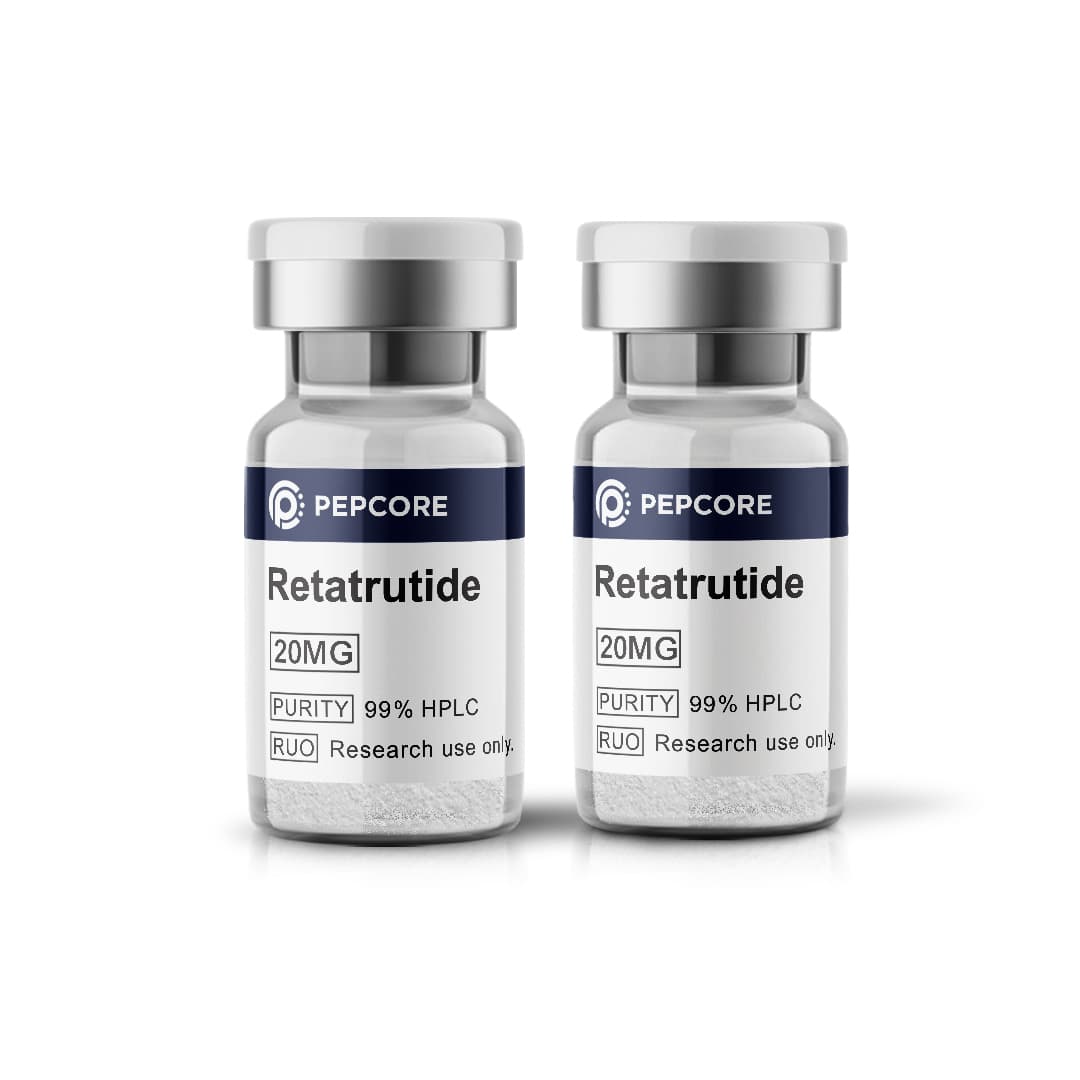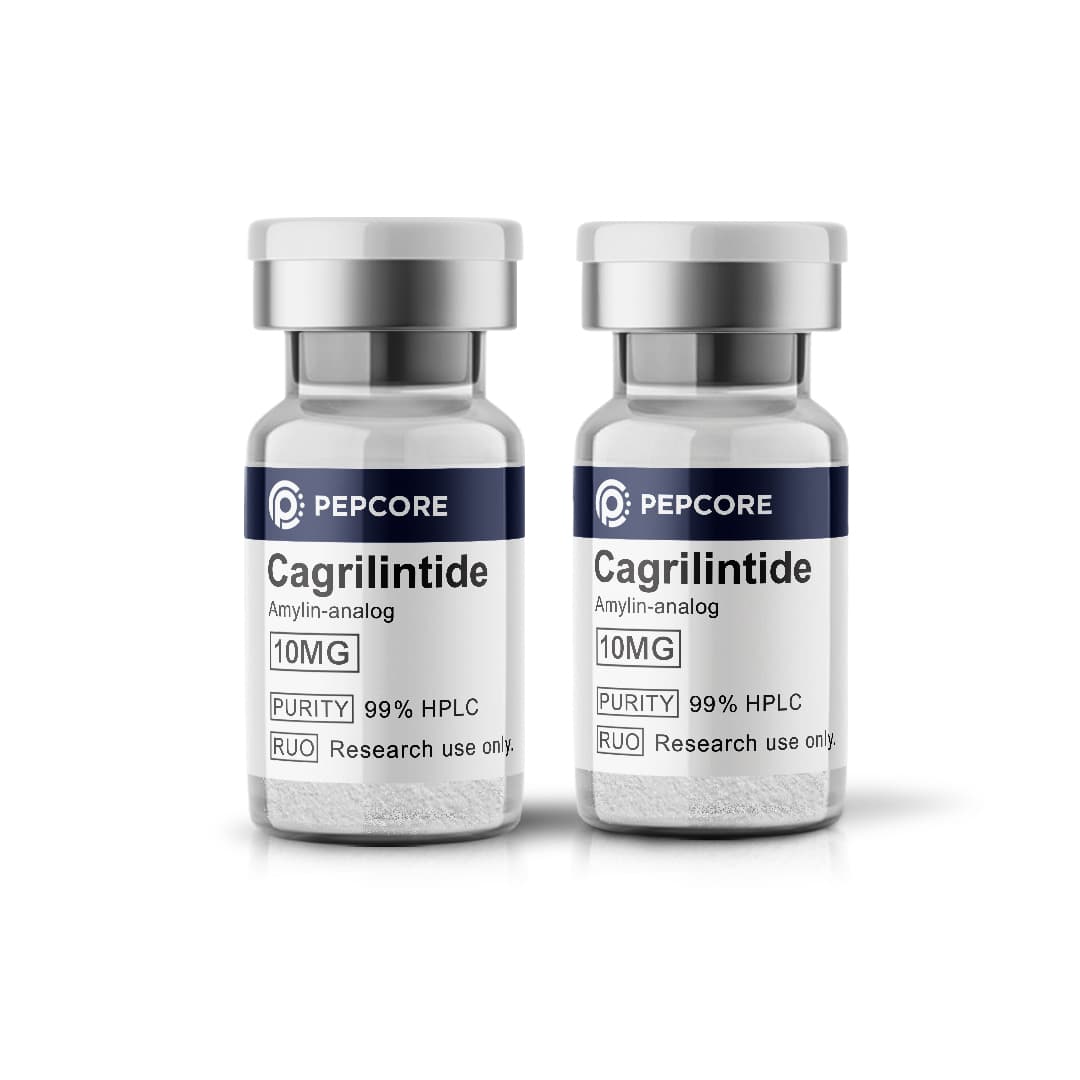



Retatrutide 10 mg + Cagrilintide 10 mg Bundle
For in-vitro laboratory research use only. Not intended for human consumption, veterinary, diagnostic, or clinical use.
Description
This bundle brings together 1× Retatrutide 10 mg + 1× Cagrilintide 10 mg in a single research bundle, priced around 15% below buying each vial separately. Each peptide is supplied in its own individual vial, so reconstitution and handling stay fully independent per compound.
Every vial is lyophilized research-grade powder at ≥ 99% HPLC purity, with a Certificate of Analysis available on request.
For laboratory research use only. Not for human or veterinary use.
Retatrutide 10 mg
Retatrutide 10mg peptide is a synthetic 39-residue triagonist designed to engage three incretin and metabolic-pathway receptors simultaneously: the glucose-dependent insulinotropic polypeptide (GIP) receptor, the glucagon-like peptide-1 (GLP-1) receptor, and the glucagon receptor. By combining activity across these three receptor systems within a single molecule, retatrutide is investigated as a research compound for studying coordinated incretin-pathway research, insulin-signaling crosstalk, and energy-metabolism research in controlled laboratory settings.
Research interest in Retatrutide 10mg peptide has focused on how triple-receptor engagement may modulate downstream metabolic-pathway research models beyond what is observed with single- or dual-agonist incretin compounds. Mechanistic data indicate that retatrutide engages GIP, GLP-1, and glucagon receptors with distinct intrinsic activity profiles, supporting investigations into combined receptor signaling, energy-expenditure pathways, and metabolic-pathway adaptation in research models (Coskun et al., 2022, Cell Metabolism; Jastreboff et al., 2023, New England Journal of Medicine).
Beyond incretin-pathway research, Retatrutide 10mg peptide has also been investigated in laboratory research studies examining hepatic lipid-metabolism research models, glucose-signaling markers, and cardiometabolic-pathway research. These investigations have positioned retatrutide as an experimental research compound of interest in studies of triagonist receptor pharmacology and integrated metabolic-pathway signaling. See also: Tirzepatide 10 mg, Semaglutide 10 mg, Mazdutide 10 mg
Cagrilintide 10 mg
This 10 mg vial of Cagrilintide is supplied as a higher-content format for multi-aliquot research applications. Cagrilintide 10mg peptide is a synthetic 37-residue long-acting amylin-analog research peptide engineered with a C16 fatty-acid acylation that extends the molecule's half-life for use in research models. By engaging amylin family receptors (calcitonin receptor and amylin receptor subtypes formed with receptor activity-modifying proteins, RAMPs), cagrilintide is investigated as an experimental research compound for studying amylin-pathway research, energy-metabolism research, and gastric-pathway research models in controlled laboratory settings.
Research interest in Cagrilintide 10mg peptide has focused on how long-acting amylin receptor engagement may modulate downstream metabolic-pathway research models. Mechanistic data indicate that cagrilintide interacts with both the calcitonin receptor and amylin receptor subtypes through structural modifications inherited from native amylin pharmacology, supporting laboratory research studies of receptor-binding research, gastric-pathway research, and energy-balance research models (Kruse et al., 2021, Journal of Medicinal Chemistry).
Beyond amylin-pathway research, Cagrilintide 10mg peptide has also been investigated in combined research models alongside GLP-1 receptor agonist peptides, where dual amylin and GLP-1 receptor engagement is studied as an integrated metabolic-pathway research model. These investigations have positioned cagrilintide as an experimental research compound of interest in studies of long-acting amylin receptor pharmacology and combined peptide receptor research. See also: Semaglutide 10 mg, Tirzepatide 10 mg, Mazdutide 10 mg
Scientific Background
Retatrutide 10 mg + Cagrilintide 10 mg Bundle combines 2 research compounds: Retatrutide 10 mg, Cagrilintide 10 mg. Scientific background for each component is documented below.
Retatrutide 10 mg
Retatrutide (also referenced in research literature as LY3437943) is a synthetic 39-residue peptide engineered as a unimolecular triagonist of the GIP, GLP-1, and glucagon receptors. It was developed to extend the pharmacology of earlier incretin-based research compounds, including single-agonist GLP-1 analogs and dual GIP/GLP-1 agonists, by adding a third receptor arm: glucagon receptor engagement.
The rationale behind triagonist research is that combined receptor signaling may modulate energy-metabolism research models through complementary pathways. GLP-1 receptor activity contributes to glucose-signaling research and central neuroendocrine-pathway research; GIP receptor activity is associated with insulin-signaling research and lipid-pathway adaptation in adipose research models; glucagon receptor activity is investigated for its association with energy-expenditure research and hepatic lipid-metabolism research.
This positioning at the intersection of three established incretin and metabolic-pathway receptors has made retatrutide an experimental research compound of considerable interest in laboratory research studies of integrated receptor pharmacology, metabolic-pathway crosstalk, and energy-balance research models.
Cagrilintide 10 mg
Cagrilintide is a synthetic 37-residue amylin-analog research peptide engineered for extended half-life through C16 fatty-acid acylation. The molecule was developed to overcome the short circulating half-life of native amylin and pramlintide research peptides, enabling once-weekly research dosing schedules in laboratory research studies.
Amylin is an endogenous 37-residue peptide co-secreted with insulin from pancreatic beta-cells in research models. Amylin receptor signaling research is associated with gastric-pathway research, neuroendocrine pathways relevant to energy-balance research, and glucose-signaling research. The development of cagrilintide as a long-acting amylin analog drew on structure-activity research to balance receptor selectivity, solubility, and pharmacokinetic stability (Kruse et al., 2021, Journal of Medicinal Chemistry).
This positioning at the intersection of amylin-pathway research and long-acting peptide engineering has made cagrilintide an experimental research compound of considerable interest in laboratory research studies of amylin receptor pharmacology, combined peptide research alongside GLP-1 receptor agonists, and integrated metabolic-pathway signaling research.
Structure
Retatrutide 10 mg + Cagrilintide 10 mg Bundle is supplied as a homogeneous lyophilized mixture. Structural details for each compound:
Retatrutide 10 mg
Cagrilintide 10 mg
Mechanism of Action
Each compound in Retatrutide 10 mg + Cagrilintide 10 mg Bundle engages distinct biochemical targets. Mechanism of action per compound:
Retatrutide 10 mg
1. GLP-1 Receptor Engagement
Retatrutide engages the GLP-1 receptor, a class B G-protein-coupled receptor expressed across pancreatic, central, and peripheral tissues in research models. GLP-1 receptor signaling research is associated with glucose-dependent insulin-signaling pathways and central neuroendocrine modulation relevant to energy-balance research.
2. GIP Receptor Engagement
Retatrutide also engages the GIP receptor, which is widely expressed in adipose and pancreatic research tissues. GIP receptor signaling is investigated for its role in insulin-signaling research, adipose-pathway adaptation, and lipid-handling research models.
3. Glucagon Receptor Engagement
The glucagon receptor arm distinguishes retatrutide from dual-agonist research compounds. Glucagon receptor signaling is investigated in laboratory research studies for its association with hepatic glucose-output research, lipid-metabolism research, and energy-expenditure research models.
4. Integrated Triagonist Signaling
By interacting with all three receptor systems within a single molecule, retatrutide is investigated as a tool for studying receptor-balance pharmacology, downstream signaling crosstalk, and integrated metabolic-pathway adaptation in research models. Preclinical and laboratory research has characterized its balanced GCGR/GLP-1R activity with relatively higher GIPR activity (Coskun et al., 2022, Cell Metabolism).
Research Applications
Conclusion
Retatrutide represents an experimental research compound class of unimolecular triagonists that engage GIP, GLP-1, and glucagon receptors simultaneously. By integrating three receptor arms within a single peptide, retatrutide supports laboratory research studies of receptor-balance pharmacology and integrated metabolic-pathway signaling, making it a valuable research target for investigations of incretin-pathway research and energy-metabolism research models.
Cagrilintide 10 mg
1. Amylin Receptor Engagement
Cagrilintide engages amylin family receptors, which are heterodimers of the calcitonin receptor with receptor activity-modifying proteins (RAMPs). Amylin receptor signaling research is associated with gastric-pathway research, central neuroendocrine modulation relevant to energy-balance research, and glucose-signaling research models.
2. Calcitonin Receptor Interaction
Cagrilintide also engages the calcitonin receptor directly, which is investigated in research models for its role in bone-remodeling research and broader neuroendocrine-pathway research. Structural research has characterized cagrilintide binding across calcitonin and amylin receptor subtypes (Kruse et al., 2021, Journal of Medicinal Chemistry).
3. C16 Fatty-Acid Acylation
The C16 fatty-acid side chain extends the half-life of cagrilintide in research models by promoting reversible albumin binding. This enables receptor-pharmacology research at extended timepoints and supports laboratory research studies that examine long-acting amylin receptor engagement.
4. Combined Peptide Research Models
Cagrilintide is frequently investigated in combined research models alongside GLP-1 receptor agonist peptides such as semaglutide. In these laboratory research studies, dual amylin and GLP-1 receptor engagement is studied as an integrated metabolic-pathway research model, distinct from selective single-receptor agonism.
Research Applications
Conclusion
Cagrilintide represents an experimental research compound class of long-acting amylin analogs engineered through fatty-acid acylation for extended half-life in research models. By engaging amylin and calcitonin receptor subtypes, cagrilintide supports laboratory research studies of amylin receptor pharmacology and combined peptide research models, making it a valuable research target for investigations of amylin-pathway research and integrated metabolic-pathway signaling research.
References
Published references for each compound in Retatrutide 10 mg + Cagrilintide 10 mg Bundle, listed by component:
Retatrutide 10 mg
Cagrilintide 10 mg
Related products
Articles you might find useful

Semaglutide vs Tirzepatide: Research Comparison
Comparing semaglutide's selective GLP-1 action with tirzepatide's dual GIP/GLP-1 agonism, and w…

BPC-157: A Comprehensive Research Overview
BPC-157 is a 15-amino-acid peptide derived from gastric juice. A look at its structure, mechani…

Peptide Longevity Research: Cellular Aging Overview
Senescence, telomere shortening, mitochondrial decline: how research peptides give scientists n…