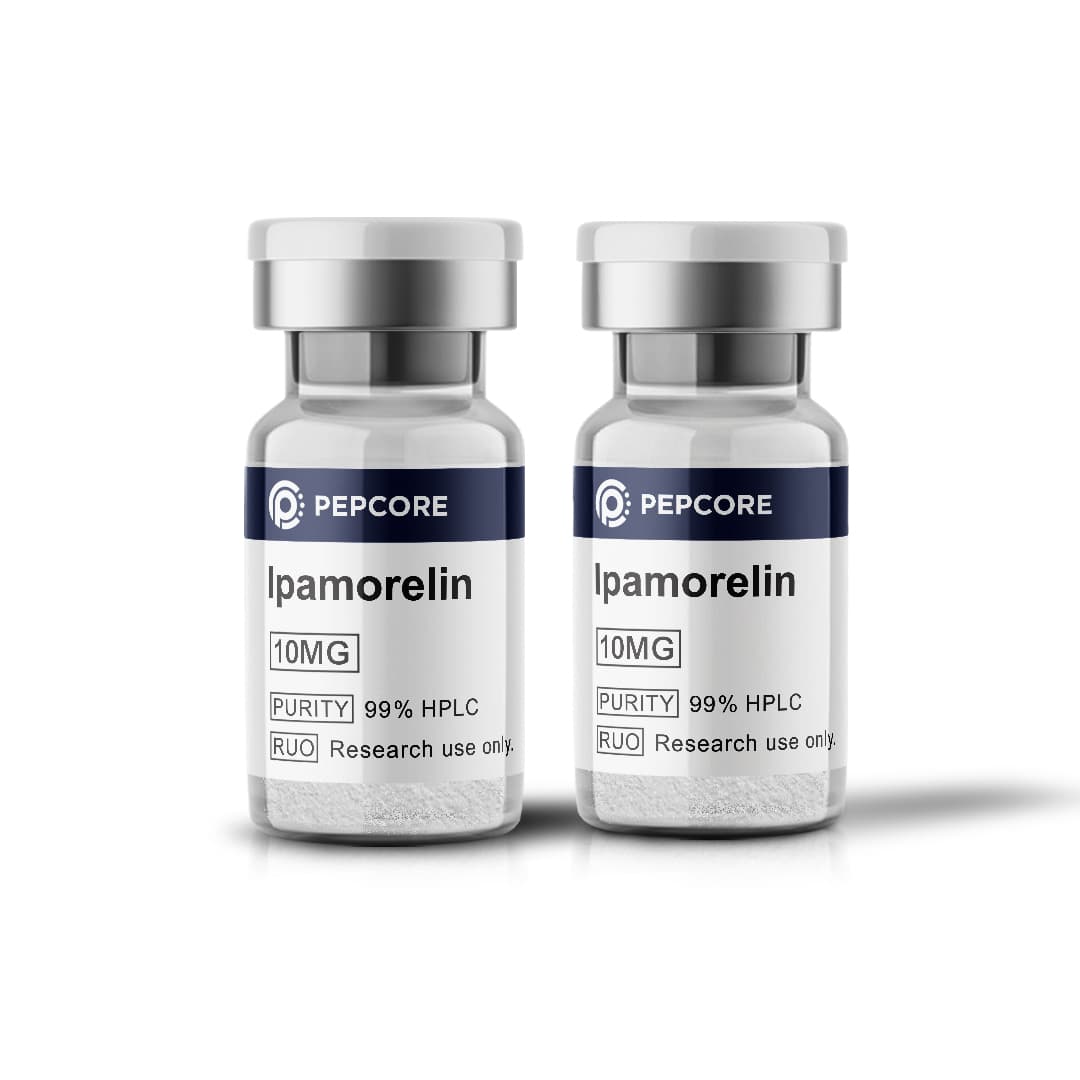
2x Ipamorelin 10 mg Bundle
For in-vitro laboratory research use only. Not intended for human consumption, veterinary, diagnostic, or clinical use.




Description
This bundle brings together 2× Ipamorelin 10 mg in a single research bundle, priced around 15% below buying each vial separately. Each peptide is supplied in its own individual vial, so reconstitution and handling stay fully independent per compound.
Every vial is lyophilized research-grade powder at ≥ 99% HPLC purity, with a Certificate of Analysis available on request.
For laboratory research use only. Not for human or veterinary use.
Ipamorelin 10 mg
Ipamorelin is a synthetic pentapeptide consisting of 5 modified amino acids and engineered as a selective agonist of the growth-hormone secretagogue receptor (GHS-R1a, the ghrelin receptor). It is classified as a GHS-R research peptide developed for investigation of ghrelin-receptor signaling research and somatotropic-axis research models.
Through selective engagement of GHS-R1a on pituitary somatotrophs and peripheral tissues, Ipamorelin is investigated as a tool compound for studying ghrelin-receptor (GHS-R) research, Gq/phospholipase-C signaling, and selective somatotropic-axis modulation that does not appreciably engage adjacent endocrine pathways (ACTH, cortisol, prolactin) in laboratory research models. This receptor selectivity profile distinguishes Ipamorelin from earlier non-selective GHS research peptides.
Ipamorelin is actively investigated across several research domains, including GHS-R1a receptor pharmacology, somatotropic-axis research models, ghrelin-receptor signaling research in gastrointestinal-motility laboratory models, and selective receptor-level investigation. Published characterization established Ipamorelin as the first selective GHS-R agonist with a selectivity profile for somatotropic-axis signaling comparable to that observed with GHRH receptor engagement ([Raun et al., 1998, European Journal of Endocrinology](https://pubmed.ncbi.nlm.nih.gov/9849822/)). Research combining Ipamorelin with GHRH-receptor agonists has investigated receptor-coupled signaling interactions in controlled laboratory models. See also: Sermorelin 5 mg, CJC-1295 No DAC 10 mg, IGF-1 LR3 1 mg
Scientific Background
2x Ipamorelin 10 mg Bundle combines 1 research compounds: Ipamorelin 10 mg. Scientific background for each component is documented below.
Ipamorelin 10 mg
The growth-hormone secretagogue receptor (GHS-R1a) was identified as the endogenous receptor for ghrelin, a 28-amino-acid acylated peptide involved in somatotropic-axis signaling and metabolic research. Early non-selective GHS research peptides (GHRP-6, GHRP-2, hexarelin) engaged GHS-R1a but also produced collateral activity at other endocrine pathways, limiting their utility as receptor-selective research tools.
Ipamorelin was developed by Novo Nordisk researchers as a five-residue scaffold designed to selectively engage GHS-R1a while minimizing collateral receptor activity. Structural studies and receptor-binding research established the pentapeptide as a high-affinity, high-selectivity GHS-R agonist suitable for laboratory investigation of receptor-mediated signaling.
This positioning at the intersection of ghrelin-receptor signaling research, selective GPCR pharmacology, and somatotropic-axis research models has made Ipamorelin a peptide of considerable interest in laboratory investigations of GHS-R1a biology and downstream growth-hormone-pathway dynamics.
Structure
2x Ipamorelin 10 mg Bundle is supplied as a homogeneous lyophilized mixture. Structural details for each compound:
Ipamorelin 10 mg
Mechanism of Action
Each compound in 2x Ipamorelin 10 mg Bundle engages distinct biochemical targets. Mechanism of action per compound:
Ipamorelin 10 mg
1. Selective GHS-R1a Engagement
Ipamorelin binds the growth-hormone secretagogue receptor (GHS-R1a, the ghrelin receptor), a Gq-coupled class A GPCR expressed on anterior-pituitary somatotrophs and selected peripheral tissues. Receptor engagement activates phospholipase-C, generates inositol-1,4,5-trisphosphate, and mobilizes intracellular calcium in laboratory research models.
2. Ghrelin-Receptor Signaling Research
Through GHS-R1a engagement, Ipamorelin is investigated as a probe for ghrelin-receptor-coupled signaling, including PLC/IP3/Ca2+ mobilization, MAPK pathway activation, and downstream transcriptional research in somatotroph cellular models.
3. Selectivity Profile in Receptor Research
Receptor-binding studies have characterized Ipamorelin as engaging GHS-R1a with minimal activity at adjacent endocrine receptor pathways. In laboratory research models, this selectivity is associated with absence of appreciable ACTH, cortisol, prolactin, or aldosterone receptor signaling, distinguishing it from earlier non-selective GHS research peptides.
4. Somatotropic-Axis Research Models
Ipamorelin is investigated alongside GHRH-receptor agonists (e.g., Sermorelin, CJC-1295, Tesamorelin) to study receptor-coupled signaling interactions between the GHS-R1a and GHRH-R pathways in controlled laboratory research.
Research Applications
Conclusion
Ipamorelin represents a structurally defined pentapeptide research compound that selectively engages the GHS-R1a (ghrelin) receptor. By providing high receptor selectivity within the somatotropic-axis research framework, it serves as a useful tool compound for examining ghrelin-receptor signaling research, selective GPCR pharmacology, and downstream growth-hormone-pathway dynamics in controlled laboratory models.
References
Published references for each compound in 2x Ipamorelin 10 mg Bundle, listed by component:
Ipamorelin 10 mg
Related products
Articles you might find useful

Semaglutide vs Tirzepatide: Research Comparison
Comparing semaglutide's selective GLP-1 action with tirzepatide's dual GIP/GLP-1 agonism, and w…

BPC-157: A Comprehensive Research Overview
BPC-157 is a 15-amino-acid peptide derived from gastric juice. A look at its structure, mechani…

Peptide Longevity Research: Cellular Aging Overview
Senescence, telomere shortening, mitochondrial decline: how research peptides give scientists n…