
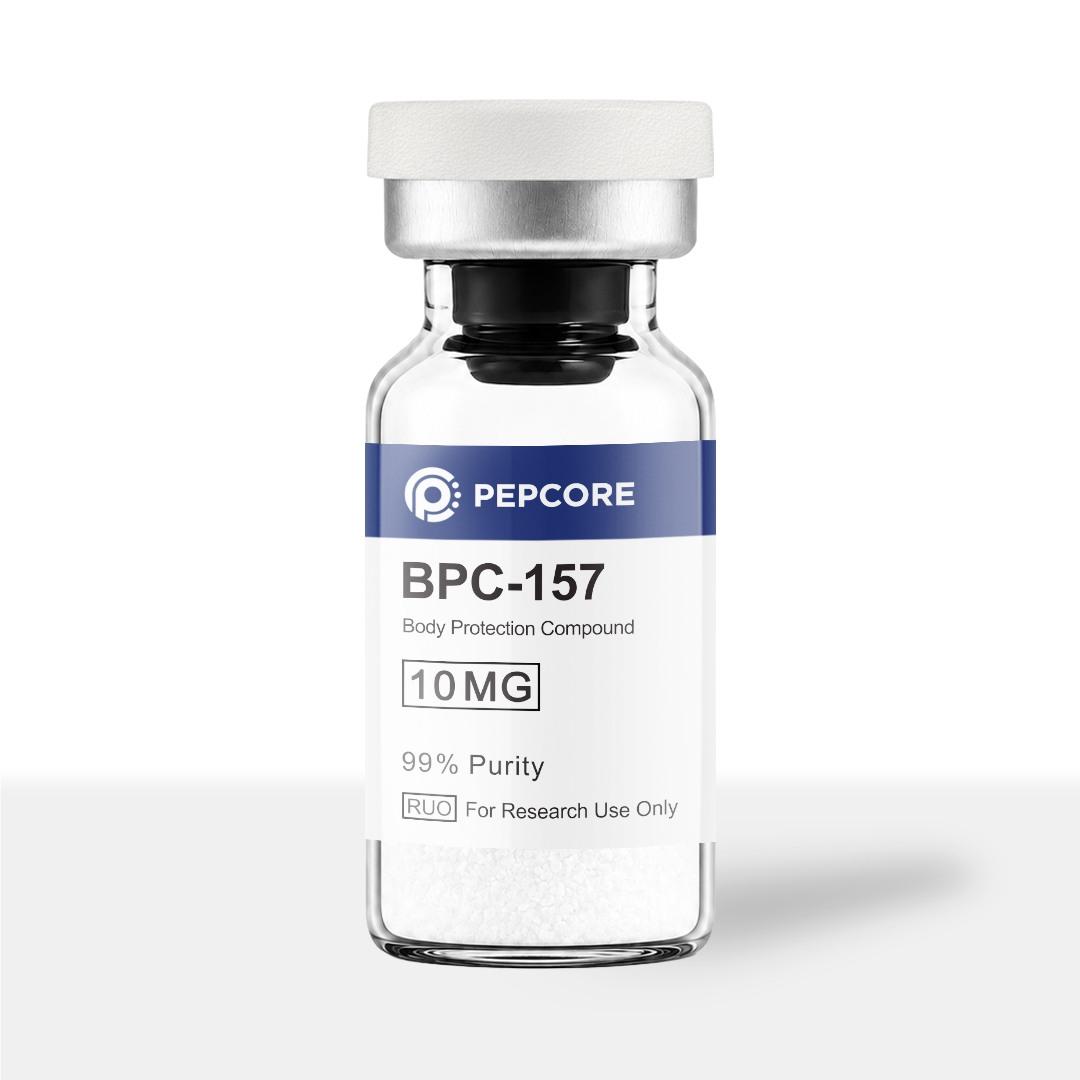
Recovery & Repair
BPC-157
In Stock
Amount (mg)
Bacteriostatic Water
Insulin Syringes
Alcohol Swabs
Quantity
1
Price€54.00
Fast delivery, dispatched same day before 14:00
Tracked delivery, door to door
Shipped discreetly
Secure payments



Order before 14:00 for same-day shipping
Order now, ships today
OrderedToday
ShippedToday
Delivered24-25 November
BPC-157 is a synthetic 15-amino-acid peptide based on a fragment of a protein first found in stomach fluid. It's best known for its role in tissue-repair and gastric research, and the fact that it was originally derived from a naturally occurring gastric protein is what makes it stand out.
It also has a solid research base, with studies exploring how it ties into nitric oxide signaling and cell-level processes (Hsieh et al., 2017, J Mol Med). That's part of why it comes up so often in this kind of lab work.
Research Applications
•Tissue-repair research models
•Gastric and stomach-tissue studies
•Nitric oxide signaling research
•Cellular-process and pathway research
Supplied as a lyophilized powder for stability.
Scientific Background
BPC-157 is classified as a synthetic gastric-pentadecapeptide research compound. The sequence was originally derived from a larger protein identified in gastric extracts, and the 15-residue synthetic version has become a widely used reference compound in cellular-pathway research and nitric oxide signalling research.
Laboratory research studies have characterized BPC-157 as a stable research peptide in acidic conditions, a property that distinguishes it from many other bioactive research peptides. This stability profile has made it a useful tool in laboratory research studies of gastric-tissue research, where peptide integrity under acidic conditions is an important methodological consideration.
Mechanistic research has investigated BPC-157 engagement with vascular endothelial pathways, including VEGFR2 signalling research and the Akt-eNOS axis. Additional research models have examined interaction with the broader nitric oxide system, Src-Cav-1-eNOS signalling, and inflammatory-pathway research. This positioning at the intersection of nitric oxide signalling research, endothelial cellular-process research, and gastric-tissue research has made BPC-157 a research peptide of considerable interest in laboratory research studies of pentadecapeptide pharmacology and integrated cellular-pathway signalling.
Structure
Peptide ClassSynthetic gastric-pentadecapeptide research compound
Residue Count15 amino acids
Amino Acid SequenceGly-Glu-Pro-Pro-Pro-Gly-Lys-Pro-Ala-Asp-Asp-Ala-Gly-Leu-Val
Sequence (single-letter)GEPPPGKPADDAGLV
Molecular FormulaC₆₂H₉₈N₁₆O₂₂
Molecular Weight~1419 g/mol
CAS Number137525-51-0
PubChem CID9941957
Alternative DesignationsBody Protection Compound-157, Bepecin
Mechanism of Action
VEGFR2 Signalling Research
BPC-157 has been investigated in laboratory research studies for engagement with vascular endothelial growth factor receptor-2 (VEGFR2) signalling. Mechanistic research models indicate that BPC-157 modulates VEGFR2 expression and internalization, supporting investigations into endothelial cellular-process research and vascular-pathway research (Hsieh et al., 2017, Journal of Molecular Medicine).
Akt-eNOS Axis and Nitric Oxide Signalling Research
Laboratory research studies have characterized BPC-157 engagement with the Akt-endothelial nitric oxide synthase (eNOS) axis. This signalling research is associated with nitric oxide production in endothelial research models and has been investigated as a downstream consequence of VEGFR2 modulation in cellular-pathway research.
Src-Cav-1-eNOS Pathway Research
Research models have also characterized BPC-157 engagement with the Src-Caveolin-1-eNOS pathway. Mechanistic research indicates that BPC-157 enhances phosphorylation of Src, Cav-1 and eNOS and reduces Cav-1-eNOS binding in vascular research models, supporting investigations into nitric oxide signalling research independent of canonical VEGFR2 input (Hsieh et al., 2020, Scientific Reports).
Gastric-Tissue Research Models
Laboratory research studies have investigated BPC-157 stability in acidic conditions and its engagement with gastric-tissue research models. These investigations support research on pentadecapeptide pharmacology and cellular-pathway research relevant to gastric-tissue research.
Conclusion
BPC-157 is a synthetic 15-residue gastric-pentadecapeptide research compound that engages VEGFR2 signalling, the Akt-eNOS axis, and the Src-Cav-1-eNOS pathway in research models. Its combination of acidic-condition stability and characterized engagement with nitric oxide signalling research makes it a valuable investigational laboratory peptide for laboratory research studies in cellular-pathway research, endothelial cellular-process research, and gastric-tissue research models.
References
•Hsieh MJ et al. (2017). Therapeutic potential of pro-angiogenic BPC157 is associated with VEGFR2 activation and up-regulation. Journal of Molecular Medicine. PubMed
•Hsieh MJ et al. (2020). Modulatory effects of BPC 157 on vasomotor tone and the activation of Src-Caveolin-1-endothelial nitric oxide synthase pathway. Scientific Reports. PubMed
•Sikiric P et al. (2014). Stable gastric pentadecapeptide BPC 157-NO-system relation. Current Pharmaceutical Design. PubMed
•Sikiric P et al. (2018). Novel Cytoprotective Mediator, Stable Gastric Pentadecapeptide BPC 157. Vascular Recruitment and Gastrointestinal Tract Healing. Current Pharmaceutical Design. PubMed
•Vukojevic J et al. (2022). Pentadecapeptide BPC 157 and the central nervous system. Neural Regeneration Research. PubMed
•Józwiak M et al. (2025). Multifunctionality and Possible Medical Application of the BPC 157 Peptide-Literature and Patent Review. Pharmaceuticals. PubMed
Research Use Disclaimer
This product is intended for research and laboratory use only. It is designed exclusively for in vitro research purposes. All information provided is for educational and research reference only. This product is not intended for human or animal use. It is not a drug, food, or cosmetic and must not be marketed, labeled, or used as such. Use and handling are restricted to trained and qualified professionals.
What is BPC-157?
BPC-157 is a synthetic 15-amino-acid peptide based on a fragment of a protein first found in stomach fluid. It is supplied as a lyophilized powder for laboratory research use only.
What is BPC-157 used for in research?
In research, BPC-157 is studied in areas such as: Tissue-repair research models, Gastric and stomach-tissue studies and Nitric oxide signaling research. Related compounds in our Recovery & Repair range include TB-500 and Glutathione.
Where can I buy BPC-157?
BPC-157 is available from Pepcore, shipped from the Netherlands to every European country with tracking. A certificate of analysis is available on request.
How is BPC-157 reconstituted?
With bacteriostatic water, added slowly down the inside of the glass rather than onto the powder, then swirled gently, never shaken. Bacteriostatic water is optional when you order: you can add a 3 ml vial (+€4.99) or a 10 ml vial (+€12.99), or leave it out. Use our peptide calculator to work out the concentration for your vial size.
How is BPC-157 stored, and how long does shipping take?
Lyophilized BPC-157 is kept cool, dry and away from light. Once reconstituted, the solution is refrigerated at 2 to 8 °C, see our peptide stability guide. Orders leave the Netherlands the same or next business day: 1 to 2 business days to the Netherlands and Belgium, 2 to 7 to Germany, France, Spain, Italy and Luxembourg, 3 to 8 to the rest of the EU, free from €250, see shipping.
Amount (mg)10 mg
Bacteriostatic Water3 ml or 10 ml, optional
Insulin Syringes10× 1 ml insulin syringes, 10× 0.5 ml insulin syringes, None
Alcohol SwabsYes, No
TestingThird-party HPLC/MS
CAS137525-51-0
Netherlands & Belgium: 1-2 business days, €8.49-€12.99
Germany: 2-7 business days, €12.99
France, Spain, Italy & Luxembourg: 2-7 business days, €14.90
Rest of the EU: 3-8 business days, €14.90
Poland: 3-8 business days, €15.99
Sweden: 3-8 business days, €15.99
Switzerland, Norway, United Kingdom & other European countries outside the EU: 5-10 business days, €15.99
Canary Islands: 7-12 business days, €24.99
Free shipping on orders from €250
For laboratory and research use only.
Not for human or veterinary use, diagnosis, or treatment.
To be handled only by qualified personnel in a controlled lab setting.
By placing an order, you confirm you have read and agree to these research-use terms.


€54.00