Recovery & Repair
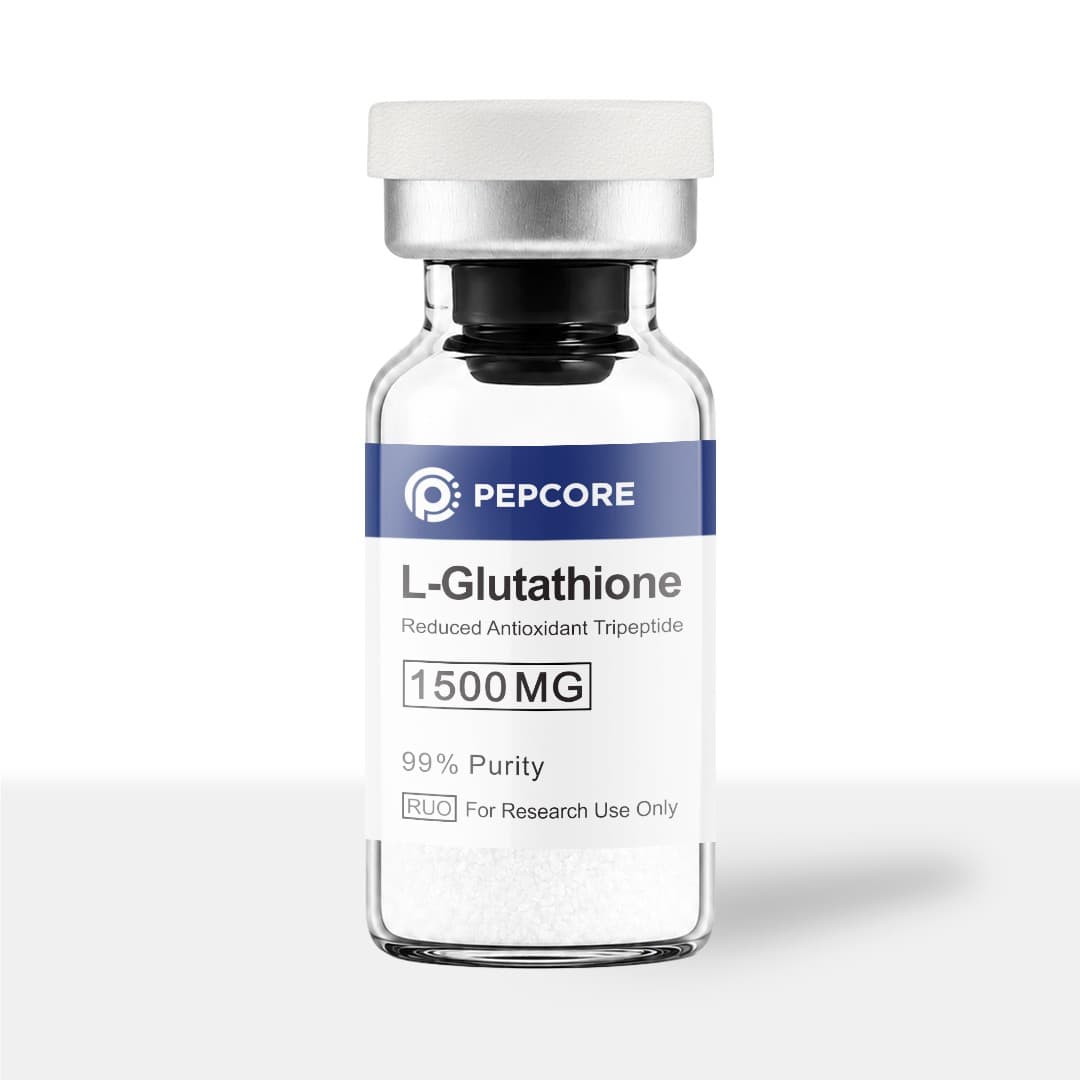
Glutathione
In Stock
Amount (mg)
Bacteriostatic Water
Insulin Syringes
Alcohol Swabs
Quantity
1
Price€84.00
Fast delivery, dispatched same day before 14:00
Tracked delivery, door to door
Shipped discreetly
Secure payments



Order before 14:00 for same-day shipping
Order now, ships today
OrderedToday
ShippedToday
Delivered24-25 November
Glutathione (GSH) is a small tripeptide built from three amino acids, glutamic acid, cysteine, and glycine, joined by an unusual gamma-glutamyl bond. It is best known in research for its role in the cell's redox balance and detox chemistry, and the reactive sulfur group on its cysteine is what makes it stand out.
It also sits on a deep research base, with work exploring how it cycles between oxidized and reduced forms to manage reactive oxygen species (Forman et al., 2009, Molecular Aspects of Medicine). That long history is why it turns up so often as a reference thiol in this kind of study.
Research Applications
•Cellular redox-balance research
•Detoxification chemistry studies
•Oxidative-stress and free-radical models
•Thiol-dependent enzyme research
Supplied as a lyophilized powder for stability.
Scientific Background
Glutathione was first isolated in the late 19th century and structurally characterized in the early 20th century. It was later recognized as one of the most abundant low-molecular-weight thiols in mammalian cells, with cytosolic concentrations typically in the millimolar range. Its unique gamma-glutamyl peptide bond renders it resistant to most peptidases, supporting its stability as an intracellular reservoir of reduced thiol.
Subsequent research established glutathione as a central component of cellular antioxidant defense, electrophile conjugation, and thiol-disulfide exchange chemistry. Its free cysteine sulfhydryl enables reversible redox cycling between the reduced form (GSH) and the oxidized disulfide form (GSSG), allowing cells to buffer oxidative challenges and maintain functional stability under stress.
This broad involvement in fundamental biochemical processes has positioned glutathione as a widely used reference compound in oxidative stress research, hepatic detoxification studies, neurobiology, and laboratory investigations of cellular aging and metabolic stability.
Structure
Peptide ClassNaturally occurring tripeptide (reduced form)
Amino Acid Sequenceγ-Glu-Cys-Gly
Molecular FormulaC₁₀H₁₇N₃O₆S
Molecular Weight~307.3 g/mol
CAS Number70-18-8
PubChem CID124886
SynonymsL-Glutathione, Reduced Glutathione, GSH
Mechanism of Action
Direct Reactive Oxygen Species Neutralization
The free thiol group on the cysteine residue of glutathione donates electrons to reactive oxygen species, neutralizing hydrogen peroxide, lipid peroxides, and other oxidant species. This reaction is catalyzed by glutathione peroxidases and produces oxidized glutathione (GSSG), which is recycled back to the reduced form by glutathione reductase using NADPH.
Xenobiotic Conjugation and Detoxification
Glutathione serves as a primary substrate for glutathione S-transferases, which catalyze conjugation of reactive electrophiles to GSH. The resulting glutathione conjugates are processed through the mercapturic acid pathway and eliminated, supporting detoxification of endogenous and exogenous electrophilic compounds.
Thiol-Disulfide Exchange and Protein Regulation
Glutathione participates in reversible glutathionylation of protein cysteine residues, modulating the activity of redox-sensitive enzymes, transcription factors, and signaling proteins. This thiol-disulfide chemistry contributes to redox-mediated regulation of cellular metabolism and stress response pathways.
Support of Cellular and Mitochondrial Integrity
Glutathione maintains a dedicated mitochondrial pool that protects respiratory chain components and matrix enzymes from oxidative damage. By preserving mitochondrial redox status, GSH supports energy metabolism, calcium handling, and apoptotic signaling control in metabolically active tissues.
Conclusion
Glutathione is a foundational tripeptide that functions as a master regulator of intracellular redox balance, electrophile detoxification, and thiol-dependent enzymatic chemistry. Through its free cysteine sulfhydryl, GSH integrates direct oxidant scavenging with regulation of redox-sensitive signaling, making it a central reference compound in oxidative stress research, hepatic metabolism studies, immune-pathway research, and longevity research models. Its broad involvement in fundamental biochemistry positions glutathione as one of the most extensively investigated peptide compounds in cellular biology.
References
•Forman HJ et al. (2009). Glutathione: overview of its protective roles, measurement, and biosynthesis. Molecular Aspects of Medicine. PubMed
•Rom O et al. (2022). Induction of glutathione biosynthesis by glycine-based treatment mitigates atherosclerosis. Redox Biology. PubMed
•Matuz-Mares D et al. (2021). Glutathione Participation in the Prevention of Cardiovascular Diseases. Antioxidants. PubMed
•Abnousian A et al. (2023). Glutathione Modulates Efficacious Changes in the Immune Response against Tuberculosis. Biomedicines. PubMed
•Wang HL et al. (2021). Potential use of glutathione as a treatment for Parkinson's disease. Experimental and Therapeutic Medicine. PubMed
Research Use Disclaimer
This product is intended for research and laboratory use only. It is designed exclusively for in vitro research purposes. All information provided is for educational and research reference only. This product is not intended for human or animal use. It is not a drug, food, or cosmetic and must not be marketed, labeled, or used as such. Use and handling are restricted to trained and qualified professionals.
What is Glutathione?
Glutathione (GSH) is a small tripeptide built from three amino acids, glutamic acid, cysteine, and glycine, joined by an unusual gamma-glutamyl bond. It is supplied as a lyophilized powder for laboratory research use only.
What is Glutathione used for in research?
In research, Glutathione is studied in areas such as: Cellular redox-balance research, Detoxification chemistry studies and Oxidative-stress and free-radical models. Related compounds in our Recovery & Repair range include TB-500 and BPC-157.
Where can I buy Glutathione?
Glutathione is available from Pepcore, shipped from the Netherlands to every European country with tracking. A certificate of analysis is available on request.
How is Glutathione reconstituted?
With bacteriostatic water, added slowly down the inside of the glass rather than onto the powder, then swirled gently, never shaken. Bacteriostatic water is optional when you order: you can add a 3 ml vial (+€4.99) or a 10 ml vial (+€12.99), or leave it out. Use our peptide calculator to work out the concentration for your vial size.
How is Glutathione stored, and how long does shipping take?
Lyophilized Glutathione is kept cool, dry and away from light. Once reconstituted, the solution is refrigerated at 2 to 8 °C, see our peptide stability guide. Orders leave the Netherlands the same or next business day: 1 to 2 business days to the Netherlands and Belgium, 2 to 7 to Germany, France, Spain, Italy and Luxembourg, 3 to 8 to the rest of the EU, free from €250, see shipping.
Amount (mg)600 mg, 1500 mg
Bacteriostatic Water3 ml or 10 ml, optional
Insulin Syringes10× 1 ml insulin syringes, 10× 0.5 ml insulin syringes, None
Alcohol SwabsYes, No
TestingThird-party HPLC/MS
CAS70-18-8
Netherlands & Belgium: 1-2 business days, €8.49-€12.99
Germany: 2-7 business days, €12.99
France, Spain, Italy & Luxembourg: 2-7 business days, €14.90
Rest of the EU: 3-8 business days, €14.90
Poland: 3-8 business days, €15.99
Sweden: 3-8 business days, €15.99
Switzerland, Norway, United Kingdom & other European countries outside the EU: 5-10 business days, €15.99
Canary Islands: 7-12 business days, €24.99
Free shipping on orders from €250
For laboratory and research use only.
Not for human or veterinary use, diagnosis, or treatment.
To be handled only by qualified personnel in a controlled lab setting.
By placing an order, you confirm you have read and agree to these research-use terms.


€84.00