Recovery & Repair
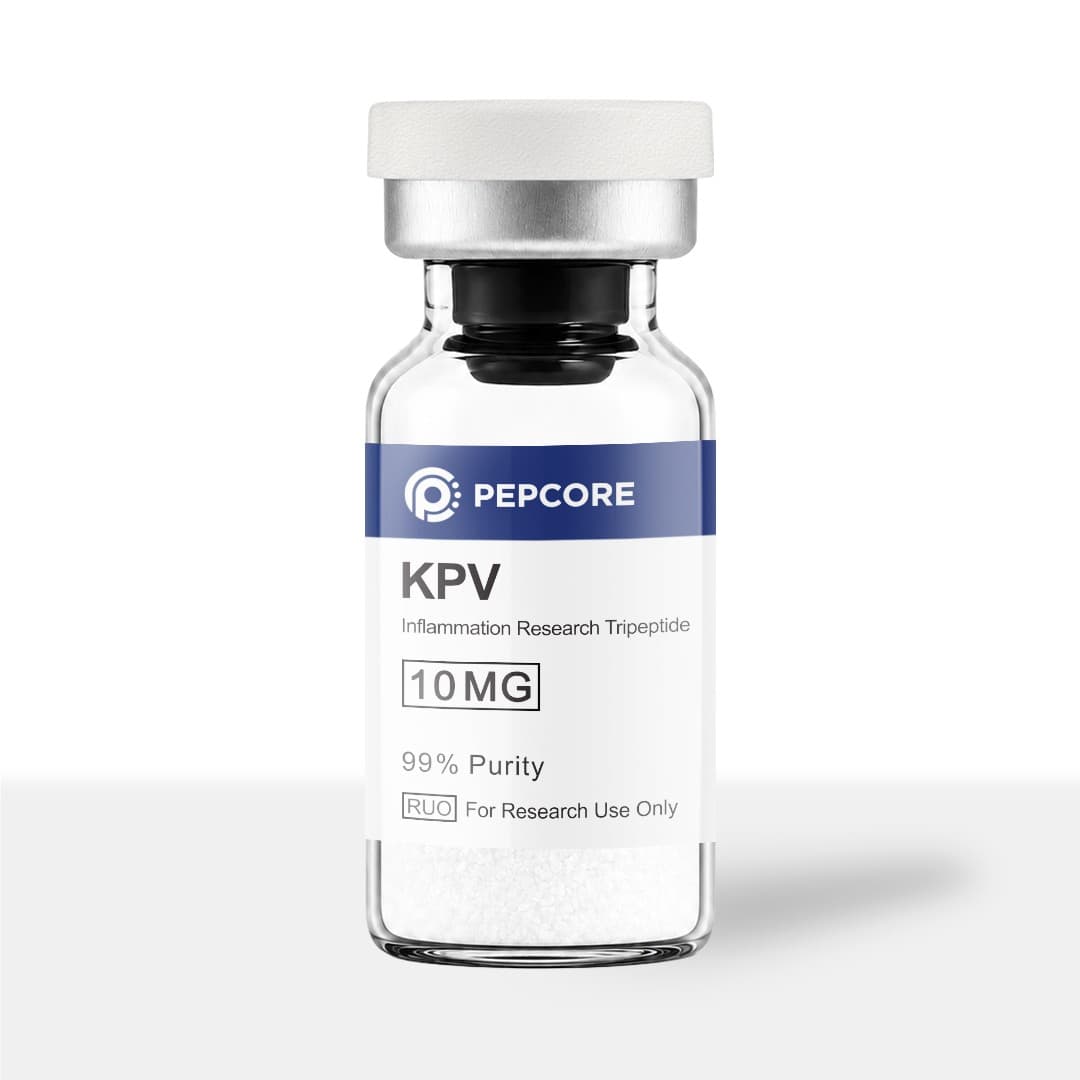
KPV
In Stock
Amount (mg)
Bacteriostatic Water
Insulin Syringes
Alcohol Swabs
Quantity
1
Price€59.00
Fast delivery, dispatched same day before 14:00
Tracked delivery, door to door
Shipped discreetly
Secure payments



Order before 14:00 for same-day shipping
Order now, ships today
OrderedToday
ShippedToday
Delivered24-25 November
KPV is a small tripeptide built from three amino acids: lysine, proline, and valine. It is best known in research for its links to inflammation and immune-pathway studies, and what makes it distinctive is that it comes from the tail end of a larger natural peptide called alpha-MSH.
It also has a solid research footing, with work exploring how it behaves in inflammatory and gut-related models (Kannengiesser et al., 2008). That background is part of why it draws steady interest as a study peptide.
Research Applications
•Inflammation-pathway research models
•Immune-signaling studies
•Melanocortin-derived peptide research
•Gut and tissue-response models
Supplied as a lyophilized powder for stability.
Scientific Background
Melanocortin peptides have long been studied for their role in pigmentation, inflammatory signaling, and immune regulation. Alpha-melanocyte-stimulating hormone (α-MSH) is the most extensively investigated member of this family and is known for potent inflammatory-pathway modulation. During the late 1990s, structure-activity research identified the C-terminal tripeptide of α-MSH, Lys-Pro-Val, as a minimal sequence that retains much of the anti-inflammatory profile of the parent hormone.
Subsequent research demonstrated that KPV exerts its activity through a melanocortin-receptor-independent mechanism. Cellular uptake studies suggested that KPV can enter epithelial and immune cells, where it appears to interfere with intracellular inflammatory signaling rather than binding extracellular receptors. This distinct mode of action has positioned KPV as a research compound of interest for investigators exploring targeted, receptor-independent inflammatory-pathway regulation.
Today, KPV is a standard research tool for studying mucosal inflammation, epithelial barrier biology, and the broader concept of small-peptide-mediated transcriptional control. Its compact size, oral and topical research-format compatibility, and clearly defined structure make it a frequent reference compound in laboratory work on inflammatory bowel research, skin biology, and immune-cell signaling.
Structure
Peptide ClassTripeptide derived from α-MSH (melanocortin C-terminal fragment)
Amino Acid SequenceLys-Pro-Val (KPV)
Molecular FormulaC₁₆H₃₀N₄O₄
Molecular Weight~342.4 g/mol
CAS NumberN/A
Mechanism of Action
NF-κB Pathway Modulation
KPV is studied as an intracellular modulator of the NF-κB inflammatory signaling cascade. Research models suggest that the tripeptide can enter cells via peptide-transporter systems such as PEPT1, accumulate in the cytoplasm, and reduce nuclear translocation of NF-κB. This in turn lowers transcription of pro-inflammatory cytokines including TNF-α, IL-1β, and IL-6 in epithelial and immune-cell models.
Receptor-Independent Anti-Inflammatory Activity
Unlike the parent α-MSH peptide, KPV is reported to act through a melanocortin-receptor-independent mechanism. Investigations indicate that its inflammatory-pathway effects persist in research systems lacking classical melanocortin receptors, supporting a model in which KPV interacts with intracellular targets rather than cell-surface receptors.
Epithelial Barrier and Mucosal Research
KPV is examined for its influence on intestinal epithelial integrity in research models of mucosal inflammation. Studies suggest reduced permeability markers, preserved tight-junction protein expression, and lower neutrophil infiltration in colitis-type research designs, supporting its use as a tool compound in gut-barrier biology.
Mast Cell and Immune-Cell Signaling
Experimental research has investigated KPV in relation to mast-cell degranulation, eosinophil recruitment, and macrophage cytokine output. These findings support broader interest in the peptide as a research compound for studying allergic-type, skin-inflammatory, and oral-mucosal research models.
Conclusion
KPV is a melanocortin-derived tripeptide investigated as a receptor-independent modulator of intracellular inflammatory signaling. By reducing NF-κB-driven cytokine expression and supporting epithelial barrier integrity in research models, it serves as a valuable research compound in laboratory studies of mucosal inflammation, gut biology, and small-peptide anti-inflammatory mechanisms.
References
•Kannengiesser K et al. (2008). Melanocortin-derived tripeptide KPV has anti-inflammatory potential in murine models of inflammatory bowel disease. Inflammatory Bowel Diseases. PubMed
•Dalmasso G et al. (2008). PepT1-mediated tripeptide KPV uptake reduces intestinal inflammation. Gastroenterology. PubMed
•Bettenworth D et al. (2011). The tripeptide KdPT protects from intestinal inflammation and maintains intestinal barrier function. The American Journal of Pathology. PubMed
•Lasaga M et al. (2008). Role of alpha-melanocyte stimulating hormone and melanocortin 4 receptor in brain inflammation. Peptides. PubMed
•Brzoska T et al. (2008). Alpha-melanocyte-stimulating hormone and related tripeptides: biochemistry, antiinflammatory and protective effects in vitro and in vivo, and future perspectives for the treatment of immune-mediated inflammatory diseases. Endocrine Reviews. PubMed
•Mandrika I et al. (2001). Effects of melanocortin peptides on lipopolysaccharide/interferon-gamma-induced NF-kappaB DNA binding and nitric oxide production in macrophage-like RAW 264.7 cells: evidence for dual mechanisms of action. Biochemical Pharmacology. PubMed
Research Use Disclaimer
This product is intended for research and laboratory use only. It is designed exclusively for in vitro research purposes. All information provided is for educational and research reference only. This product is not intended for human or animal use. It is not a drug, food, or cosmetic and must not be marketed, labeled, or used as such. Use and handling are restricted to trained and qualified professionals.
What is KPV?
KPV is a small tripeptide built from three amino acids: lysine, proline, and valine. It is supplied as a lyophilized powder for laboratory research use only.
What is KPV used for in research?
In research, KPV is studied in areas such as: Inflammation-pathway research models, Immune-signaling studies and Melanocortin-derived peptide research. Related compounds in our Recovery & Repair range include TB-500 and Glutathione.
Where can I buy KPV?
KPV is available from Pepcore, shipped from the Netherlands to every European country with tracking. A certificate of analysis is available on request.
How is KPV reconstituted?
With bacteriostatic water, added slowly down the inside of the glass rather than onto the powder, then swirled gently, never shaken. Bacteriostatic water is optional when you order: you can add a 3 ml vial (+€4.99) or a 10 ml vial (+€12.99), or leave it out. Use our peptide calculator to work out the concentration for your vial size.
How is KPV stored, and how long does shipping take?
Lyophilized KPV is kept cool, dry and away from light. Once reconstituted, the solution is refrigerated at 2 to 8 °C, see our peptide stability guide. Orders leave the Netherlands the same or next business day: 1 to 2 business days to the Netherlands and Belgium, 2 to 7 to Germany, France, Spain, Italy and Luxembourg, 3 to 8 to the rest of the EU, free from €250, see shipping.
Amount (mg)10 mg, 30 mg
Bacteriostatic Water3 ml or 10 ml, optional
Insulin Syringes10× 1 ml insulin syringes, 10× 0.5 ml insulin syringes, None
Alcohol SwabsYes, No
TestingThird-party HPLC/MS
CASN/A
Netherlands & Belgium: 1-2 business days, €8.49-€12.99
Germany: 2-7 business days, €12.99
France, Spain, Italy & Luxembourg: 2-7 business days, €14.90
Rest of the EU: 3-8 business days, €14.90
Poland: 3-8 business days, €15.99
Sweden: 3-8 business days, €15.99
Switzerland, Norway, United Kingdom & other European countries outside the EU: 5-10 business days, €15.99
Canary Islands: 7-12 business days, €24.99
Free shipping on orders from €250
For laboratory and research use only.
Not for human or veterinary use, diagnosis, or treatment.
To be handled only by qualified personnel in a controlled lab setting.
By placing an order, you confirm you have read and agree to these research-use terms.


€59.00