Fast delivery, dispatched same day before 14:00
Tracked delivery, door to door
Shipped discreetly
Secure payments



Order before 14:00 for same-day shipping
Order now, ships today
OrderedToday
ShippedToday
Delivered24-25 November
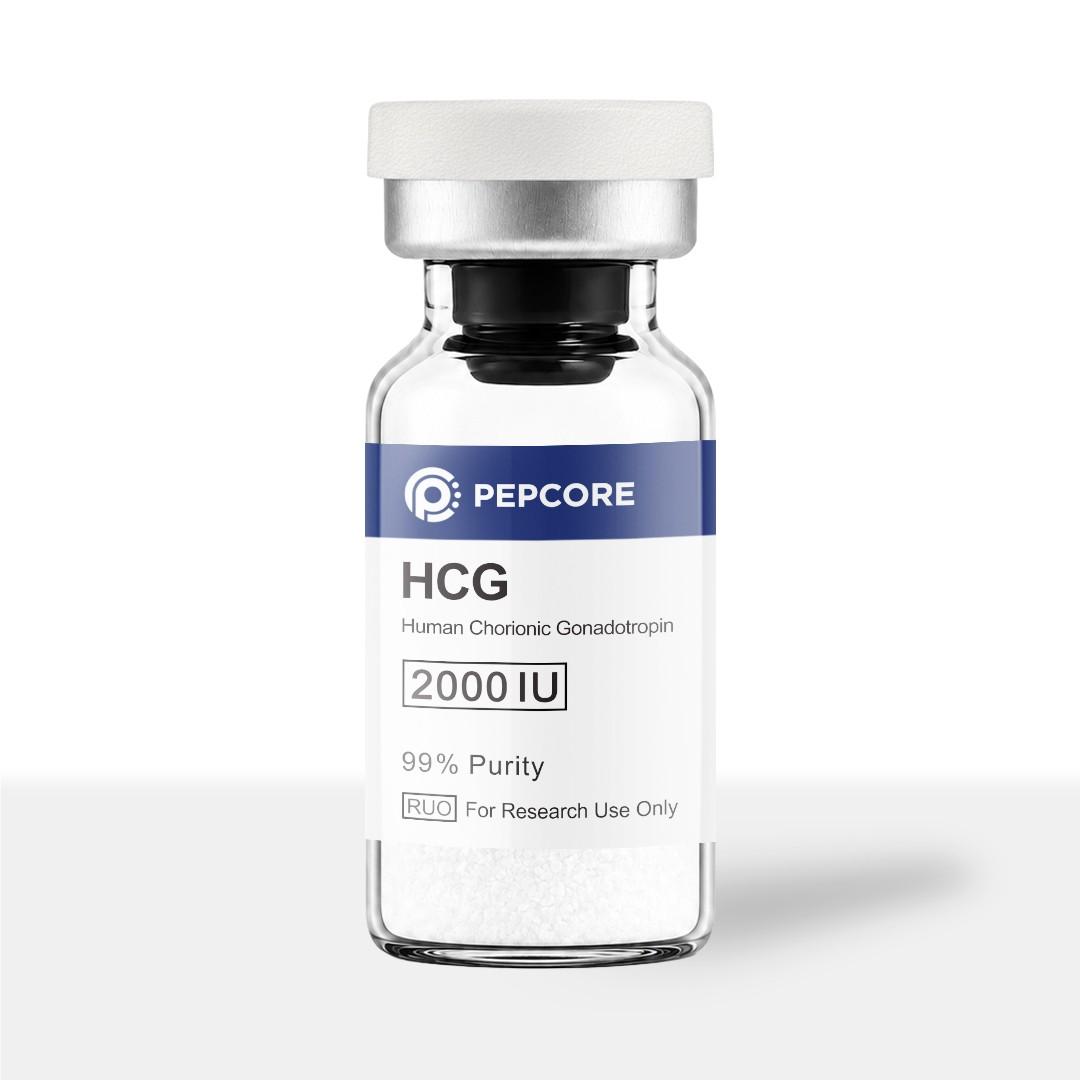
HCG is a glycoprotein research compound built from two linked subunits, a shared alpha part and a unique beta part that gives it its identity. It is best known in research for its role as a tool for studying LH/CG receptor signaling, and its two-piece structure is what sets it apart.
It also has a solid research base, with work looking at how it binds and activates its target receptor (Casarini et al., 2018, Endocrine Reviews). That is why it often turns up as a reference compound in this kind of receptor work.
Research Applications
•LH/CG receptor signaling studies
•Ligand-binding and pharmacology research
•Reproductive-axis investigation models
•Gonadotropin-receptor reference work
Supplied as a lyophilized powder for stability.
Scientific Background
Human chorionic gonadotropin is a heterodimeric glycoprotein hormone research compound originally characterized as a placental glycoprotein produced during early gestation in research models. Structurally it consists of a 92-residue α-subunit (shared with LH, FSH, and TSH) and a 145-residue β-subunit that confers hormone identity. The two subunits are non-covalently associated and decorated with multiple N- and O-linked carbohydrate side chains that contribute to the overall mass of approximately 37 kDa.
Historically, hCG preparations were obtained from biological sources such as urine of pregnant individuals, while recombinant expression in mammalian cell lines has enabled more standardized material for mechanistic research, assay development, and structure-function studies. The carbohydrate composition of hCG, including sialic acid content and glycoform diversity, has long been a research focus because glycosylation strongly influences receptor activation efficiency, plasma residency in laboratory species, and signaling output even when receptor-binding affinity is largely preserved.
This positioning at the intersection of glycoprotein hormone biochemistry, LH/CG-receptor signaling research, and reproductive-axis investigation has made hCG a widely used reference compound in receptor pharmacology research models. Comparative studies of hCG, LH, and engineered glycoform variants support laboratory research on gonadotropin-pathway research, ligand-receptor specificity, and signaling-bias research at the LHCGR.
Structure
Peptide ClassHeterodimeric glycoprotein hormone research compound
Subunit Compositionα-subunit (92 residues, common to LH/FSH/TSH) + β-subunit (145 residues, hormone-specific)
Molecular Weight~37 kDa (glycosylated heterodimer)
GlycosylationMultiple N-linked and O-linked carbohydrate side chains
CAS Number9002-61-3
Source NotesUrinary preparation or recombinant expression in mammalian cell lines
Mechanism of Action
LHCGR Engagement
HCG binds the luteinizing hormone / chorionic gonadotropin receptor (LHCGR), a class A G-protein-coupled receptor expressed across reproductive-axis tissues in research models. Receptor engagement stabilizes an active conformation that couples primarily to Gαs and modulates intracellular cyclic AMP, the canonical second messenger downstream of LHCGR in gonadotropin-receptor signaling research.
Cyclic AMP / PKA Signaling
Upon receptor activation, hCG modulates adenylyl cyclase and downstream protein kinase A signaling in research models. These cascades are studied in laboratory research as regulators of gene expression in reproductive-axis cell models, including transcription of genes involved in steroid-pathway research markers and reproductive-tissue cellular differentiation responses.
Glycosylation and Signaling Output
A major focus of LH/CG-receptor signaling research is how carbohydrate residues on hCG influence receptor activation efficiency and downstream signaling output. Comparative research with recombinant glycoform variants has shown that altering glycosylation can reduce signaling output even when receptor binding remains relatively preserved, highlighting glycan importance for signal transduction in research models.
Comparative Signaling versus LH
Because hCG and LH engage the same LHCGR but display distinct intracellular signaling profiles, hCG is widely used as a reference ligand for studying signaling-bias research at gonadotropin receptors. Laboratory research has characterized differences in cyclic AMP accumulation, β-arrestin recruitment, and receptor internalization kinetics between hCG and LH in research models (Casarini et al., 2018, Endocrine Reviews).
Conclusion
HCG is a heterodimeric glycoprotein hormone research compound widely used as a reference ligand in LH/CG-receptor signaling research and gonadotropin-pathway research models. By combining a well-characterized α/β heterodimer architecture with extensively studied glycosylation profiles, hCG supports laboratory research on glycoprotein hormone biochemistry, LHCGR receptor pharmacology, and reproductive-axis investigation in research models.
References
•Cole LA (2010). Biological functions of hCG and hCG-related molecules. Reproductive Biology and Endocrinology. PubMed
•Casarini L et al. (2018). Two Hormones for One Receptor: Evolution, Biochemistry, Actions, and Pathophysiology of LH and hCG. Endocrine Reviews. PubMed
•Nwabuobi C et al. (2017). hCG: Biological Functions and Clinical Applications. International Journal of Molecular Sciences. PubMed
•Moyle WR et al. (1975). Role of carbohydrate of human chorionic gonadotropin in the mechanism of hormone action. The Journal of Biological Chemistry. PubMed
•Riccetti L et al. (2017). Human Luteinizing Hormone and Chorionic Gonadotropin Display Biased Agonism at the LH and LH/CG Receptors. Scientific Reports. PubMed
•Choi J, Smitz J (2014). Luteinizing hormone and human chorionic gonadotropin: distinguishing unique physiologic roles. Gynecological Endocrinology. PubMed
Research Use Disclaimer
This product is intended for research and laboratory use only. It is designed exclusively for in vitro research purposes. All information provided is for educational and research reference only. This product is not intended for human or animal use. It is not a drug, food, or cosmetic and must not be marketed, labeled, or used as such. Use and handling are restricted to trained and qualified professionals.
What is HCG?
HCG is a glycoprotein research compound built from two linked subunits, a shared alpha part and a unique beta part that gives it its identity. It is supplied as a lyophilized powder for laboratory research use only.
What is HCG used for in research?
In research, HCG is studied in areas such as: LH/CG receptor signaling studies, Ligand-binding and pharmacology research and Reproductive-axis investigation models. Related compounds in our Muscle Growth range include Tesamorelin and Sermorelin.
Where can I buy HCG?
HCG is available from Pepcore, shipped from the Netherlands to every European country with tracking. A certificate of analysis is available on request.
How is HCG reconstituted?
With bacteriostatic water, added slowly down the inside of the glass rather than onto the powder, then swirled gently, never shaken. Bacteriostatic water is optional when you order: you can add a 3 ml vial (+€4.99) or a 10 ml vial (+€12.99), or leave it out. Use our peptide calculator to work out the concentration for your vial size.
How is HCG stored, and how long does shipping take?
Lyophilized HCG is kept cool, dry and away from light. Once reconstituted, the solution is refrigerated at 2 to 8 °C, see our peptide stability guide. Orders leave the Netherlands the same or next business day: 1 to 2 business days to the Netherlands and Belgium, 2 to 7 to Germany, France, Spain, Italy and Luxembourg, 3 to 8 to the rest of the EU, free from €250, see shipping.
Size1000 IU, 2000 IU, 5000 IU
Bacteriostatic Water3 ml or 10 ml, optional
Insulin Syringes10× 1 ml insulin syringes, 10× 0.5 ml insulin syringes, None
Alcohol SwabsYes, No
TestingThird-party HPLC/MS
CAS9002-61-3
Netherlands & Belgium: 1-2 business days, €8.49-€12.99
Germany: 2-7 business days, €12.99
France, Spain, Italy & Luxembourg: 2-7 business days, €14.90
Rest of the EU: 3-8 business days, €14.90
Poland: 3-8 business days, €15.99
Sweden: 3-8 business days, €15.99
Switzerland, Norway, United Kingdom & other European countries outside the EU: 5-10 business days, €15.99
Canary Islands: 7-12 business days, €24.99
Free shipping on orders from €250
For laboratory and research use only.
Not for human or veterinary use, diagnosis, or treatment.
To be handled only by qualified personnel in a controlled lab setting.
By placing an order, you confirm you have read and agree to these research-use terms.
AI recommendations
Often bought together


€69.00