HomeShopGrowth Hormone PeptidesTesamorelin 20 mg
Tesamorelin 20 mg 20 mg - Research Peptide | Pepcore

Tesamorelin 20 mg

119.00
Out of Stock
Size
1

For in-vitro laboratory research use only. Not intended for human consumption, veterinary, diagnostic, or clinical use.

Same-day dispatch
Same-day dispatch
Order before 12:00 CET
≥99% HPLC Purity
≥99% HPLC Purity
Third-party batch verified
COA Included
COA Included
Lab report with every order
Secure shipping
Secure shipping
Professional packaging
Secure Payments
SEPA
Order before 12:00 for same-day shipping
Order now, ships today
OrderedToday
ShippedToday
Delivered4 Jun8 Jun
Product Specifications
Format
Lyophilized powder
Strength
20 mg
Purity
99%
Testing
Third-party HPLC/MS
CAS
218949-48-5
Intended use
Research only

Description

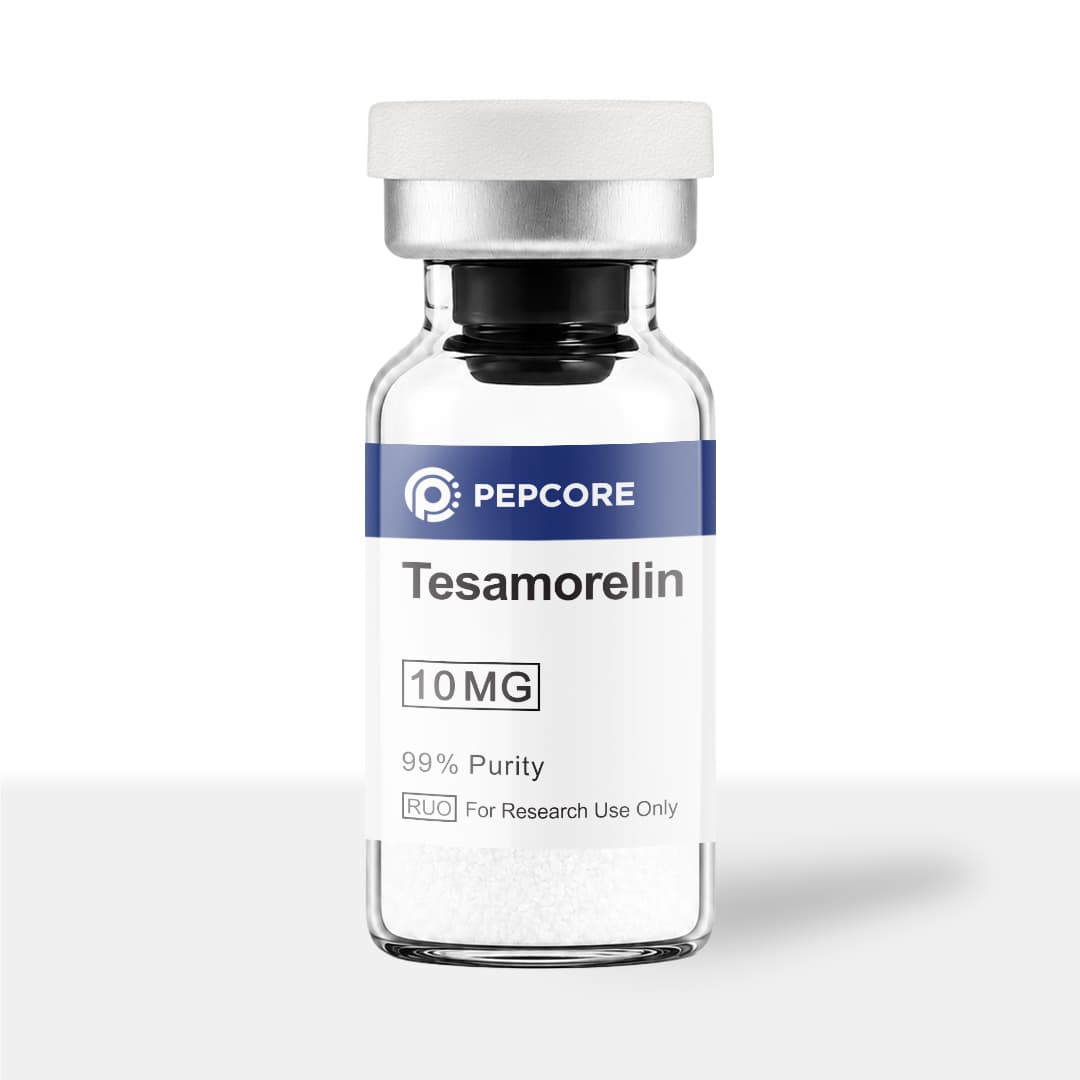
This 20 mg vial of Tesamorelin is supplied as a higher-content format for longer-protocol research applications. Tesamorelin is a synthetic 44-residue research peptide engineered as a stabilized analog of human growth hormone–releasing hormone (GHRH(1-44)). It carries a trans-3-hexenoyl moiety on the N-terminal tyrosine, a modification that confers resistance to dipeptidyl peptidase-IV cleavage and extends plasma residency in laboratory species. It is supplied as an investigational laboratory peptide for use in GHRH-receptor signaling research, somatotropic-axis research, and structure–activity studies on stabilized GHRH analogs.

Laboratory research studies have positioned tesamorelin as a reference compound for examining how N-terminally modified GHRH analogs engage the GHRH receptor on pituitary somatotroph cells. Research models have investigated its receptor binding kinetics, enzymatic stability profile, and downstream pulsatile growth hormone responses, providing comparative data versus native GHRH(1-44) and other secretagogue research peptides (Ferdinandi et al., 2007, Basic & Clinical Pharmacology & Toxicology).

Beyond receptor pharmacology, tesamorelin is investigated in cellular and animal research models that explore somatotropic-axis signal transduction, pituitary research, hepatic lipid-metabolism research, and downstream IGF-1 pathway dynamics. The molecule's trans-3-hexenoyl modification, which enables resistance to enzymatic deactivation and supports extended plasma residency in research models, is also a frequent subject of pharmacokinetics and structural-stability research.

The peptide is supplied as a lyophilized powder to ensure optimal stability during storage and handling.

Related products

Related Research

Articles you might find useful

View all articles
119.00