Bioregulators
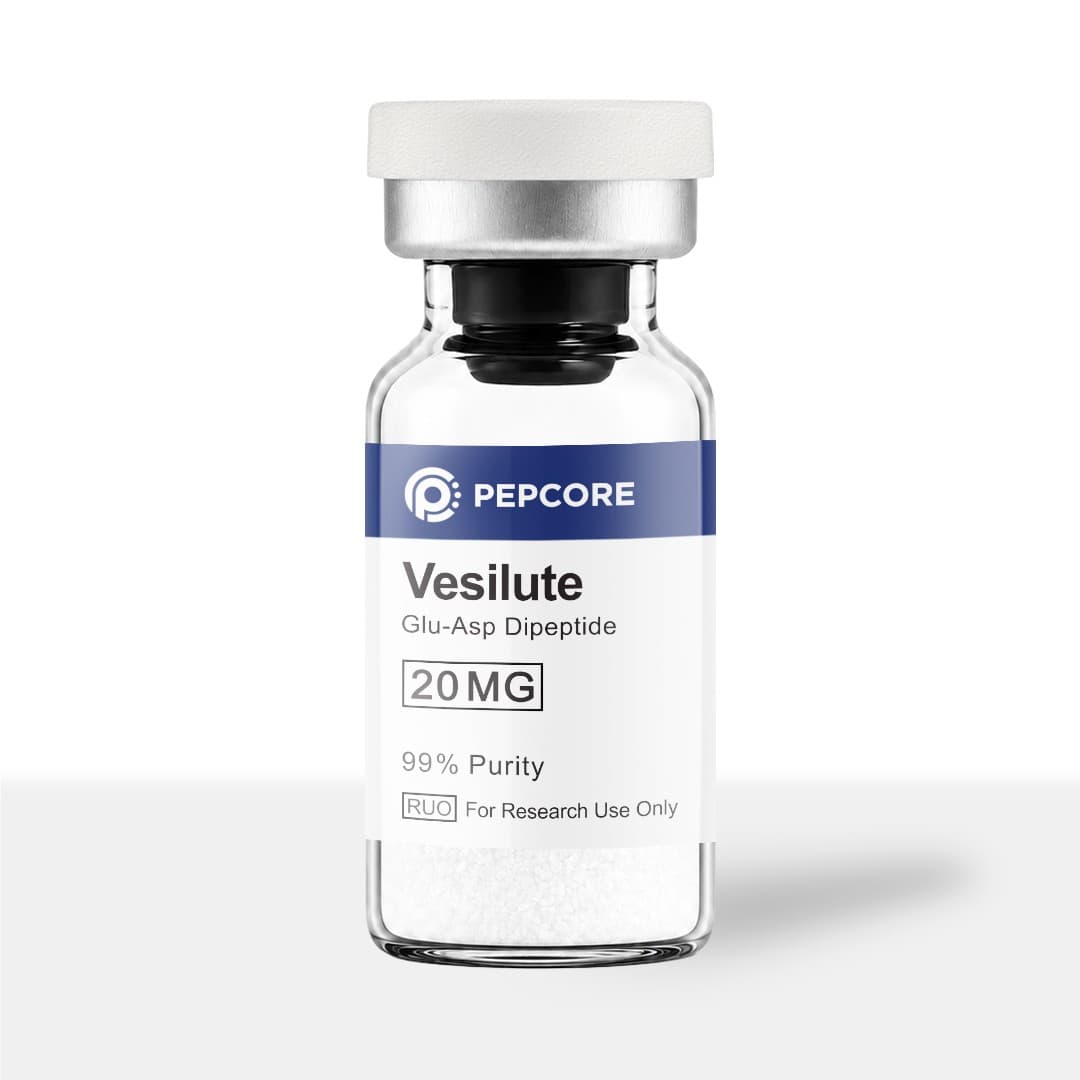
Vesilute 20 mg
In Stock
Amount (mg)
Bacteriostatic Water
Insulin Syringes
Alcohol Swabs
Quantity
1
Price€79.00
Fast delivery, dispatched same day before 14:00
Tracked delivery, door to door
Shipped discreetly
Secure payments



Order before 14:00 for same-day shipping
Order now, ships today
OrderedToday
ShippedToday
Delivered24-25 November
Vesilute is a short peptide bioregulator, a small chain of amino acids from the Khavinson family of low-molecular-weight peptides. It is best known for its research focus on bladder and urinary tract tissue, and its tissue-specific targeting is what sets it apart.
It also sits within a well-studied group of short peptides, with work exploring how these molecules may guide gene activity inside specific tissues (Khavinson and Anisimov, 2009, Advances in Gerontology). That background is why it appears often in this line of laboratory study.
Research Applications
•Bladder and urinary tract research
•Tissue-specific peptide studies
•Gene-activity and transcription research
•Khavinson short-peptide bioregulator models
Supplied as a lyophilized powder for stability.
Scientific Background
The short-peptide bioregulator framework was developed at the Saint Petersburg Institute of Bioregulation and Gerontology under Vladimir Khavinson and colleagues. Beginning in the 1970s, this research program characterized tissue extracts from various organs and progressively isolated short peptide fragments that appeared to influence gene-expression patterns within their tissue of origin. Vesilute belongs to this lineage of tissue-derived short peptides, with a research focus on urinary tract and bladder biology.
Research on Khavinson-school bioregulators expanded throughout the 1990s and 2000s, with multiple publications proposing that di-, tri-, and tetra-peptide sequences can interact with DNA promoter regions in a sequence-selective manner. This model positions short peptide bioregulators as research tools for studying tissue-specific transcriptional programs in cell-culture and animal-model systems. Vesilute is referenced in this context as a urinary-system-directed compound.
Vesilute occupies a defined position within the Pepcore bioregulator catalog as a research tool for urinary epithelial and bladder-tissue investigations. It is typically studied in parallel with other organ-directed bioregulators in cell-culture and gene-expression research workflows, supporting comparative analysis across the bioregulator family.
Structure
Peptide ClassKhavinson-school short peptide bioregulator (urinary tract directed)
Amino Acid SequenceSequence available on request
Molecular FormulaC₉H₁₄N₂O₇
Molecular Weight~262.2 g/mol
CAS NumberN/A
Mechanism of Action
Sequence-Selective DNA Interaction
Vesilute is studied within the Khavinson-school framework that proposes short peptide bioregulators interact directly with DNA in a sequence-selective manner. In this research model, short peptides are examined for their ability to bind specific regions within promoter sequences and influence transcriptional initiation in cultured cell systems and tissue-extract preparations.
Tissue-Specific Gene Expression Modulation
In urinary epithelial research models, Vesilute is investigated for its influence on gene-expression patterns associated with epithelial cell turnover, barrier-function biology, and stress-response signaling. Research designs typically use cultured bladder or urothelial cell lines to characterize expression changes under controlled laboratory conditions.
Cellular Renewal and Differentiation Research
Vesilute is examined for its influence on proliferation and differentiation markers in urinary tract research models. Investigations focus on standard biomarkers of epithelial renewal, including cytokeratin profiles, junctional proteins, and proliferation indices, providing a quantitative framework for evaluating peptide influence on tissue-renewal pathways.
Comparative Bioregulator Profiling
Within the bioregulator research family, Vesilute is studied alongside organ-directed peers such as Prostamax, Crystagen, and Cartalax. Comparative profiling examines the specificity of each peptide for its proposed target tissue, contributing to the broader research framework that supports the tissue-specificity hypothesis of short peptide bioregulators.
Conclusion
Vesilute is a short peptide bioregulator positioned within the Khavinson-school tradition of tissue-directed peptide research. It is studied for its proposed influence on urinary epithelial gene expression and tissue-renewal research models. Continued comparative work across the bioregulator family supports its use as a research tool in laboratories investigating tissue-specific transcriptional biology.
References
•Khavinson VKh, Anisimov VN (2009). [35-year experience in research of peptide regulation of aging]. Advances in Gerontology. PubMed
•Khavinson VKh et al. (2016). Short Peptides and Telomere Length Regulator Hormone Irisin. Bulletin of Experimental Biology and Medicine. PubMed
•Anisimov VN, Khavinson VKh (2010). Peptide bioregulation of aging: results and prospects. Biogerontology. PubMed
•Korkushko OV et al. (2011). Peptide geroprotector from the pituitary gland inhibits rapid aging of elderly people: results of 15-year follow-up. Bulletin of Experimental Biology and Medicine. PubMed
Research Use Disclaimer
This product is intended for research and laboratory use only. It is designed exclusively for in vitro research purposes. All information provided is for educational and research reference only. This product is not intended for human or animal use. It is not a drug, food, or cosmetic and must not be marketed, labeled, or used as such. Use and handling are restricted to trained and qualified professionals.
What is Vesilute?
Vesilute is a short peptide bioregulator, a small chain of amino acids from the Khavinson family of low-molecular-weight peptides. It is supplied as a lyophilized powder for laboratory research use only.
What is Vesilute used for in research?
In research, Vesilute is studied in areas such as: Bladder and urinary tract research, Tissue-specific peptide studies and Gene-activity and transcription research. Related compounds in our Bioregulators range include Thymogen and Testagen.
Where can I buy Vesilute?
Vesilute is available from Pepcore, shipped from the Netherlands to every European country with tracking. A certificate of analysis is available on request.
How is Vesilute reconstituted?
With bacteriostatic water, added slowly down the inside of the glass rather than onto the powder, then swirled gently, never shaken. Bacteriostatic water is optional when you order: you can add a 3 ml vial (+€4.99) or a 10 ml vial (+€12.99), or leave it out. Use our peptide calculator to work out the concentration for your vial size.
How is Vesilute stored, and how long does shipping take?
Lyophilized Vesilute is kept cool, dry and away from light. Once reconstituted, the solution is refrigerated at 2 to 8 °C, see our peptide stability guide. Orders leave the Netherlands the same or next business day: 1 to 2 business days to the Netherlands and Belgium, 2 to 7 to Germany, France, Spain, Italy and Luxembourg, 3 to 8 to the rest of the EU, free from €250, see shipping.
Amount (mg)20 mg
Bacteriostatic Water3 ml or 10 ml, optional
Insulin Syringes10× 1 ml insulin syringes, 10× 0.5 ml insulin syringes, None
Alcohol SwabsYes, No
TestingThird-party HPLC/MS
CASN/A
Netherlands & Belgium: 1-2 business days, €8.49-€12.99
Germany: 2-7 business days, €12.99
France, Spain, Italy & Luxembourg: 2-7 business days, €14.90
Rest of the EU: 3-8 business days, €14.90
Poland: 3-8 business days, €15.99
Sweden: 3-8 business days, €15.99
Switzerland, Norway, United Kingdom & other European countries outside the EU: 5-10 business days, €15.99
Canary Islands: 7-12 business days, €24.99
Free shipping on orders from €250
For laboratory and research use only.
Not for human or veterinary use, diagnosis, or treatment.
To be handled only by qualified personnel in a controlled lab setting.
By placing an order, you confirm you have read and agree to these research-use terms.


€79.00