Out of stock
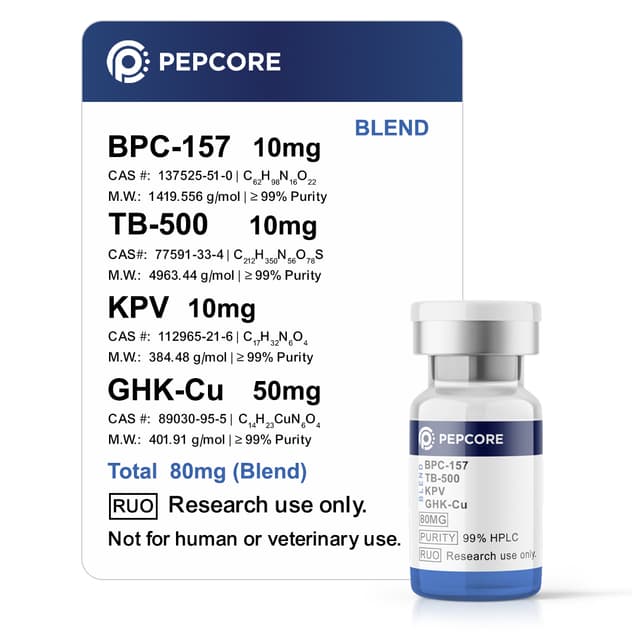
Klow 80mg (Blend)
For in-vitro laboratory research use only. Not intended for human consumption, veterinary, diagnostic, or clinical use.




Glow is a research blend combining three extensively studied research peptides: Thymosin Beta-4 (TB4), BPC 157, and GHK-Cu. Each component has been independently investigated in laboratory research models related to cytoskeletal dynamics, extracellular matrix research, angiogenesis pathway research, and cellular signaling research.
By integrating these compounds into a single research formulation, Glow is designed for multi-pathway research approaches where overlapping or complementary mechanisms can be explored within one experimental framework.
All three components are studied in research models involving inflammatory signaling pathways, oxidative balance research, and tissue resilience mechanisms (Pickart and Margolina, 2018, International Journal of Molecular Sciences).
The peptide is supplied as a lyophilized powder to ensure optimal stability during storage and handling.
This product is intended for research and laboratory use only. It is designed exclusively for in vitro research purposes. All information provided is for educational and research reference only. This product is not intended for human or animal use. It is not a drug, food, or cosmetic and must not be marketed, labeled, or used as such. Use and handling are restricted to trained and qualified professionals.
TB-500 peptide is a synthetic full-length analog of thymosin beta-4, a 43-residue actin-binding research peptide abundantly expressed across many mammalian cell types. As a synthetic reference compound, TB-500 is supplied for use in actin-binding research, cytoskeletal dynamics research models, and cellular-process research in controlled laboratory settings.
TB-500 peptide is investigated for its interaction with monomeric G-actin, a core component of the cytoskeletal dynamics research system. In laboratory research studies, the parent thymosin beta-4 sequence has been characterized as a 1:1 actin-sequestering peptide that engages G-actin and modulates the equilibrium between monomeric and filamentous actin in cellular research models (Huff et al., 2001, International Journal of Biochemistry and Cell Biology). This actin-binding profile makes TB-500 a widely used reference compound in laboratory research studies of cytoskeletal dynamics research and cellular-process research signalling.
Beyond actin-binding research, TB-500 peptide has also been investigated in laboratory research studies examining endothelial cellular-process research models, inflammatory-pathway research, and structure-activity research comparing the full-length thymosin beta-4 sequence with discrete active-site fragments such as the heptapeptide LKKTETQ ([Sosne et al., 2010, Annals of the New York Academy of Sciences](https://pubmed.ncbi.nlm.nih.gov/20179146/)). These investigations have positioned TB-500 as an experimental research compound of interest in studies of cytoskeletal dynamics research and cellular-pathway research models. See also: BPC-157, TB500 Fragment (17-23), KPV
BPC-157 is a synthetic 15-residue gastric-pentadecapeptide research compound derived from a protein originally identified in gastric extracts. Composed of the sequence Gly-Glu-Pro-Pro-Pro-Gly-Lys-Pro-Ala-Asp-Asp-Ala-Gly-Leu-Val, this gastric-extract-derived research peptide is supplied as a defined investigational laboratory peptide for use in cellular-process research, nitric oxide signalling research, and gastric-tissue research models in controlled laboratory settings.
BPC-157 has been investigated in laboratory research studies for its interaction with vascular endothelial signalling pathways and the nitric oxide system. Mechanistic research models have characterized engagement with vascular endothelial growth factor receptor-2 (VEGFR2) signalling and the Akt-eNOS axis, supporting investigations into nitric oxide signalling research and endothelial cellular-process research (Hsieh et al., 2017, Journal of Molecular Medicine; Hsieh et al., 2020, Scientific Reports).
Beyond endothelial pathway research, BPC-157 has also been investigated in laboratory research studies examining gastric-tissue research models, inflammatory-pathway research, and cellular-process research signalling. These investigations have positioned BPC-157 as an experimental research compound of interest in studies of pentadecapeptide pharmacology and integrated cellular-pathway signalling.
For a deeper review of the published literature, see our [BPC-157 research guide](/blog/bpc-157-research-guide). See also: TB-500 10 mg, KPV, GHK-Cu
GHK-Cu is a naturally occurring copper-binding tripeptide composed of glycine, histidine, and lysine. It is classified as a bioactive tripeptide-copper complex widely studied for its role in tissue remodeling and cellular signaling research.
In biological systems, GHK binds copper ions to form the bioactive GHK-Cu complex, which functions as a signaling molecule involved in maintaining tissue integrity. The peptide influences extracellular matrix remodeling by stimulating collagen synthesis and modulating matrix metalloproteinase activity. It also engages TGF-beta signaling pathways and supports endothelial-related cellular responses. At the genomic level, GHK-Cu has been shown to influence gene expression patterns associated with aging and cellular renewal.
Research interest in GHK-Cu focuses on its ability to influence extracellular matrix remodeling, stimulate collagen synthesis, modulate inflammatory signaling, and support [cellular renewal processes](/product/pinealon-20-mg). Investigations have documented its capacity to reset gene expression patterns associated with aging, activating protective and cellular-pathway genes ([Pickart & Margolina, 2018, International Journal of Molecular Sciences](https://pubmed.ncbi.nlm.nih.gov/29986520/)). Due to its broad biological activity, GHK-Cu is frequently investigated in cellular-pathway biology, skin physiology, and age-related tissue degeneration models. It remains a foundational compound in connective tissue and aging research. See also: Epitalon, Snap-8, MOTS-c
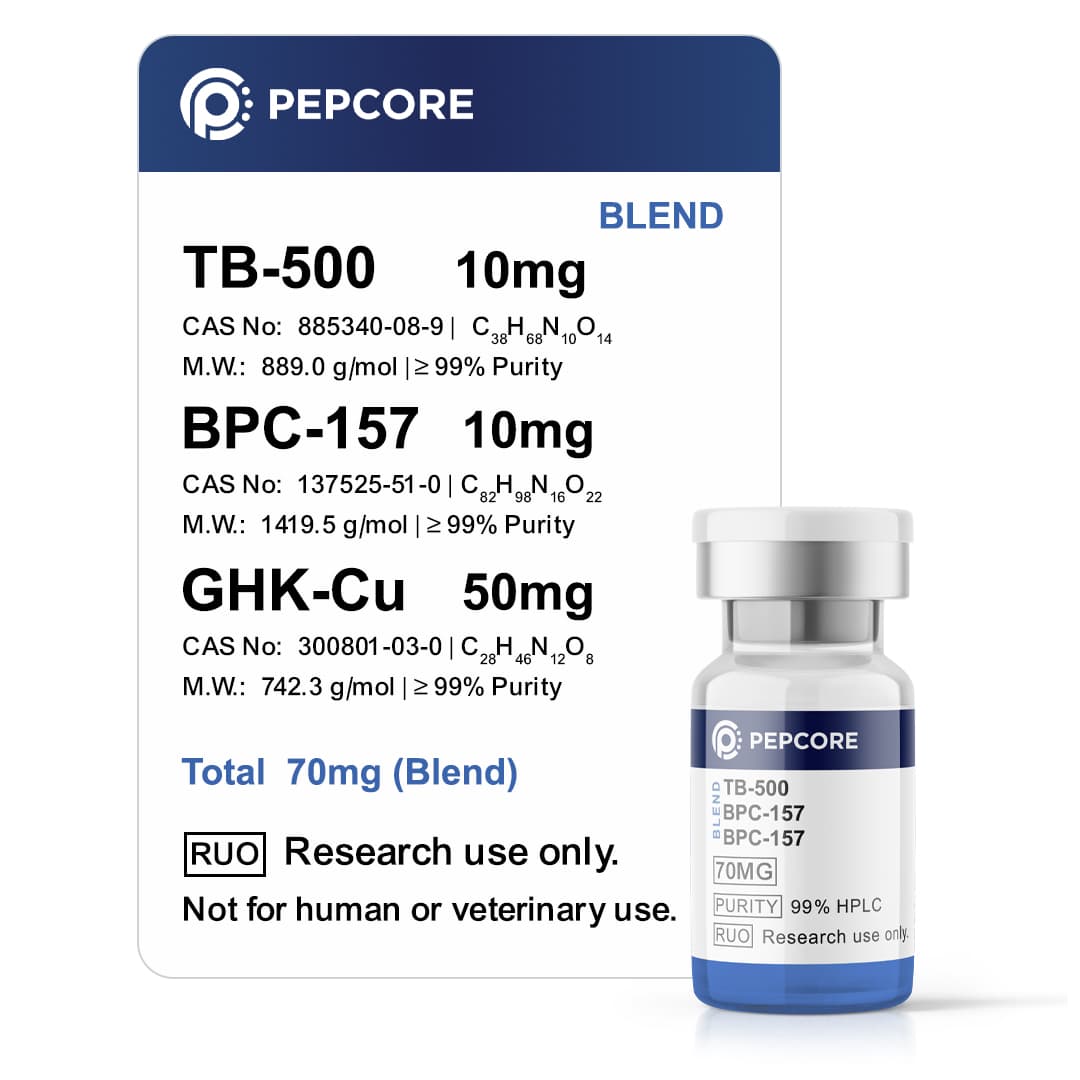
Glow combines 3 research compounds: TB4, BPC 157, GHK-Cu. Scientific background for each component is documented below.
Thymosin beta-4 is a 43-amino-acid acidic peptide first isolated from thymic tissue and subsequently identified as one of the most abundant intracellular actin-sequestering peptides in mammalian cell types. It functions as a 1:1 G-actin-binding research peptide and contributes to the maintenance of a pool of monomeric actin available for rapid cytoskeletal reorganization in cellular research models.
TB-500 is supplied as a synthetic full-length analog of the thymosin beta-4 sequence, allowing laboratory research studies to use a defined reference compound for actin-binding research and cytoskeletal dynamics research. The sequence retains the central LKKTET actin-binding motif (residues 17-22), which has been mapped through mutational and structural research as the principal contact region with G-actin in research models.
This positioning at the intersection of cytoskeletal dynamics research, cellular-process research, and structure-activity research has made TB-500 an experimental research compound of considerable interest in laboratory research studies of actin-binding pharmacology, endothelial cellular-process research, and comparative thymosin beta-4 fragment research.
BPC-157 is classified as a synthetic gastric-pentadecapeptide research compound. The sequence was originally derived from a larger protein identified in gastric extracts, and the 15-residue synthetic version has become a widely used reference compound in cellular-pathway research and nitric oxide signalling research.
Laboratory research studies have characterized BPC-157 as a stable research peptide in acidic conditions, a property that distinguishes it from many other bioactive research peptides. This stability profile has made it a useful tool in laboratory research studies of gastric-tissue research, where peptide integrity under acidic conditions is an important methodological consideration.
Mechanistic research has investigated BPC-157 engagement with vascular endothelial pathways, including VEGFR2 signalling research and the Akt-eNOS axis. Additional research models have examined interaction with the broader nitric oxide system, Src-Cav-1-eNOS signalling, and inflammatory-pathway research. This positioning at the intersection of nitric oxide signalling research, endothelial cellular-process research, and gastric-tissue research has made BPC-157 a research peptide of considerable interest in laboratory research studies of pentadecapeptide pharmacology and integrated cellular-pathway signalling.
GHK was first identified in human plasma and later recognized for its strong affinity for copper ions. The GHK-Cu complex naturally occurs in tissues and fluids, where it participates in signaling pathways related to cellular-response research. Levels of GHK decline with age, which has led to scientific interest in its role in age-related loss of tissue cellular-pathway capacity.
Experimental studies have demonstrated that GHK-Cu can influence the expression of a wide range of genes involved in cell growth, antioxidant defense, inflammatory signaling control, and extracellular matrix organization. These properties have positioned GHK-Cu as an important research compound in studies of cellular-process signaling, skin aging, and connective tissue biology.
Glow is supplied as a homogeneous lyophilized mixture. Structural details for each compound:
Each compound in Glow engages distinct biochemical targets. Mechanism of action per compound:
TB-500 engages monomeric G-actin in a 1:1 stoichiometry through its central LKKTET actin-binding motif. In laboratory research studies, this interaction sequesters G-actin and modulates the equilibrium between monomeric and filamentous actin populations, supporting investigations into cytoskeletal dynamics research and cellular-process research models.
TB-500 has been investigated in cellular research models for its interaction with endothelial and epithelial cell migration pathways. Research models indicate that the full-length thymosin beta-4 sequence engages cellular-process signalling research relevant to cellular-pathway research and structure-activity research with discrete actin-binding fragments such as LKKTETQ.
Laboratory research studies have examined how TB-500 modulates inflammatory-pathway research markers in cellular and animal research models. These investigations are relevant to cytokine-signalling research and comparative research on thymosin beta-4 active-site fragments.
By supplying the full-length 43-residue sequence, TB-500 enables comparative research alongside discrete fragments such as the heptapeptide LKKTETQ (residues 17-23). This supports structure-activity research investigating how isolated actin-binding domains compare to the parent peptide in actin-binding research and cellular-process research models.
TB-500 is a synthetic full-length thymosin beta-4 research peptide that engages monomeric G-actin through its central LKKTET motif and supports laboratory research studies of cytoskeletal dynamics research, cellular-process research, and inflammatory-pathway research. Its defined sequence and 1:1 actin-binding profile make it a valuable reference compound for laboratory research studies of actin-binding pharmacology and comparative research with thymosin beta-4 active-site fragments.
BPC-157 has been investigated in laboratory research studies for engagement with vascular endothelial growth factor receptor-2 (VEGFR2) signalling. Mechanistic research models indicate that BPC-157 modulates VEGFR2 expression and internalization, supporting investigations into endothelial cellular-process research and vascular-pathway research (Hsieh et al., 2017, Journal of Molecular Medicine).
Laboratory research studies have characterized BPC-157 engagement with the Akt-endothelial nitric oxide synthase (eNOS) axis. This signalling research is associated with nitric oxide production in endothelial research models and has been investigated as a downstream consequence of VEGFR2 modulation in cellular-pathway research.
Research models have also characterized BPC-157 engagement with the Src-Caveolin-1-eNOS pathway. Mechanistic research indicates that BPC-157 enhances phosphorylation of Src, Cav-1 and eNOS and reduces Cav-1-eNOS binding in vascular research models, supporting investigations into nitric oxide signalling research independent of canonical VEGFR2 input (Hsieh et al., 2020, Scientific Reports).
Laboratory research studies have investigated BPC-157 stability in acidic conditions and its engagement with gastric-tissue research models. These investigations support research on pentadecapeptide pharmacology and cellular-pathway research relevant to gastric-tissue research.
BPC-157 is a synthetic 15-residue gastric-pentadecapeptide research compound that engages VEGFR2 signalling, the Akt-eNOS axis, and the Src-Cav-1-eNOS pathway in research models. Its combination of acidic-condition stability and characterized engagement with nitric oxide signalling research makes it a valuable investigational laboratory peptide for laboratory research studies in cellular-pathway research, endothelial cellular-process research, and gastric-tissue research models.
GHK binds copper ions and facilitates their safe transport and delivery to cells, supporting copper-dependent enzymatic processes essential for cellular-process research and antioxidant defense.
GHK-Cu has been shown to stimulate collagen, elastin, and proteoglycan synthesis while simultaneously regulating matrix metalloproteinases, contributing to balanced tissue remodeling.
Research indicates that GHK-Cu may help regulate inflammatory pathways by reducing pro-inflammatory cytokine activity and supporting inflammatory-pathway gene expression profiles.
GHK-Cu influences the expression of genes associated with cell survival, differentiation, and cellular signaling research, supporting cellular turnover and tissue maintenance.
GHK-Cu is a copper-binding tripeptide investigated for its role in cellular-process research, extracellular matrix regulation, and gene expression associated with cellular-response signaling. By supporting copper-dependent biological processes, modulating inflammatory signaling, and promoting structural protein synthesis, GHK-Cu represents a foundational research compound in cellular-pathway biology and aging-related tissue studies.
Published references for each compound in Glow, listed by component:


