Hair & Skin
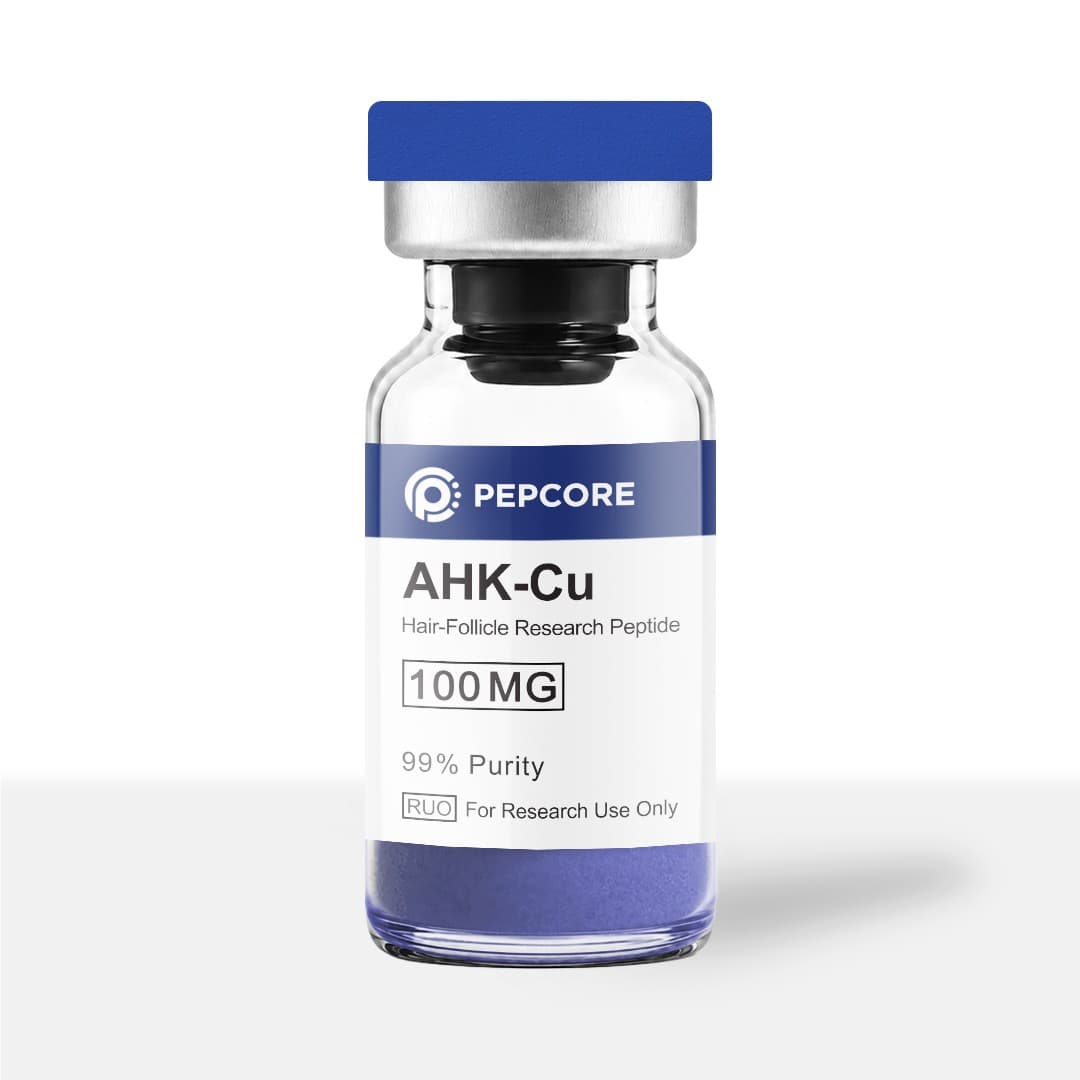
AHK-Cu
In Stock
Amount (mg)
Bacteriostatic Water
Insulin Syringes
Alcohol Swabs
Quantity
1
Price€54.00
Fast delivery, dispatched same day before 14:00
Tracked delivery, door to door
Shipped discreetly
Secure payments



Order before 14:00 for same-day shipping
Order now, ships today
OrderedToday
ShippedToday
Delivered24-25 November
AHK-Cu is a synthetic copper-binding tripeptide made of three amino acids (alanine, histidine, and lysine). It is a close cousin of GHK-Cu, swapping in alanine where GHK uses glycine, and it is best known in cosmetic peptide and hair follicle research.
Like other copper peptides, it carries a copper ion that lets it act as a signaling molecule in cell-based research models, which is why it turns up as a reference compound in this kind of work.
Research Applications
•Cosmetic peptide research
•Hair follicle research models
•Copper-binding and copper-transport studies
•Cell-signaling research
Supplied as a lyophilized powder for stability.
Scientific Background
AHK is a tripeptide composed of alanine, histidine, and lysine. The AHK-Cu complex forms when AHK binds a copper ion, creating a bioactive copper-peptide signaling molecule that has been studied alongside the more extensively characterized GHK-Cu tripeptide. The two compounds share the histidine-lysine C-terminal motif required for copper coordination, but differ at the N-terminus, where AHK substitutes alanine for the glycine residue found in GHK.
Experimental studies have investigated AHK-Cu in dermal papilla cell research models, where it has been examined for its influence on growth-related signaling and VEGF-pathway expression. AHK-Cu is also investigated for copper transport, antioxidant defense pathway research, and cellular-pathway signaling within cosmetic and dermatological research contexts.
The structural similarity to GHK-Cu and the substitution of alanine for glycine at the N-terminus has positioned AHK-Cu as a useful comparative research compound for laboratory studies of copper-peptide pharmacology, hair follicle research, and follicle-pathway research.
Structure
Peptide ClassCopper-binding tripeptide
Amino Acid SequenceAla-His-Lys (AHK)
Molecular FormulaC₁₅H₂₄ClCuN₆O₄
Molecular Weight451.39 g/mol
CAS NumberN/A
Mechanism of Action
Copper Transport and Delivery
AHK binds copper ions and facilitates their safe transport and delivery to cellular research models, supporting copper-dependent enzymatic processes essential for cellular-process research and antioxidant defense research.
Dermal Papilla Cell Signaling Research
AHK-Cu has been investigated in hair follicle research models, particularly dermal papilla cell cultures, where it is studied for its role in growth-related signaling and cellular activity in follicle-pathway research.
VEGF and Vascular Pathway Research
Research has examined AHK-Cu for its association with VEGF (vascular endothelial growth factor) expression and angiogenic-pathway signaling in cellular models, which is relevant to follicle research and dermal cellular-pathway research contexts.
Comparative Copper-Peptide Research
AHK-Cu is frequently studied alongside GHK-Cu as a comparative copper-peptide research compound, allowing investigation of how N-terminal residue substitution (alanine versus glycine) influences copper-peptide signaling profiles in cellular research models.
Conclusion
AHK-Cu is a copper-binding tripeptide investigated for its role in hair follicle research, copper transport, and comparative copper-peptide pharmacology research. Its structural similarity to GHK-Cu and substitution of alanine for glycine at the N-terminus makes AHK-Cu a useful research compound for laboratory studies of copper-peptide signaling and follicle-related research models.
References
•Pickart L (2008). The human tri-peptide GHK and tissue remodeling. Journal of Biomaterials Science, Polymer Edition. PubMed
•Pyo HK et al. (2007). The effect of tripeptide-copper complex on human hair growth in vitro. Archives of Pharmacal Research. PubMed
•Pickart L, Margolina A (2018). Regenerative and Protective Actions of the GHK-Cu Peptide in the Light of the New Gene Data. International Journal of Molecular Sciences. PubMed
Research Use Disclaimer
This product is intended for research and laboratory use only. It is designed exclusively for in vitro research purposes. All information provided is for educational and research reference only. This product is not intended for human or animal use. It is not a drug, food, or cosmetic and must not be marketed, labeled, or used as such. Use and handling are restricted to trained and qualified professionals.
What is AHK-Cu?
AHK-Cu is a synthetic copper-binding tripeptide made of three amino acids (alanine, histidine, and lysine). It is supplied as a lyophilized powder for laboratory research use only.
What is AHK-Cu used for in research?
In research, AHK-Cu is studied in areas such as: Cosmetic peptide research, Hair follicle research models and Copper-binding and copper-transport studies. Related compounds in our Hair & Skin range include PT-141 and Melanotan 2. Further reading: GHK-Cu: how it works and the research.
Where can I buy AHK-Cu?
AHK-Cu is available from Pepcore, shipped from the Netherlands to every European country with tracking. A certificate of analysis is available on request.
How is AHK-Cu reconstituted?
With bacteriostatic water, added slowly down the inside of the glass rather than onto the powder, then swirled gently, never shaken. Bacteriostatic water is optional when you order: you can add a 3 ml vial (+€4.99) or a 10 ml vial (+€12.99), or leave it out. Use our peptide calculator to work out the concentration for your vial size.
How is AHK-Cu stored, and how long does shipping take?
Lyophilized AHK-Cu is kept cool, dry and away from light. Once reconstituted, the solution is refrigerated at 2 to 8 °C, see our peptide stability guide. Orders leave the Netherlands the same or next business day: 1 to 2 business days to the Netherlands and Belgium, 2 to 7 to Germany, France, Spain, Italy and Luxembourg, 3 to 8 to the rest of the EU, free from €250, see shipping.
Amount (mg)100 mg
Bacteriostatic Water3 ml or 10 ml, optional
Insulin Syringes10× 1 ml insulin syringes, 10× 0.5 ml insulin syringes, None
Alcohol SwabsYes, No
TestingThird-party HPLC/MS
CASN/A
Netherlands & Belgium: 1-2 business days, €8.49-€12.99
Germany: 2-7 business days, €12.99
France, Spain, Italy & Luxembourg: 2-7 business days, €14.90
Rest of the EU: 3-8 business days, €14.90
Poland: 3-8 business days, €15.99
Sweden: 3-8 business days, €15.99
Switzerland, Norway, United Kingdom & other European countries outside the EU: 5-10 business days, €15.99
Canary Islands: 7-12 business days, €24.99
Free shipping on orders from €250
For laboratory and research use only.
Not for human or veterinary use, diagnosis, or treatment.
To be handled only by qualified personnel in a controlled lab setting.
By placing an order, you confirm you have read and agree to these research-use terms.


€54.00