HomeShopKlow 80mg (Blend)
Klow 80mg (Blend) 80mg - Research Peptide | Pepcore

Klow 80mg (Blend)

79.00
In Stock
Size
Optional Lab Accessories
Bacteriostatic Water
Insulin Needles
Alcohol Swabs
1

For laboratory research use only. Not for human or veterinary use.

1–2 day delivery
1–2 day delivery
EU-wide tracked shipping
≥99% HPLC Purity
≥99% HPLC Purity
Third-party batch verified
COA Included
Lab report with every order
Discreet shipping
Secure & private packaging
Secure Payments
PayPalSEPABitcoin
Order before 12:00 for same-day shipping
Order now, ships next business day
OrderedToday
Shipped13 Apr
Delivered14 Apr16 Apr
Product Specifications
Format
Lyophilized powder
Strength
80mg
Purity
99%
Testing
Third-party HPLC/MS
CAS
N/A
Intended use
Research only

Description

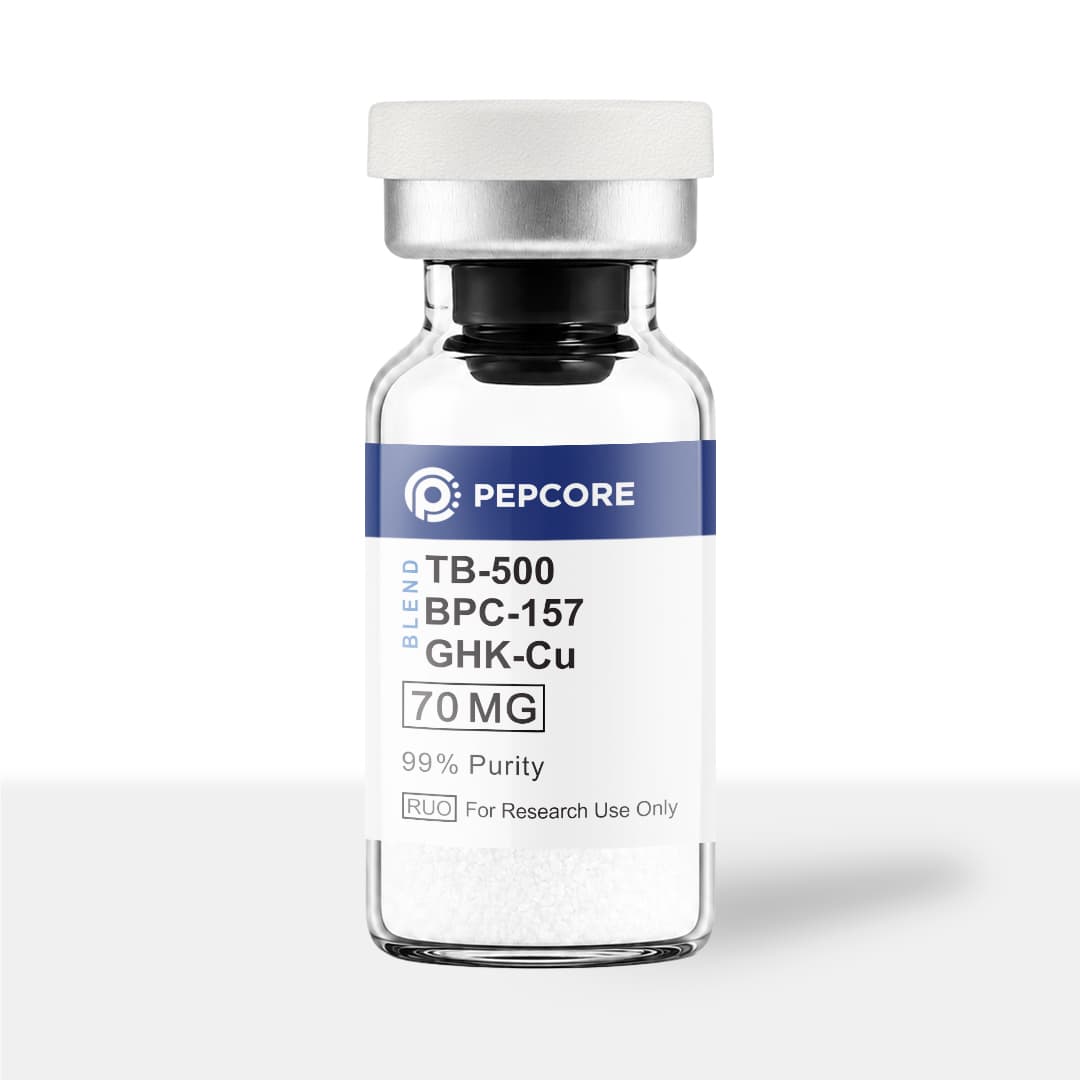
Klow is a multi-peptide blend containing TB4, BPC-157, KPV, and GHK-Cu. It is commonly explored in research settings where the goal is to support a full repair cycle: inflammation control → cell migration → tissue rebuilding → remodeling.

(Kenwood et al., 2014 — Nature Chemical Biology).

Each component contributes a different “layer” of activity:

TB4 supports cytoskeletal organization, cell movement, and vascular responses linked to repair.

BPC-157 is studied for broad tissue-support pathways, including cellular protection and pro-repair signaling.

KPV is associated with local inflammatory downshifting (often linked to NF-κB modulation) and mucosal recovery models.

GHK-Cu is researched for collagen-related signaling, antioxidant support, and microenvironment balancing.

Together, the blend is often described as supporting a more complete regeneration “loop,” where repair signaling and remodeling can proceed without excessive inflammatory disruption.

The peptide is supplied as a lyophilized powder to ensure optimal stability during storage and handling.

What is KPV?

KPV (Lys–Pro–Val) is a short tripeptide associated with anti-inflammatory signaling in multiple experimental settings. It is often connected to NF-κB pathway downregulation, which can reduce the production of pro-inflammatory mediators. In mucosal and epithelial injury models, KPV is commonly discussed for helping limit inflammatory escalation while supporting barrier recovery and repair continuity.

Conclusion

As a combined system, TB4 + BPC-157 are often positioned as the “repair engine” (migration + vessel support + matrix rebuilding), while KPV helps prevent repair from being stalled by excessive inflammation, and GHK-Cu supports remodeling quality by strengthening collagen-related signaling and limiting oxidative disruption. The intended outcome (in research terms) is a more stable and complete path from early injury response through reconstruction and remodeling.

This product is intended for research and laboratory use only. It is designed exclusively for in vitro research purposes. All information provided is for educational and research reference only. This product is not intended for human or animal use. It is not a drug, food, or cosmetic and must not be marketed, labeled, or used as such. Use and handling are restricted to trained and qualified professionals.

Related products

79.00