Healthy Aging
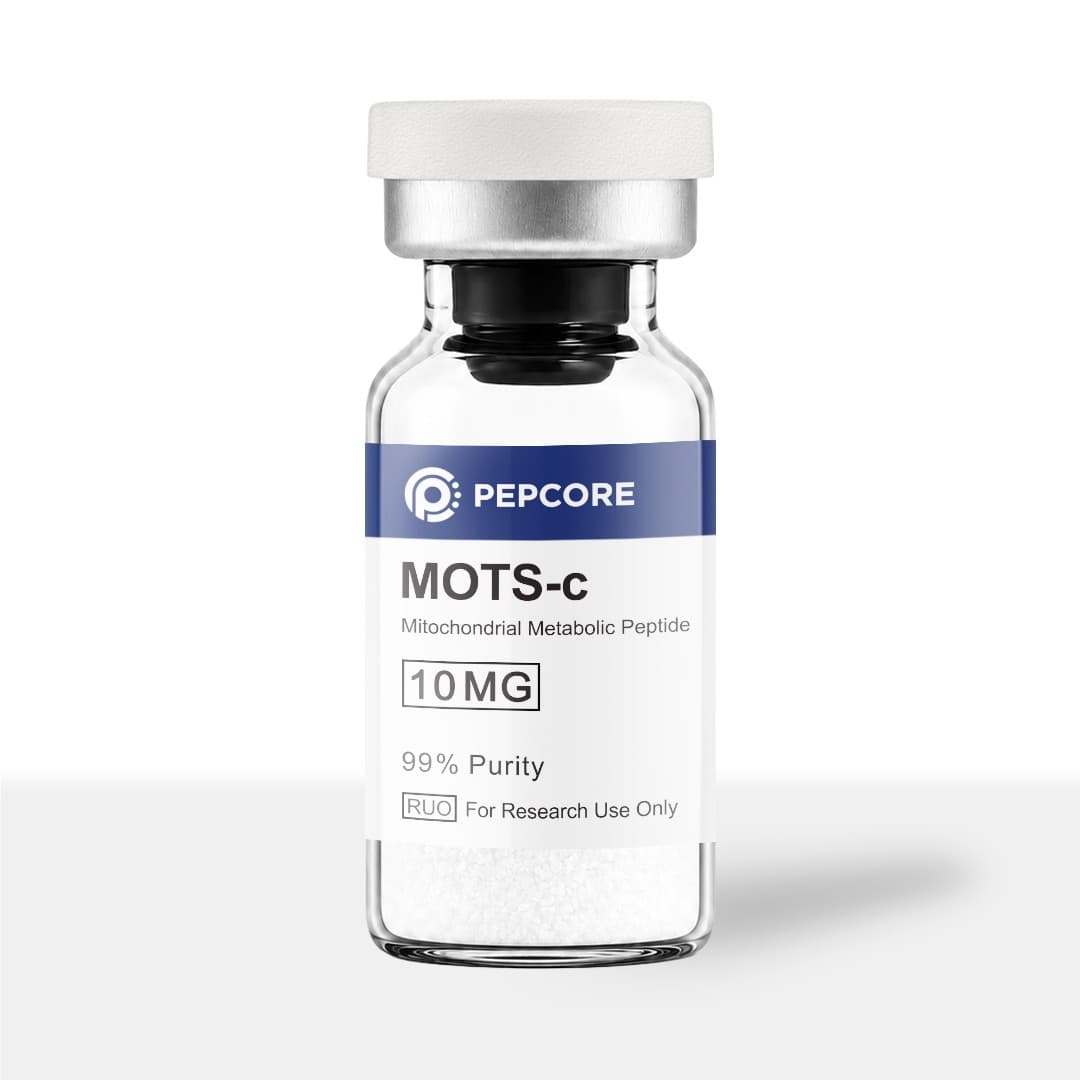
MOTS-c
In Stock
Amount (mg)
Bacteriostatic Water
Insulin Syringes
Alcohol Swabs
Quantity
1
Price€54.00
Fast delivery, dispatched same day before 14:00
Tracked delivery, door to door
Shipped discreetly
Secure payments



Order before 14:00 for same-day shipping
Order now, ships today
OrderedToday
ShippedToday
Delivered24-25 November
MOTS-c is a small signaling peptide made of 16 amino acids that is encoded right inside mitochondrial DNA, which makes it stand out from most peptides. It's best known in research for the way it links mitochondrial activity to how genes behave in the cell nucleus.
It has a solid research base, with work exploring how it taps into AMPK signaling to influence energy and metabolic pathways (Lee et al., 2015, Cell Metabolism). That's why it comes up often in studies on cellular energy and metabolism.
Research Applications
•Mitochondrial signaling research
•Cellular energy and metabolism studies
•AMPK pathway research
•Glucose and lipid metabolism models
Supplied as a lyophilized powder for stability.
Scientific Background
For decades, mitochondria were viewed primarily as energy-producing organelles. Advances in genomics later revealed that the mitochondrial genome encodes bioactive peptides capable of regulating systemic physiology. MOTS-c was identified within the 12S rRNA region of mitochondrial DNA as one of the first peptides shown to function as a circulating metabolic signal.
Subsequent studies demonstrated that MOTS-c is expressed across multiple tissues and can translocate to the nucleus in response to metabolic or oxidative stress. Its levels decline with aging, while exercise and metabolic challenges are associated with increased expression, suggesting a role in adaptive signalling.
This positioning at the intersection of mitochondrial biology, metabolic regulation, and aging research has made MOTS-c a peptide of considerable interest in laboratory investigations of energy homeostasis and cellular stress adaptation.
Structure
Peptide ClassMitochondrial-encoded signaling peptide
Amino Acid SequenceMRWQEMGYIFYPRKLR
Molecular FormulaC₁₀₁H₁₅₂N₂₈O₂₂S₂
Molecular Weight~2174.6 g/mol
CAS Number1627580-64-6
PubChem CID146675088
Mechanism of Action
Activation of AMPK Signaling
MOTS-c promotes cellular energy balance by activating the AICAR-AMPK pathway. This activation enhances glucose uptake, suppresses excessive gluconeogenesis, and increases fatty acid oxidation. Through these mechanisms, MOTS-c supports stable glucose homeostasis and improves insulin responsiveness.
Regulation of Nuclear Gene Expression
Under stress conditions, MOTS-c can enter the nucleus and interact with transcription factors involved in metabolic and inflammatory regulation. By influencing gene networks linked to glucose transport, mitochondrial biogenesis, and immune modulation, it acts as a messenger coordinating mitochondrial and nuclear responses.
Mitochondrial Remodeling and Stress Resistance
MOTS-c modulates mitochondrial dynamics by promoting fusion processes and regulating biogenesis-associated proteins. These changes enhance mitochondrial efficiency while limiting oxidative damage. Concurrently, MOTS-c upregulates antioxidant defenses, reducing reactive oxygen species and protecting cellular integrity.
Musculoskeletal and Endothelial Modulation
MOTS-c influences muscle differentiation and bone remodeling by regulating osteoblast and osteoclast activity, while also improving vascular endothelial performance and reducing inflammatory signaling in cardiac tissue under metabolic stress models.
Conclusion
MOTS-c represents a unique class of mitochondria-encoded peptides that function as systemic metabolic regulators. By integrating mitochondrial signaling with nuclear gene control, MOTS-c supports energy homeostasis, stress resistance, and age-related metabolic adaptation. Its diverse biological actions make it a valuable research target in metabolism, aging, and mitochondrial biology.
References
•Lee C et al. (2015). The mitochondrial-derived peptide MOTS-c promotes metabolic homeostasis and reduces obesity and insulin resistance. Cell Metabolism. PubMed
•Reynolds JC et al. (2021). MOTS-c is an exercise-induced mitochondrial-encoded regulator of age-dependent physical decline and muscle homeostasis. Nature Communications. PubMed
•Zheng Y et al. (2023). MOTS-c: A promising mitochondrial-derived peptide for therapeutic exploitation. Frontiers in Endocrinology. PubMed
•Mohtashami Z et al. (2022). MOTS-c, the Most Recent Mitochondrial Derived Peptide in Human Aging and Age-Related Diseases. International Journal of Molecular Sciences. PubMed
•Kumagai H et al. (2021). MOTS-c reduces myostatin and muscle atrophy signaling. American Journal of Physiology - Endocrinology and Metabolism. PubMed
•Kong BS et al. (2023). Mitochondrial-Encoded Peptide MOTS-c, Diabetes, and Aging-Related Diseases. Diabetes & Metabolism Journal. PubMed
Research Use Disclaimer
This product is intended for research and laboratory use only. It is designed exclusively for in vitro research purposes. All information provided is for educational and research reference only. This product is not intended for human or animal use. It is not a drug, food, or cosmetic and must not be marketed, labeled, or used as such. Use and handling are restricted to trained and qualified professionals.
What is MOTS-c?
MOTS-c is a small signaling peptide made of 16 amino acids that is encoded right inside mitochondrial DNA, which makes it stand out from most peptides. It is supplied as a lyophilized powder for laboratory research use only.
What is MOTS-c used for in research?
In research, MOTS-c is studied in areas such as: Mitochondrial signaling research, Cellular energy and metabolism studies and AMPK pathway research. Related compounds in our Healthy Aging range include NAD⁺ and SS-31.
Where can I buy MOTS-c?
MOTS-c is available from Pepcore, shipped from the Netherlands to every European country with tracking. A certificate of analysis is available on request.
How is MOTS-c reconstituted?
With bacteriostatic water, added slowly down the inside of the glass rather than onto the powder, then swirled gently, never shaken. Bacteriostatic water is optional when you order: you can add a 3 ml vial (+€4.99) or a 10 ml vial (+€12.99), or leave it out. Use our peptide calculator to work out the concentration for your vial size.
How is MOTS-c stored, and how long does shipping take?
Lyophilized MOTS-c is kept cool, dry and away from light. Once reconstituted, the solution is refrigerated at 2 to 8 °C, see our peptide stability guide. Orders leave the Netherlands the same or next business day: 1 to 2 business days to the Netherlands and Belgium, 2 to 7 to Germany, France, Spain, Italy and Luxembourg, 3 to 8 to the rest of the EU, free from €250, see shipping.
Amount (mg)10 mg, 20 mg, 40 mg
Bacteriostatic Water3 ml or 10 ml, optional
Insulin Syringes10× 1 ml insulin syringes, 10× 0.5 ml insulin syringes, None
Alcohol SwabsYes, No
TestingThird-party HPLC/MS
CAS1627580-64-6
Netherlands & Belgium: 1-2 business days, €8.49-€12.99
Germany: 2-7 business days, €12.99
France, Spain, Italy & Luxembourg: 2-7 business days, €14.90
Rest of the EU: 3-8 business days, €14.90
Poland: 3-8 business days, €15.99
Sweden: 3-8 business days, €15.99
Switzerland, Norway, United Kingdom & other European countries outside the EU: 5-10 business days, €15.99
Canary Islands: 7-12 business days, €24.99
Free shipping on orders from €250
For laboratory and research use only.
Not for human or veterinary use, diagnosis, or treatment.
To be handled only by qualified personnel in a controlled lab setting.
By placing an order, you confirm you have read and agree to these research-use terms.


€54.00