Hair & Skin
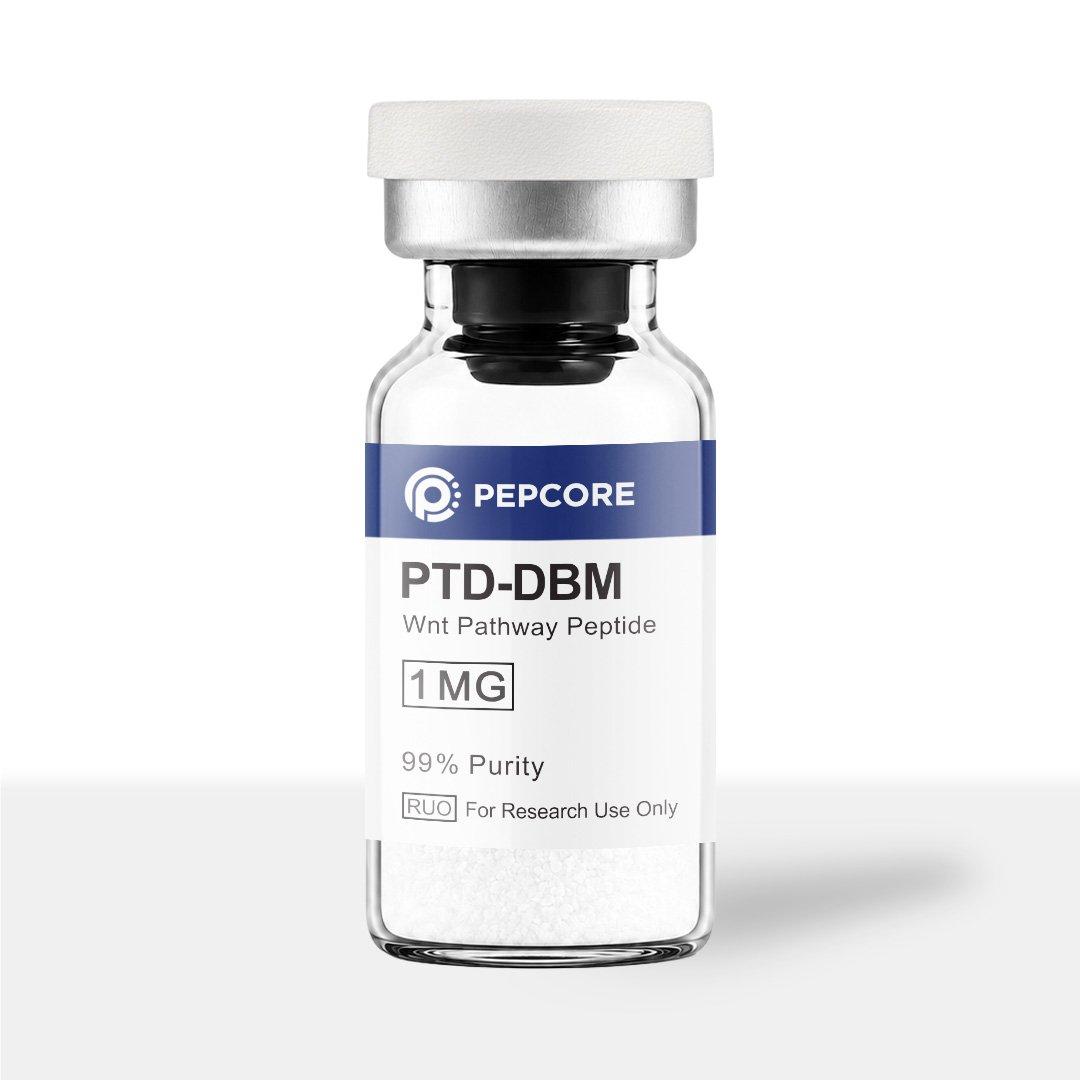
PTD-DBM 1 mg
In Stock
Amount (mg)
Bacteriostatic Water
Insulin Syringes
Alcohol Swabs
Quantity
1
Price€49.00
Fast delivery, dispatched same day before 14:00
Tracked delivery, door to door
Shipped discreetly
Secure payments



Order before 14:00 for same-day shipping
Order now, ships today
OrderedToday
ShippedToday
Delivered24-25 November
PTD-DBM is an experimental peptide designed to release a feedback brake on Wnt signaling, a system that helps cells coordinate their behavior. The protein CXXC5 can attach to Dishevelled and reduce the strength of that signal. PTD-DBM is designed to interrupt this connection. In cultured human dermal fibroblasts, the published construct increased β-catenin signaling and collagen production.
Researchers also measured changes in cell movement and matrix-related proteins in those fibroblast cultures. These experiments connect a specific protein interaction with the way cells produce and organize their surrounding material. The response depends on the cellular setting and construct used. The published fibroblast work used a fluorescently tagged peptide, which has additional chemical features compared with the unlabelled reference described below. Kim et al., 2015, Lee et al., 2015.
Research Applications
•Studied in collagen production in skin-cell models
•Relevant in Wnt signals and cell behavior research
•Examined in fibroblast movement studies
•Applied in connective-tissue remodeling research
Supplied as a lyophilized powder for stability.
Scientific Background
Wnt signaling is a communication system used by cells. Dishevelled, often shortened to Dvl, helps pass the message onward. CXXC5 participates in negative feedback, a process that limits a signal after it has begun. Its interaction with Dvl is one of the steps researchers examine when studying this regulation. Kim et al., 2015.
The unlabelled PTD-DBM reference contains 25 amino acids. Eight arginines form the transduction segment, four glycines provide a linker, and RKTGHQICKFRKC supplies the CXXC5-derived binding region. These parts combine a segment intended to support cellular entry with the region designed to interfere with protein binding. PubChem CID176453931.
The fibroblast study included an additional FITC-conjugated lysine, a fluorescent feature used for visualization. That construct differs chemically from the unlabelled reference. Keeping the construct identity clear helps researchers compare protein-binding results with what they observe in cells. Lee et al., 2015.
Structure
Peptide classCXXC5–Dishevelled competitor
Reference length25 amino acids
Reference sequenceRRRRRRRR GGGG RKTGHQICKFRKC
ArchitectureEight arginines, four glycines, CXXC5-derived motif
Reference formulaC₁₂₄H₂₂₅N₆₁O₂₈S₂
Reference molar mass~3082.6 g/mol
Reference terminiFree amino and carboxyl termini
PubChem CID176453931
Published labelAdditional FITC-conjugated lysine
Mechanism of Action
Interrupting the feedback connection
The binding region of PTD-DBM represents a part of CXXC5 that interacts with Dvl. By competing at that interface, the peptide is intended to reduce formation of the CXXC5–Dvl complex. This can weaken a brake on the Wnt pathway. Protein-interaction tests and comparisons with altered peptide motifs help identify the contribution of this particular connection. Kim et al., 2015.
Increasing the downstream Wnt signal
β-Catenin is a protein that helps carry the Wnt message toward changes in gene activity. In the published cellular experiments, PTD-DBM increased β-catenin-related responses. Researchers followed the amount and location of β-catenin and used reporter tests that produce a measurable signal when the pathway is active. These measurements link interference at the feedback step with a later cellular response. Lee et al., 2015.
Changes in fibroblast behavior
In cultured human dermal fibroblasts, the published construct increased collagen-related measurements and changed markers including α-SMA and endothelin-1. The investigators also examined cell migration and contraction of collagen gels. Collagen forms part of the material surrounding cells, while the other measurements describe how the cells interact with that material. Combining these readouts helps explain the biological response in the tested culture system. Lee et al., 2015.
References
•Kim HY et al. (2015). CXXC5 feedback regulation and cellular Wnt experiments. Cell Death & Differentiation. PubMed
•Lee SH et al. (2015). CXXC5 interactions and PTD-DBM experiments in human dermal fibroblasts. Journal of Experimental Medicine. PubMed
Research Use Disclaimer
This product is intended for in vitro laboratory research only. All information is provided for education and research reference. Not for personal use, diagnosis or treatment. Handling is restricted to trained and qualified professionals.
What is PTD-DBM?
PTD-DBM is an experimental peptide designed to release a feedback brake on Wnt signaling, a system that helps cells coordinate their behavior. It is supplied as a lyophilized powder for laboratory research use only.
What is PTD-DBM used for in research?
In research, PTD-DBM is studied in collagen production in skin-cell models, in Wnt signals and cell behavior research as well as in fibroblast movement studies. Related compounds in our Hair & Skin range include PT-141 and Melanotan 2.
Where can I buy PTD-DBM?
PTD-DBM is available from Pepcore, shipped from the Netherlands to every European country with tracking. A certificate of analysis is available on request.
How is PTD-DBM reconstituted?
With bacteriostatic water, added slowly down the inside of the glass rather than onto the powder, then swirled gently, never shaken. Bacteriostatic water is optional when you order: you can add a 3 ml vial (+€4.99) or a 10 ml vial (+€12.99), or leave it out. Use our peptide calculator to work out the concentration for your vial size.
How is PTD-DBM stored, and how long does shipping take?
Lyophilized PTD-DBM is kept cool, dry and away from light. Once reconstituted, the solution is refrigerated at 2 to 8 °C, see our peptide stability guide. Orders leave the Netherlands the same or next business day: 1 to 2 business days to the Netherlands and Belgium, 2 to 7 to Germany, France, Spain, Italy and Luxembourg, 3 to 8 to the rest of the EU, free from €250, see shipping.
Amount (mg)1 mg
Bacteriostatic Water3 ml or 10 ml, optional
Insulin Syringes10× 1 ml insulin syringes, 10× 0.5 ml insulin syringes, None
Alcohol SwabsYes, No
TestingThird-party HPLC/MS
CASN/A
Netherlands & Belgium: 1-2 business days, €8.49-€12.99
Germany: 2-7 business days, €12.99
France, Spain, Italy & Luxembourg: 2-7 business days, €14.90
Rest of the EU: 3-8 business days, €14.90
Poland: 3-8 business days, €15.99
Sweden: 3-8 business days, €15.99
Switzerland, Norway, United Kingdom & other European countries outside the EU: 5-10 business days, €15.99
Canary Islands: 7-12 business days, €24.99
Free shipping on orders from €250
For laboratory and research use only.
Not for human or veterinary use, diagnosis, or treatment.
To be handled only by qualified personnel in a controlled lab setting.
By placing an order, you confirm you have read and agree to these research-use terms.
Related products


€49.00