
Weight Management
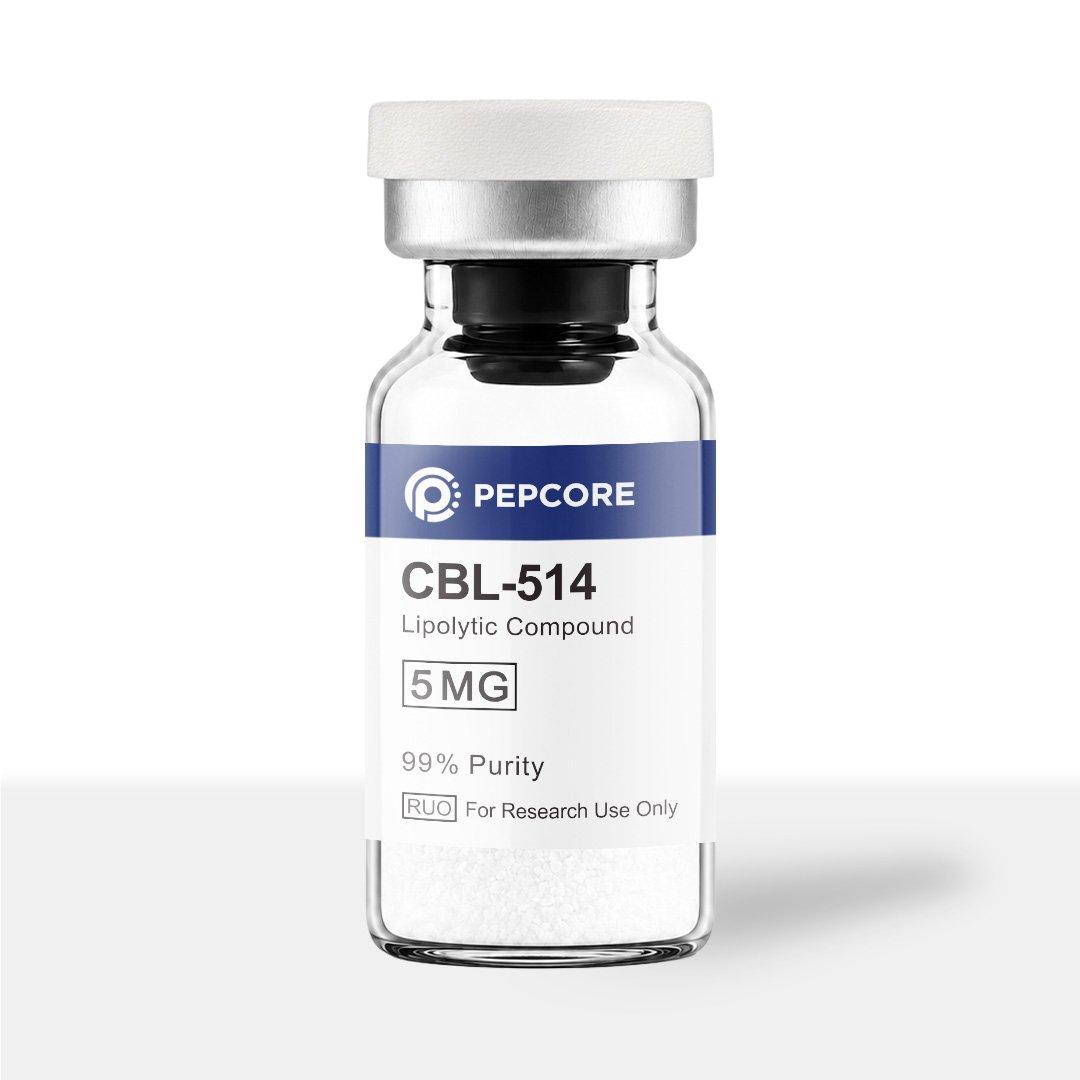
CBL-514 5 mg
In Stock
Amount (mg)
Bacteriostatic Water
Insulin Syringes
Alcohol Swabs
Quantity
1
Price€69.00
Fast delivery, dispatched same day before 14:00
Tracked delivery, door to door
Shipped discreetly
Secure payments



Order before 14:00 for same-day shipping
Order now, ships today
OrderedToday
ShippedToday
Delivered24-25 November
CBL-514 is an investigational small molecule studied in adipose-tissue research. Its proposed biological action is to promote adipocyte apoptosis, the programmed removal of fat cells, rather than simply release stored lipid. Published clinical studies have reported reductions in measured subcutaneous adipose volume or thickness, but those tissue measurements do not by themselves prove the cellular mechanism.
The distinction is useful when reading CBL-514 research. Apoptosis, lipid mobilisation and a change in tissue dimensions are different processes and require different evidence. The compound’s chemical structure has not been publicly disclosed in the cited publications. Mechanistic descriptions therefore need to retain the difference between a proposed pathway and an independently established molecular target.
Research Applications
•Studied in localized adipose volume changes reported in clinical research.
•Relevant in adipocyte turnover research on proposed apoptosis pathways.
•Examined in subcutaneous adipose tissue biology and tissue-thickness changes.
•Applied in adipocyte survival research separating programmed cell death from lipid release.
Supplied as a lyophilized powder for stability.
Scientific Background
Adipocytes store lipids, respond to metabolic signals and contribute to the structure of adipose tissue. A change in their lipid content is different from loss of the cells through apoptosis. The latter involves an organised cell-death programme, whereas direct membrane disruption is a separate form of injury. These distinctions provide the biological framework for CBL-514 research.
The 2022 phase IIa publication described a proposed apoptosis mechanism and reported clinical tissue measurements. It did not include biopsies that could directly verify adipocyte apoptosis in the participants. Several mechanistic statements referred to developer-held reports rather than a fully accessible independent target-validation dataset. Subsequent randomized studies added ultrasound and MRI endpoints. These observations strengthen the record of measured tissue changes in those studies, but do not turn every proposed intracellular step into a demonstrated mechanism.
Structure
Compound ClassInvestigational small molecule; proposed adipocyte-apoptosis activity
Chemical StructureNot publicly disclosed by the developer
Molecular FormulaN/A
Molecular WeightN/A
CAS NumberN/A
DeveloperCaliway Biopharmaceuticals (Taiwan)
SynonymsCBL514
Mechanism of Action
Proposed adipocyte apoptosis
CBL-514 is described in the research literature as a candidate for promoting programmed adipocyte death. Caspase activity, membrane-associated apoptosis markers and the balance of cell-survival proteins are relevant ways to investigate that hypothesis. They are not interchangeable with an imaging measurement, and a single marker alone does not establish selective removal of adipocytes.
Survival-pathway hypotheses
Descriptions of CBL-514 have linked the proposed response to DYRK1B and to Bax/Bcl-2-related pathways. These should remain proposed mechanisms: the cited clinical papers do not provide a complete public dataset demonstrating direct target binding or a causal chain from kinase inhibition to adipocyte death. The biological role of a pathway does not establish that a particular compound acts through it.
Cellular signals and tissue endpoints
Ultrasound and MRI can quantify tissue dimensions or volume, while cellular assays can examine survival, death markers and cell number. Published human studies reported changes in subcutaneous adipose measurements with the study formulation. Those findings describe the studied clinical material and setting; they do not establish equivalent behaviour of this laboratory product. Linking tissue changes to apoptosis requires direct mechanistic evidence rather than inference from imaging alone.
References
•Goodman GJ et al. (2022). CBL-514 phase IIa study and proposed adipocyte-apoptosis mechanism. PubMed
•Gold M et al. (2025). CBL-514 randomized phase II study with ultrasound adipose-tissue measurements. PubMed
Research Use Disclaimer
This product is intended for in vitro laboratory research only. All information is provided for education and research reference. Not for personal use, diagnosis or treatment. Handling is restricted to trained and qualified professionals.
What is CBL-514?
CBL-514 is an investigational small molecule studied in adipose-tissue research. It is supplied as a lyophilized powder for laboratory research use only.
What is CBL-514 used for in research?
In research, CBL-514 is studied in localized adipose volume changes reported in clinical research., in adipocyte turnover research on proposed apoptosis pathways. as well as in subcutaneous adipose tissue biology and tissue-thickness changes.. Related compounds in our Weight Management range include Tirzepatide and SLU-PP-332.
Where can I buy CBL-514?
CBL-514 is available from Pepcore, shipped from the Netherlands to every European country with tracking. A certificate of analysis is available on request.
How is CBL-514 reconstituted?
With bacteriostatic water, added slowly down the inside of the glass rather than onto the powder, then swirled gently, never shaken. Bacteriostatic water is optional when you order: you can add a 3 ml vial (+€4.99) or a 10 ml vial (+€12.99), or leave it out. Use our peptide calculator to work out the concentration for your vial size.
How is CBL-514 stored, and how long does shipping take?
Lyophilized CBL-514 is kept cool, dry and away from light. Once reconstituted, the solution is refrigerated at 2 to 8 °C, see our peptide stability guide. Orders leave the Netherlands the same or next business day: 1 to 2 business days to the Netherlands and Belgium, 2 to 7 to Germany, France, Spain, Italy and Luxembourg, 3 to 8 to the rest of the EU, free from €250, see shipping.
Amount (mg)5 mg
Bacteriostatic Water3 ml or 10 ml, optional
Insulin Syringes10× 1 ml insulin syringes, 10× 0.5 ml insulin syringes, None
Alcohol SwabsYes, No
TestingThird-party HPLC/MS
CASN/A
Netherlands & Belgium: 1-2 business days, €8.49-€12.99
Germany: 2-7 business days, €12.99
France, Spain, Italy & Luxembourg: 2-7 business days, €14.90
Rest of the EU: 3-8 business days, €14.90
Poland: 3-8 business days, €15.99
Sweden: 3-8 business days, €15.99
Switzerland, Norway, United Kingdom & other European countries outside the EU: 5-10 business days, €15.99
Canary Islands: 7-12 business days, €24.99
Free shipping on orders from €250
For laboratory and research use only.
Not for human or veterinary use, diagnosis, or treatment.
To be handled only by qualified personnel in a controlled lab setting.
By placing an order, you confirm you have read and agree to these research-use terms.
Related products


€69.00