
Recovery & Repair
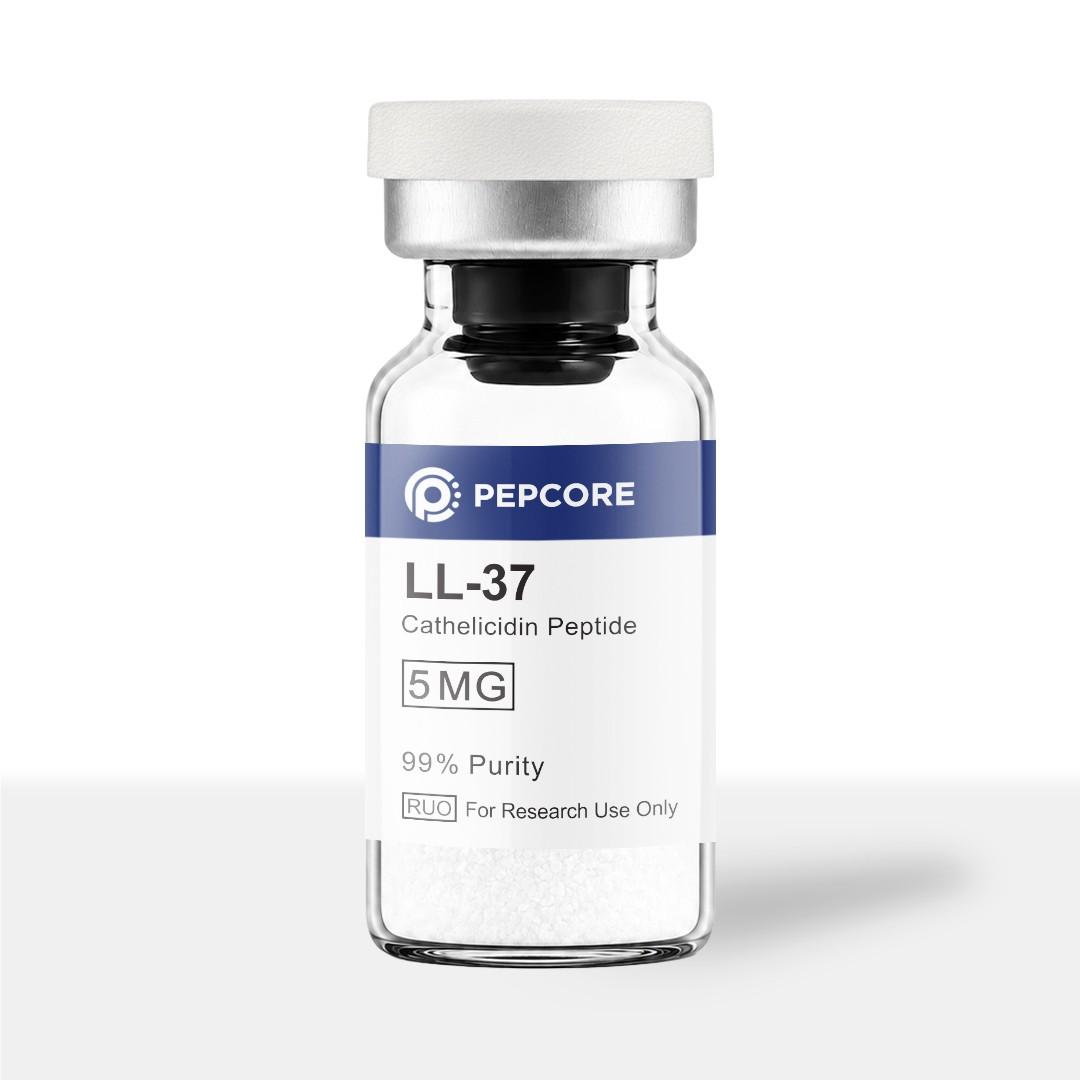
LL-37 5 mg
In Stock
Amount (mg)
Bacteriostatic Water
Insulin Syringes
Alcohol Swabs
Quantity
1
Price€42.00
Fast delivery, dispatched same day before 14:00
Tracked delivery, door to door
Shipped discreetly
Secure payments



Order before 14:00 for same-day shipping
Order now, ships today
OrderedToday
ShippedToday
Delivered24-25 November
LL-37 is the body's own antimicrobial peptide, the only cathelicidin humans make, released by immune cells and skin as a first line of defence. It is used in research on infection, biofilms, immune signalling and wound healing, where it is the reference molecule for the whole cathelicidin family.
LL-37 is studied for three things at once: how it breaks bacterial membranes, how it steers immune cells, and how it helps skin close wounds, all described in the core structural and functional literature (Dürr et al., 2006, Biochimica et Biophysica Acta).
Research Applications
•Studied in antimicrobial and biofilm models
•Relevant in wound-healing and skin-repair research
•Examined in innate-immunity and immunomodulation studies
•Applied in membrane-interaction and TLR-signalling work
Supplied as a lyophilized powder for stability.
Scientific Background
Cathelicidins are a family of host-defense peptides released at sites of microbial challenge or tissue injury. Humans carry a single cathelicidin gene, CAMP, whose precursor hCAP18 is cleaved to release LL-37, a cationic, amphipathic 37-residue peptide named for its two N-terminal leucines.
In the presence of membranes or physiological salt, LL-37 adopts an α-helical conformation, which underlies its interaction with bacterial membranes, lipopolysaccharide and host cell surfaces. Research has described broad-spectrum antimicrobial activity, disruption of biofilm formation and binding of bacterial endotoxin.
Beyond direct antimicrobial effects, LL-37 is studied as a signalling molecule: it modulates Toll-like receptor responses, attracts immune cells and promotes keratinocyte migration and re-epithelialization in wound models. This dual antimicrobial and immunomodulatory profile makes it a widely used reference peptide in innate-immunity research.
Structure
Peptide ClassHuman cathelicidin antimicrobial peptide (synthetic, 37 amino acids)
Amino Acid SequenceLLGDFFRKSKEKIGKEFKRIVQRIKDFLRNLVPRTES
Molecular FormulaC₂₀₅H₃₄₀N₆₀O₅₃
Molecular Weight4493.3 g/mol
CAS Number154947-66-7
Mechanism of Action
Membrane Interaction
LL-37 carries a net positive charge and folds into an amphipathic α-helix on contact with membranes. In research models it binds negatively charged microbial membranes, inserts into the lipid bilayer and disrupts membrane integrity, a mechanism described for bacteria, fungi and enveloped viruses.
Biofilm Disruption
At concentrations well below those that inhibit planktonic growth, LL-37 has been shown to prevent Pseudomonas aeruginosa biofilm formation, reduce bacterial attachment and stimulate twitching motility, with transcriptional changes in quorum-sensing systems.
Modulation of TLR Signalling
LL-37 binds lipopolysaccharide and lipoteichoic acid and selectively modulates Toll-like receptor responses in monocytes and macrophages, reducing pro-inflammatory cytokine output while preserving chemokine production, a pattern described as immune balancing rather than suppression.
Chemotaxis and Tissue-Repair Signalling
The peptide acts through formyl peptide receptor-like 1 (FPRL1) and transactivation of the epidermal growth factor receptor to recruit immune cells and drive keratinocyte migration, angiogenesis and re-epithelialization in wound models.
Conclusion
LL-37 combines direct antimicrobial membrane activity with receptor-mediated immune and repair signalling. This dual profile makes it a versatile research tool for investigating host defense, biofilm biology, inflammation and tissue regeneration in laboratory systems.
References
•Dürr UH et al. (2006). LL-37, the only human member of the cathelicidin family of antimicrobial peptides. Biochimica et Biophysica Acta. PubMed
•Mookherjee N et al. (2006). Modulation of the TLR-mediated inflammatory response by the endogenous human host defense peptide LL-37. Journal of Immunology. PubMed
•Overhage J et al. (2008). Human host defense peptide LL-37 prevents bacterial biofilm formation. Infection and Immunity. PubMed
•Carretero M et al. (2008). In vitro and in vivo wound healing-promoting activities of human cathelicidin LL-37. The Journal of Investigative Dermatology. PubMed
Research Use Disclaimer
This product is intended for research and laboratory use only. It is designed exclusively for in vitro research purposes. All information provided is for educational and research reference only. This product is not intended for human or animal use. It is not a drug, food, or cosmetic and must not be marketed, labeled, or used as such. Use and handling are restricted to trained and qualified professionals.
What is LL-37?
LL-37 is the body's own antimicrobial peptide, the only cathelicidin humans make, released by immune cells and skin as a first line of defence. It is supplied as a lyophilized powder for laboratory research use only.
What is LL-37 used for in research?
In research, LL-37 is studied in antimicrobial and biofilm models, in wound-healing and skin-repair research as well as in innate-immunity and immunomodulation studies. Related compounds in our Recovery & Repair range include TB-500 and Glutathione.
Where can I buy LL-37?
LL-37 is available from Pepcore, shipped from the Netherlands to every European country with tracking. A certificate of analysis is available on request.
How is LL-37 reconstituted?
With bacteriostatic water, added slowly down the inside of the glass rather than onto the powder, then swirled gently, never shaken. Bacteriostatic water is optional when you order: you can add a 3 ml vial (+€4.99) or a 10 ml vial (+€12.99), or leave it out. Use our peptide calculator to work out the concentration for your vial size.
How is LL-37 stored, and how long does shipping take?
Lyophilized LL-37 is kept cool, dry and away from light. Once reconstituted, the solution is refrigerated at 2 to 8 °C, see our peptide stability guide. Orders leave the Netherlands the same or next business day: 1 to 2 business days to the Netherlands and Belgium, 2 to 7 to Germany, France, Spain, Italy and Luxembourg, 3 to 8 to the rest of the EU, free from €250, see shipping.
Amount (mg)5 mg
Bacteriostatic Water3 ml or 10 ml, optional
Insulin Syringes10× 1 ml insulin syringes, 10× 0.5 ml insulin syringes, None
Alcohol SwabsYes, No
TestingThird-party HPLC/MS
CAS154947-66-7
Netherlands & Belgium: 1-2 business days, €8.49-€12.99
Germany: 2-7 business days, €12.99
France, Spain, Italy & Luxembourg: 2-7 business days, €14.90
Rest of the EU: 3-8 business days, €14.90
Poland: 3-8 business days, €15.99
Sweden: 3-8 business days, €15.99
Switzerland, Norway, United Kingdom & other European countries outside the EU: 5-10 business days, €15.99
Canary Islands: 7-12 business days, €24.99
Free shipping on orders from €250
For laboratory and research use only.
Not for human or veterinary use, diagnosis, or treatment.
To be handled only by qualified personnel in a controlled lab setting.
By placing an order, you confirm you have read and agree to these research-use terms.


€42.00