Bioregulators
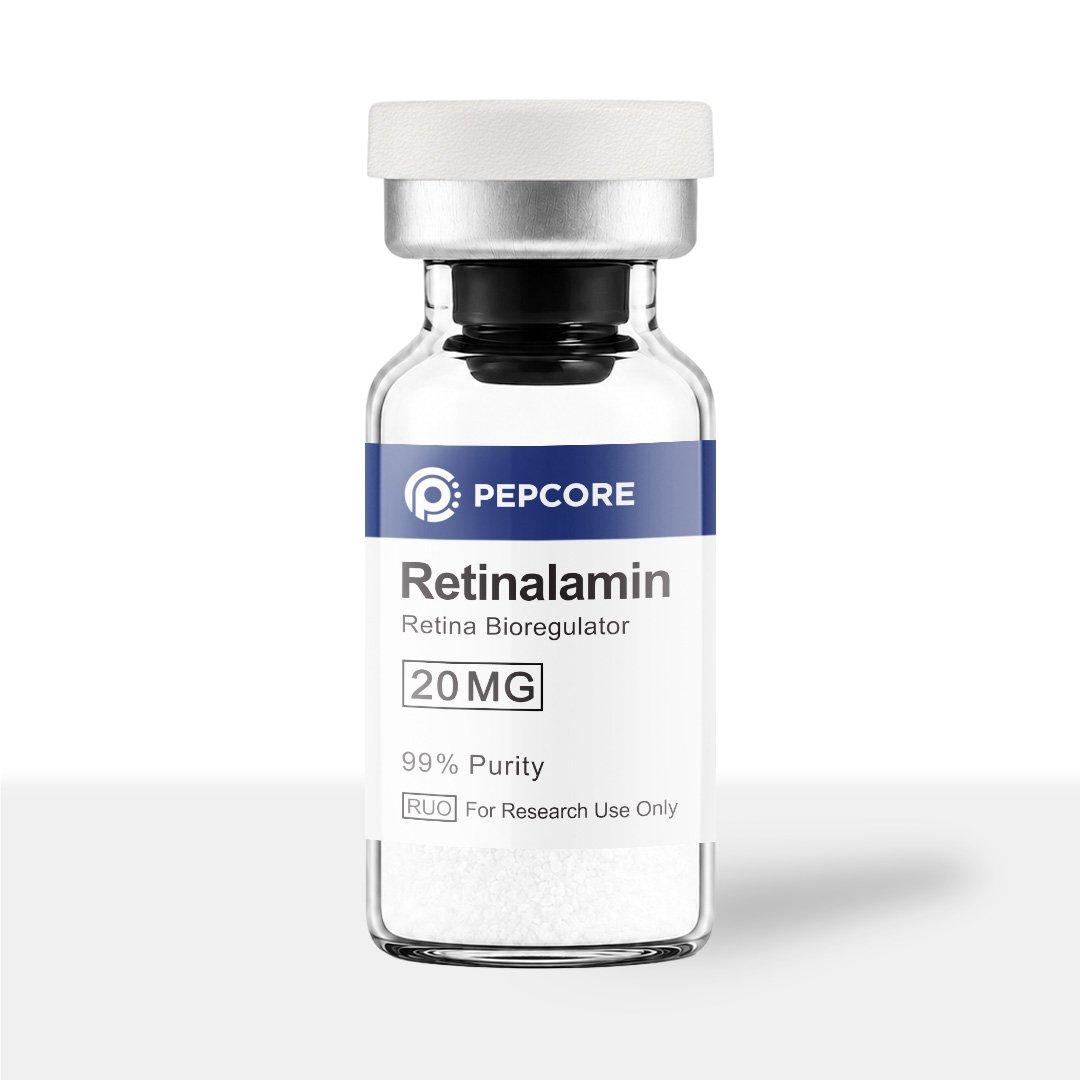
Retinalamin 20 mg
Out of Stock
Amount (mg)
Bacteriostatic Water
Insulin Syringes
Alcohol Swabs
Quantity
1
Price€79.00
Fast delivery, dispatched same day before 14:00
Tracked delivery, door to door
Shipped discreetly
Secure payments



Order before 14:00 for same-day shipping
Order now, ships today
OrderedToday
ShippedToday
Delivered24-25 November
Retinalamin is the name used for a retinal tissue-derived polypeptide preparation. In published cell-culture research, the preparation stimulated the growth of retinal and pigment epithelial cell populations under some experimental conditions. These are cells associated with the retina and its supporting pigment layer. The observed response is studied at the level of the preparation, which contains several peptide fractions. Khavinson et al., 2003.
The name refers to a mixture, so a single amino acid sequence, formula or molecular weight does not represent the whole preparation. Original manufacturer information describes water-soluble retinal polypeptides. Supplier-specific composition and analytical documents are needed to establish how this research material relates to the preparation used in publications. The cell-culture findings provide context for investigating cell growth and tissue-related responses, while keeping the identity of the tested preparation clear. GEROPHARM.
Research Applications
•Studied in retinal-cell growth models
•Relevant in pigment epithelial support cells research
•Examined in tissue-specific retinal cell responses studies
•Applied in retinal peptide biology research
Supplied as a lyophilized powder for stability.
Scientific Background
Peptides are chains of amino acids. A tissue-derived preparation can contain several chains with different lengths and compositions. Retinalamin belongs to this preparation-based research tradition. The original manufacturer's description identifies water-soluble polypeptide fractions isolated from retinal tissue. Its chemical identity is therefore described as a mixture. GEROPHARM.
The directly relevant cell-culture paper examined retinal cells and pigment epithelial cells as separate populations. This distinction matters because neighboring cell types can respond differently to the same preparation. The investigators measured changes in cell number under specified culture conditions. Their results support studying proliferation as one biological response to the published material. Khavinson et al., 2003.
Cell growth, cell survival and the maintenance of cell identity are related questions. Following them separately helps explain what a change in cell number means. This also provides a framework for comparing a complete preparation with individual fractions in further in vitro research.
Structure
Preparation classRetina-derived polypeptide preparation
CompositionHeterogeneous water-soluble polypeptide fractions
Amino acid sequenceNo single sequence assigned
Molecular formulaNot applicable to the mixture
Molecular weightNo single molecular weight
CAS numberNot assigned
Product designationRetinalamin
Mechanism of Action
Following growth in cell cultures
The published culture experiments measured the number of retinal and pigment epithelial cells after exposure to the studied preparation. A change in that number provides a way to follow growth of the population. The investigators reported stimulation under certain experimental conditions. These measurements describe a response of cultured cells, with the culture conditions forming part of the result. Khavinson et al., 2003.
Comparing different cell populations
Retinal cells and pigment epithelial cells have different roles within retinal tissue. Studying them separately makes it possible to examine whether their responses follow the same pattern. The original work considered the tissue-related character of the growth response. Comparing cell types helps connect an observed effect with the biological setting in which it appears. Khavinson et al., 2003.
Connecting the response to the preparation
A mixture can act through more than one component. Cell-count experiments can show a population response, while identifying a responsible peptide requires separation of the mixture and additional testing. Researchers can then compare the fractions with the complete preparation and examine cellular signals alongside growth. This distinguishes the measured biological effect from the additional work needed to assign a specific molecular target.
References
•Khavinson VKh et al. (2003). Retinalamin and proliferative responses in retinal and pigment epithelial cell cultures. Bulletin of Experimental Biology and Medicine. PubMed
Research Use Disclaimer
This product is intended for in vitro laboratory research only. All information is provided for education and research reference. Not for personal use, diagnosis or treatment. Handling is restricted to trained and qualified professionals.
What is Retinalamin?
Retinalamin is the name used for a retinal tissue-derived polypeptide preparation. It is supplied as a lyophilized powder for laboratory research use only.
What is Retinalamin used for in research?
In research, Retinalamin is studied in retinal-cell growth models, in pigment epithelial support cells research as well as in tissue-specific retinal cell responses studies. Related compounds in our Bioregulators range include Thymogen and Testagen.
Where can I buy Retinalamin?
Retinalamin is available from Pepcore, shipped from the Netherlands to every European country with tracking. A certificate of analysis is available on request.
How is Retinalamin reconstituted?
With bacteriostatic water, added slowly down the inside of the glass rather than onto the powder, then swirled gently, never shaken. Bacteriostatic water is optional when you order: you can add a 3 ml vial (+€4.99) or a 10 ml vial (+€12.99), or leave it out. Use our peptide calculator to work out the concentration for your vial size.
How is Retinalamin stored, and how long does shipping take?
Lyophilized Retinalamin is kept cool, dry and away from light. Once reconstituted, the solution is refrigerated at 2 to 8 °C, see our peptide stability guide. Orders leave the Netherlands the same or next business day: 1 to 2 business days to the Netherlands and Belgium, 2 to 7 to Germany, France, Spain, Italy and Luxembourg, 3 to 8 to the rest of the EU, free from €250, see shipping.
Amount (mg)20 mg
Bacteriostatic Water3 ml or 10 ml, optional
Insulin Syringes10× 1 ml insulin syringes, 10× 0.5 ml insulin syringes, None
Alcohol SwabsYes, No
TestingThird-party HPLC/MS
CASN/A
Netherlands & Belgium: 1-2 business days, €8.49-€12.99
Germany: 2-7 business days, €12.99
France, Spain, Italy & Luxembourg: 2-7 business days, €14.90
Rest of the EU: 3-8 business days, €14.90
Poland: 3-8 business days, €15.99
Sweden: 3-8 business days, €15.99
Switzerland, Norway, United Kingdom & other European countries outside the EU: 5-10 business days, €15.99
Canary Islands: 7-12 business days, €24.99
Free shipping on orders from €250
For laboratory and research use only.
Not for human or veterinary use, diagnosis, or treatment.
To be handled only by qualified personnel in a controlled lab setting.
By placing an order, you confirm you have read and agree to these research-use terms.


€79.00