Cognitive
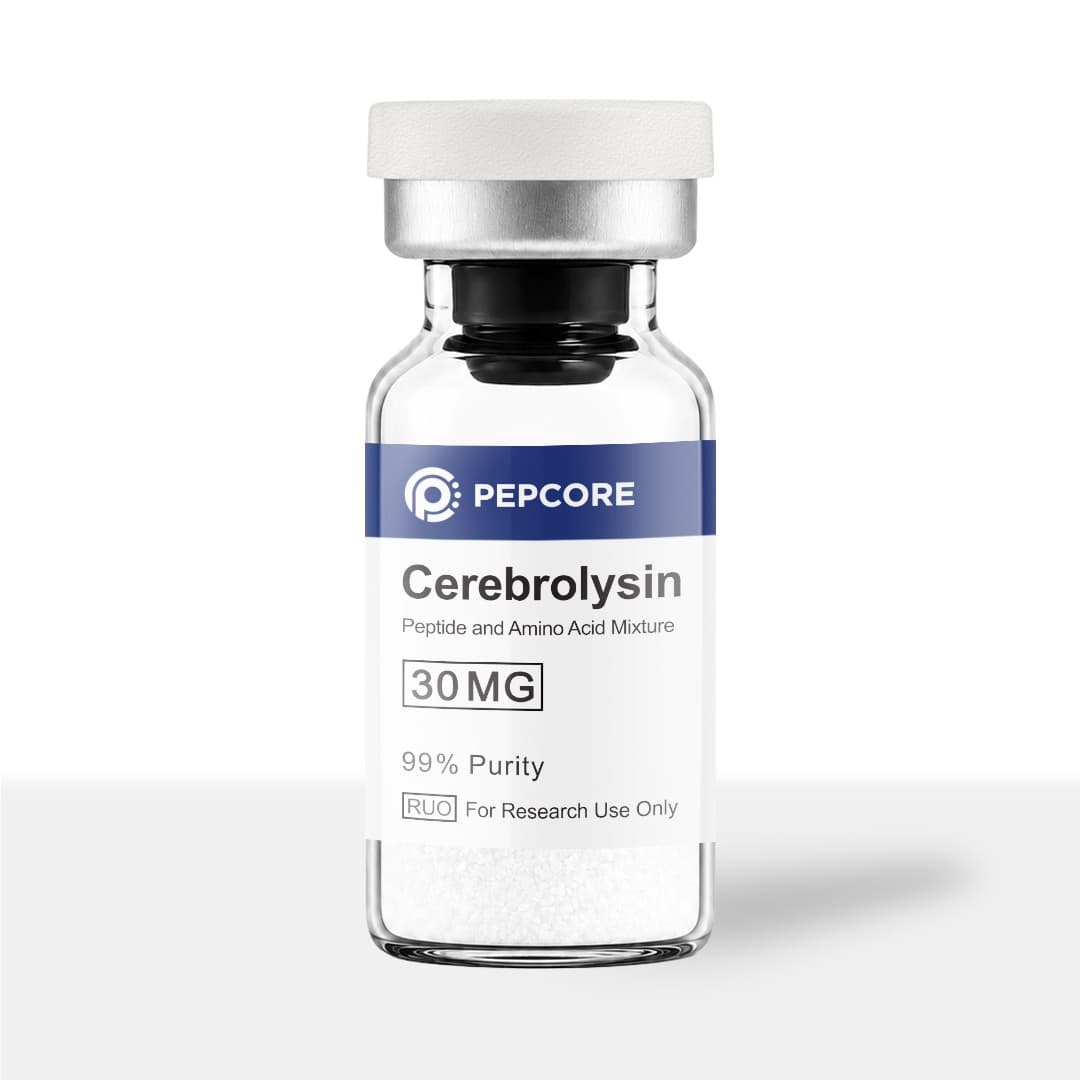
Cerebrolysin 30 mg
In Stock
Amount (mg)
Bacteriostatic Water
Insulin Syringes
Alcohol Swabs
Quantity
1
Price€49.00
Fast delivery, dispatched same day before 14:00
Tracked delivery, door to door
Shipped discreetly
Secure payments



Order before 14:00 for same-day shipping
Order now, ships today
OrderedToday
ShippedToday
Delivered24-25 November
Cerebrolysin is not a single peptide. It is a standardised preparation of low-molecular-weight peptides and free amino acids produced by controlled enzymatic breakdown of purified porcine brain protein, and the mixture is the point: it is studied as a whole rather than as one molecule.
Its research base centres on neurotrophic signaling, with work characterising how the preparation engages neuronal survival and repair pathways (Masliah and Diez-Tejedor, 2012, Drugs Today). That has made it a long-standing reference preparation in neurological research.
Research Applications
•Neurotrophic signaling research
•Neuroprotection and neurorepair models
•Neuroplasticity and neurogenesis studies
•Cognitive research model systems
Supplied as a lyophilized powder for stability.
Scientific Background
Cerebrolysin is produced by standardised enzymatic hydrolysis of purified porcine brain protein, yielding roughly 15% biologically active peptides below 10 kDa alongside approximately 85% free amino acids. It carries the development code FPF-1070 and has been under continuous laboratory investigation since the 1970s.
Unlike the synthetic single-sequence peptides that dominate this field, Cerebrolysin has no defined amino-acid sequence and no single molecular weight. Mass-spectrometry profiling of authentic material has resolved hundreds of distinct peptide species, so its characterisation rests on the behaviour of the preparation as a whole rather than on one molecule.
This has placed it at the intersection of neurotrophic-factor research, neuroprotection and neurorepair models, and cognitive research, where it is used as a reference preparation in laboratory investigations of neuronal survival and structural plasticity.
Structure
Peptide ClassStandardised porcine brain-derived peptide preparation
Amino Acid SequenceNot applicable, mixture of low-molecular-weight peptides and free amino acids
CompositionApproximately 15% peptides below 10 kDa, approximately 85% free amino acids
Molecular FormulaN/A (mixture)
Molecular WeightN/A (peptide fraction below 10 kDa)
CAS Number12656-61-0
SynonymsFPF-1070
Mechanism of Action
Neurotrophic-Factor-Like Activity
Cerebrolysin is investigated as a preparation whose low-molecular-weight peptide fraction produces effects resembling endogenous neurotrophic factors. In laboratory research models it is examined for engagement of neuronal survival signaling, including pathways associated with brain-derived neurotrophic factor and glial cell line-derived neurotrophic factor.
Neuroprotection Research Models
The preparation is studied in cellular and animal research models of excitotoxicity, oxidative stress and ischemic injury, where it is examined for effects on calcium homeostasis, calpain activity and apoptotic signaling cascades.
Neuroplasticity and Neurogenesis
Cerebrolysin is investigated for effects on dendritic architecture, synaptic protein expression and hippocampal neurogenesis in laboratory research models, making it a tool compound for studying structural plasticity.
Amyloid and Tau Research Models
In transgenic laboratory models it is examined for effects on amyloid-precursor-protein processing and tau phosphorylation, and is used to probe neurodegeneration research pathways.
Conclusion
Cerebrolysin represents a standardised, non-synthetic peptide preparation whose research value lies in its complexity rather than in a defined sequence. By acting through neurotrophic-factor-like signaling across several pathways at once, it serves as a reference preparation for neuroprotection, neuroplasticity and cognitive research in controlled laboratory models.
References
•Masliah E, Díez-Tejedor E (2012). The pharmacology of neurotrophic treatment with Cerebrolysin: brain protection and repair to counteract pathologies of acute and chronic neurological disorders. Drugs of Today (Barcelona). PubMed
•Rejdak K et al. (2023). Modulation of neurotrophic factors in the treatment of dementia, stroke and TBI: Effects of Cerebrolysin. Medicinal Research Reviews. PubMed
•Heiss WD et al. (2012). Cerebrolysin in patients with acute ischemic stroke in Asia: results of a double-blind, placebo-controlled randomized trial. Stroke. PubMed
•Muresanu DF et al. (2016). Cerebrolysin and Recovery After Stroke (CARS): A Randomized, Placebo-Controlled, Double-Blind, Multicenter Trial. Stroke. PubMed
•Espinoza I et al. (2024). The administration of Cerebrolysin elicits neuroprotective and neurorepair effects in an animal model of type 1 diabetes mellitus. Behavioural Brain Research. PubMed
•Farajdokht F et al. (2022). Cerebrolysin® and Environmental Enrichment, Alone or in Combination, Ameliorate Anxiety- and Depressive-Like Behaviors in a Post-Ischemic Depression Model in Mice. Journal of Stroke and Cerebrovascular Diseases. PubMed
Research Use Disclaimer
This product is intended for research and laboratory use only. It is designed exclusively for in vitro research purposes. All information provided is for educational and research reference only. This product is not intended for human or animal use. It is not a drug, food, or cosmetic and must not be marketed, labeled, or used as such. Use and handling are restricted to trained and qualified professionals.
What is Cerebrolysin?
Cerebrolysin is not a single peptide. It is supplied as a lyophilized powder for laboratory research use only.
What is Cerebrolysin used for in research?
In research, Cerebrolysin is studied in areas such as: Neurotrophic signaling research, Neuroprotection and neurorepair models and Neuroplasticity and neurogenesis studies. Related compounds in our Cognitive range include NA Semax and NA Selank.
Where can I buy Cerebrolysin?
Cerebrolysin is available from Pepcore, shipped from the Netherlands to every European country with tracking. A certificate of analysis is available on request.
How is Cerebrolysin reconstituted?
With bacteriostatic water, added slowly down the inside of the glass rather than onto the powder, then swirled gently, never shaken. Bacteriostatic water is optional when you order: you can add a 3 ml vial (+€4.99) or a 10 ml vial (+€12.99), or leave it out. Use our peptide calculator to work out the concentration for your vial size.
How is Cerebrolysin stored, and how long does shipping take?
Lyophilized Cerebrolysin is kept cool, dry and away from light. Once reconstituted, the solution is refrigerated at 2 to 8 °C, see our peptide stability guide. Orders leave the Netherlands the same or next business day: 1 to 2 business days to the Netherlands and Belgium, 2 to 7 to Germany, France, Spain, Italy and Luxembourg, 3 to 8 to the rest of the EU, free from €250, see shipping.
Amount (mg)30 mg
Bacteriostatic Water3 ml or 10 ml, optional
Insulin Syringes10× 1 ml insulin syringes, 10× 0.5 ml insulin syringes, None
Alcohol SwabsYes, No
TestingThird-party HPLC/MS
CAS12656-61-0
Netherlands & Belgium: 1-2 business days, €8.49-€12.99
Germany: 2-7 business days, €12.99
France, Spain, Italy & Luxembourg: 2-7 business days, €14.90
Rest of the EU: 3-8 business days, €14.90
Poland: 3-8 business days, €15.99
Sweden: 3-8 business days, €15.99
Switzerland, Norway, United Kingdom & other European countries outside the EU: 5-10 business days, €15.99
Canary Islands: 7-12 business days, €24.99
Free shipping on orders from €250
For laboratory and research use only.
Not for human or veterinary use, diagnosis, or treatment.
To be handled only by qualified personnel in a controlled lab setting.
By placing an order, you confirm you have read and agree to these research-use terms.


€49.00