Cognitive
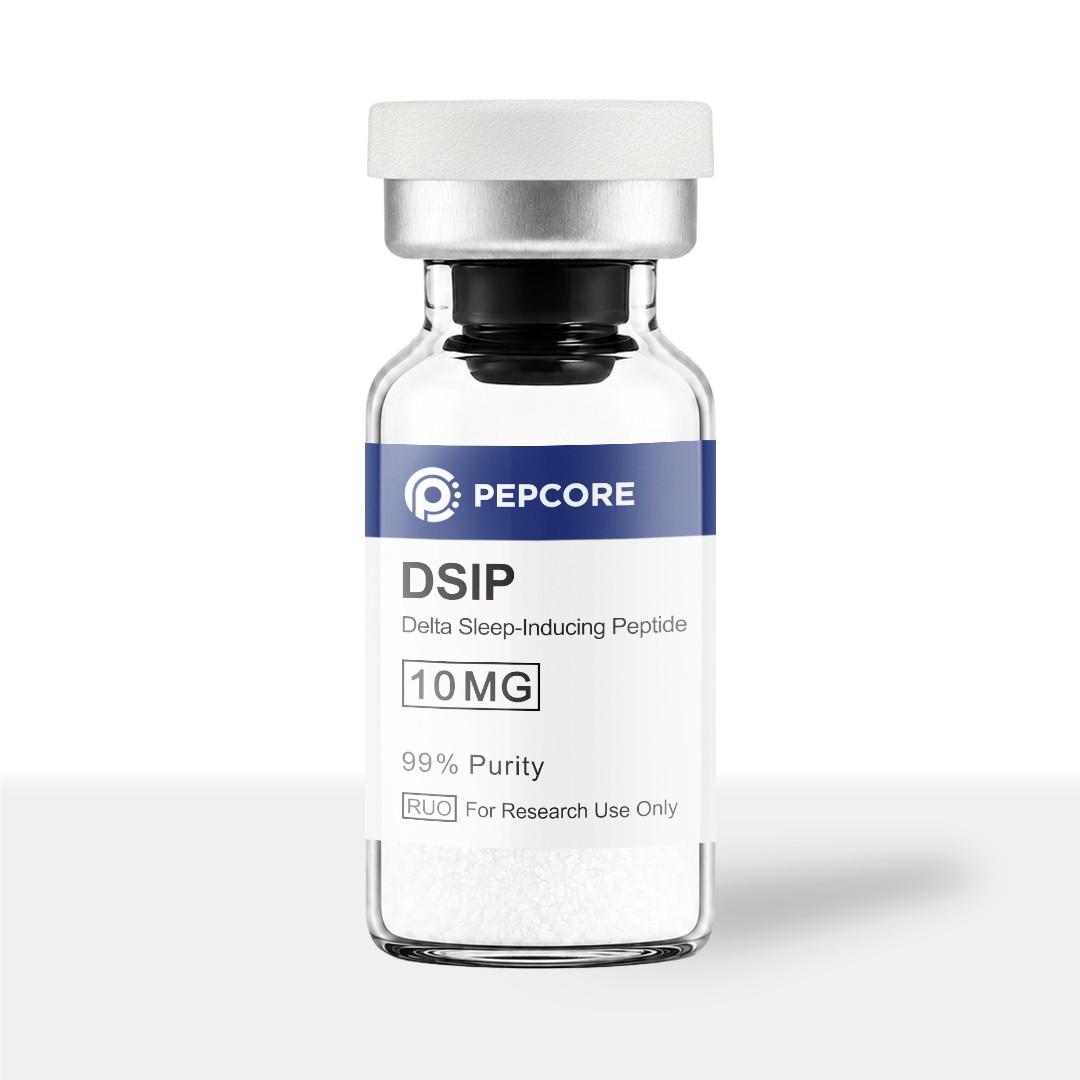
DSIP
In Stock
Amount (mg)
Bacteriostatic Water
Insulin Syringes
Alcohol Swabs
Quantity
1
Price€74.00
Fast delivery, dispatched same day before 14:00
Tracked delivery, door to door
Shipped discreetly
Secure payments



Order before 14:00 for same-day shipping
Order now, ships today
OrderedToday
ShippedToday
Delivered24-25 November
DSIP (Delta Sleep-Inducing Peptide) is a nine amino acid neuropeptide, first isolated from rabbit brain tissue in the 1970s during work on sleep signalling. In research it is best known for its association with slow-wave sleep and delta EEG activity.
DSIP is studied for how it crosses the blood-brain barrier and interacts with central nervous system signalling, circadian timing and the stress axis, which keeps it in use across neuroscience research models (Schoenenberger & Monnier, 1977, PNAS).
Research Applications
•Studied in models of sleep architecture and delta wave activity
•Relevant in research on circadian rhythm and timing
•Examined in stress response and corticotropin research models
•Applied in blood-brain barrier transport studies
Available in 5 mg and 10 mg vials at ≥99% HPLC purity.
Supplied as a lyophilized powder for stability.
Scientific Background
Delta sleep-inducing peptide was identified in 1977 by Schoenenberger and Monnier, who perfused blood from rabbits held in an induced delta-sleep state and isolated the fraction responsible for the effect. The active substance proved to be a nonapeptide, Trp-Ala-Gly-Gly-Asp-Ala-Ser-Gly-Glu, and it became one of the first endogenous peptides tied directly to a specific stage of sleep.
The molecule is small, water soluble and unusually mobile. Transport work in rabbit demonstrated that DSIP crosses the blood-brain barrier in both directions without a saturable carrier, a property that made it attractive as a research probe for central nervous system signalling and for barrier-permeability studies of small peptides.
Despite nearly five decades of investigation, no dedicated DSIP receptor has been isolated and its endogenous role remains debated. That open question is precisely why the peptide keeps reappearing in the neurochemistry literature, described in one review as a still unresolved riddle, and why it continues to be used as a reference nonapeptide in sleep and neuroendocrine research models.
Structure
Peptide ClassEndogenous nonapeptide; neuropeptide
Amino Acid SequenceTrp-Ala-Gly-Gly-Asp-Ala-Ser-Gly-Glu
Molecular FormulaC₃₅H₄₈N₁₀O₁₅
Molecular Weight~848.8 g/mol
CAS Number62568-57-4
PubChem CID68816
SynonymsDelta sleep-inducing peptide, Emideltide, DSIP nonapeptide
Mechanism of Action
Delta Wave and Sleep Architecture Research
DSIP was originally characterised by its ability to increase delta-frequency electroencephalogram activity in laboratory models. Research in this area treats the peptide as a modulator of slow-wave sleep rather than as a sedative compound, with observed effects that depend heavily on the baseline state of the model.
Blood-Brain Barrier Transport
Transport research established that DSIP moves across the blood-brain barrier in both directions and without a saturable carrier system. This bidirectional mobility is one reason the nonapeptide is still used as a reference compound in permeability studies of small peptides.
Stress Axis and Corticotropin Research
Laboratory studies have examined DSIP in restraint and other stressor models, looking at its relationship to corticotropin release and to markers of cellular stress in peripheral tissue. This line of work uses the peptide as a probe for neuroendocrine regulation rather than as a defined receptor agonist.
Circadian and Metabolic Signalling
DSIP has been investigated alongside glucocorticoid-responsive proteins for possible links between circadian timing and metabolic regulation, an area of research that connects sleep signalling to broader homeostatic pathways.
Conclusion
DSIP is an unusual research peptide: structurally simple, chemically well characterised, and still without an identified receptor. That combination is what keeps it in use as a tool compound for sleep architecture research, blood-brain barrier transport studies and neuroendocrine investigation in controlled laboratory models.
References
•Schoenenberger GA, Monnier M (1977). Characterization of a delta-electroencephalogram (-sleep)-inducing peptide. Proceedings of the National Academy of Sciences of the United States of America. PubMed
•Monnier M et al. (1977). The delta sleep inducing peptide (DSIP). Comparative properties of the original and synthetic nonapeptide. Experientia. PubMed
•Monnier M et al. (1977). Transport of the synthetic peptide DSIP through the blood-brain barrier in rabbit. Experientia. PubMed
•Kovalzon VM, Strekalova TV (2006). Delta sleep-inducing peptide (DSIP): a still unresolved riddle. Journal of Neurochemistry. PubMed
•Bobyntsev II et al. (2016). Effect of Delta Sleep-Inducing Peptide on Functional State of Hepatocytes in Rats During Restraint Stress. Bulletin of Experimental Biology and Medicine. PubMed
•Gimble JM et al. (2009). Delta sleep-inducing peptide and glucocorticoid-induced leucine zipper: potential links between circadian mechanisms and obesity?. Obesity Reviews. PubMed
Research Use Disclaimer
This product is intended for research and laboratory use only. It is designed exclusively for in vitro research purposes. All information provided is for educational and research reference only. This product is not intended for human or animal use. It is not a drug, food, or cosmetic and must not be marketed, labeled, or used as such. Use and handling are restricted to trained and qualified professionals.
What is DSIP?
DSIP (Delta Sleep-Inducing Peptide) is a nine amino acid neuropeptide, first isolated from rabbit brain tissue in the 1970s during work on sleep signalling. It is supplied as a lyophilized powder for laboratory research use only.
What is DSIP used for in research?
In research, DSIP is studied in models of sleep architecture and delta wave activity, in research on circadian rhythm and timing as well as in stress response and corticotropin research models. Related compounds in our Cognitive range include NA Semax and NA Selank.
Where can I buy DSIP?
DSIP is available from Pepcore, shipped from the Netherlands to every European country with tracking. A certificate of analysis is available on request.
How is DSIP reconstituted?
With bacteriostatic water, added slowly down the inside of the glass rather than onto the powder, then swirled gently, never shaken. Bacteriostatic water is optional when you order: you can add a 3 ml vial (+€4.99) or a 10 ml vial (+€12.99), or leave it out. Use our peptide calculator to work out the concentration for your vial size.
How is DSIP stored, and how long does shipping take?
Lyophilized DSIP is kept cool, dry and away from light. Once reconstituted, the solution is refrigerated at 2 to 8 °C, see our peptide stability guide. Orders leave the Netherlands the same or next business day: 1 to 2 business days to the Netherlands and Belgium, 2 to 7 to Germany, France, Spain, Italy and Luxembourg, 3 to 8 to the rest of the EU, free from €250, see shipping.
Amount (mg)5 mg, 10 mg
Bacteriostatic Water3 ml or 10 ml, optional
Insulin Syringes10× 1 ml insulin syringes, 10× 0.5 ml insulin syringes, None
Alcohol SwabsYes, No
TestingThird-party HPLC/MS
CAS62568-57-4
Netherlands & Belgium: 1-2 business days, €8.49-€12.99
Germany: 2-7 business days, €12.99
France, Spain, Italy & Luxembourg: 2-7 business days, €14.90
Rest of the EU: 3-8 business days, €14.90
Poland: 3-8 business days, €15.99
Sweden: 3-8 business days, €15.99
Switzerland, Norway, United Kingdom & other European countries outside the EU: 5-10 business days, €15.99
Canary Islands: 7-12 business days, €24.99
Free shipping on orders from €250
For laboratory and research use only.
Not for human or veterinary use, diagnosis, or treatment.
To be handled only by qualified personnel in a controlled lab setting.
By placing an order, you confirm you have read and agree to these research-use terms.


€74.00